

A weekly collection of links to interesting things curated by Colin Wright.
What Are Roundabouts?
“Roundabouts, also known as traffic circles or rotaries, are circular intersections designed to improve traffic flow and safety. They offer several advantages over conventional intersections controlled by traffic signals or stop signs, but by far the most important one is safety.”
Freedom From Work
“In the late 1880s the artist William Morris proposed a future in which we worked only 24 hours a week. Some decades later, during the Great Depression, the economist John Maynard Keynes went further, reckoning we’d all have a 15-hour working week by the end of this decade, and that we would enter an “age of leisure and of abundance”. Indeed, big thinkers have long proposed that society would inevitably move towards a future of less work and more leisure. And they were partly right: from 1800 to the 1970s, thanks to unionism and enlightened employers, working hours were gradually eroded until we arrived at the archetypal ’40-hour week’.
Now, it’s proposed, robotics and AI will hasten radical change for employment – in short, there may be fewer and fewer jobs to go round. Some developments already point in this direction: in the US, the share of prime-age men neither working nor looking for work has doubled since the 1970s, and the number of jobs in manufacturing is down 30% since just 2000. AI is poised to set in motion a new wave of job automation, perhaps further eroding the share of ‘good jobs’ available to humans.”
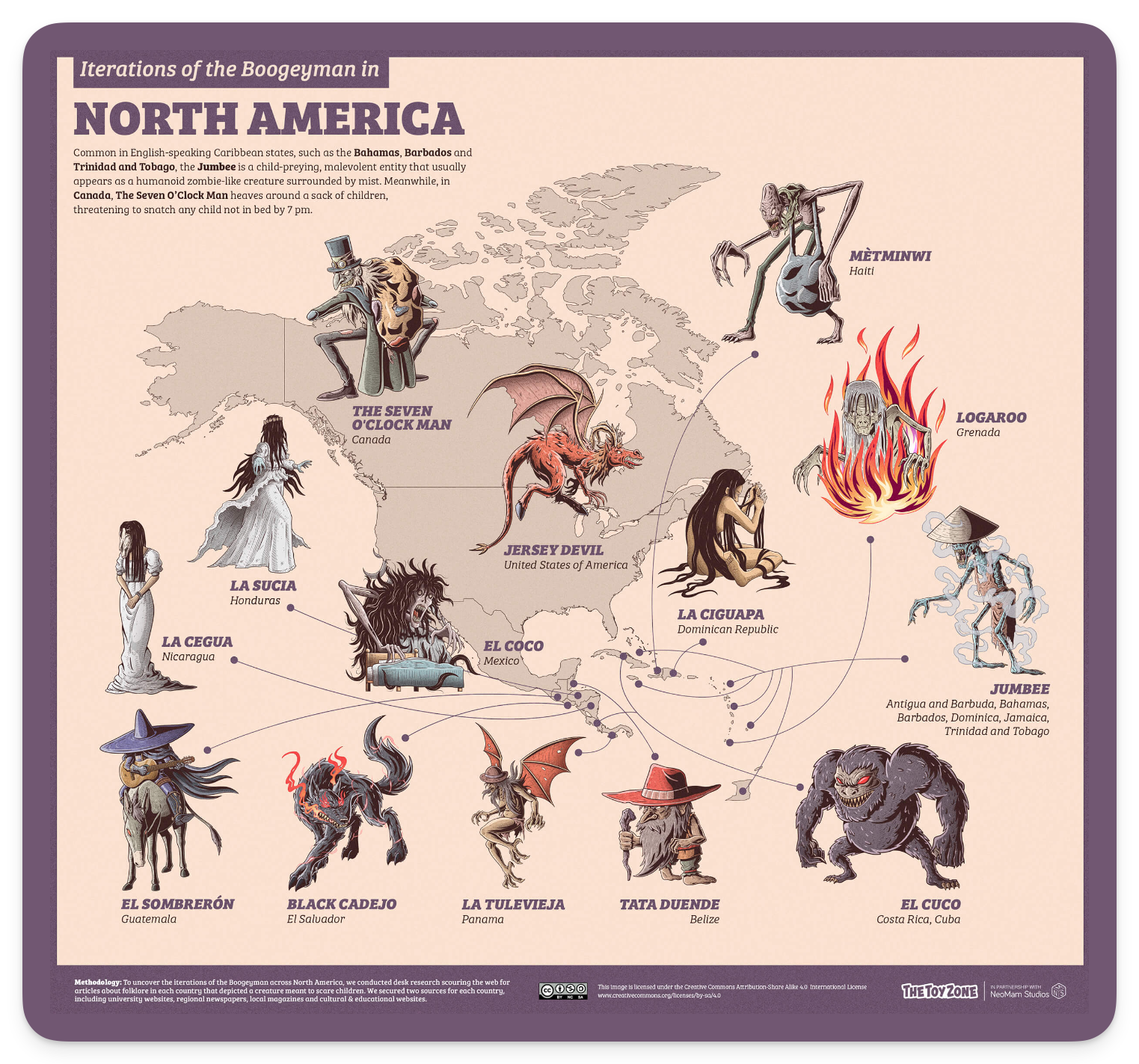
Iterations of the Boogeyman in (Almost) Every Country
“The Boogeyman is America’s most notable take on the international boogeymen phenomenon, but more locally still, you’ll find the Jersey Devil. The cursed thirteenth child of an 18th-century NJ mother, the Jersey Devil may have “a horse’s head, long legs with hooves, two short front legs, and a bat’s wings,” according to official state sources; generally, witnesses are too frightened to hang around and note down the details.”
Poets in the Machine
“This spring, the literary critic Laura Miller got annoyed with Brandon Taylor’s new novel, The Late Americans. A fan of Taylor’s “brilliant” Substack and “irresistible patter” on Twitter, she found his book disappointingly lugubrious. “Brandon Taylor’s online writing is vibrant, funny, and true,” read the subhead of her review. “Why is his fiction trying so hard to be something else?” The Slate piece subjected the novel to some churlish complaints. But it was the inclusion of “online writing” that attracted minor controversy; writers and critics tweeted in response that to compare an author’s novel to his tweets was to insult the author and embarrass oneself. One respondent wrote, “this may be the worst piece of writing on a book or author I have ever read.” Another said, “it’s gauche to even mention a professional author’s twitter account in a review.””
Division of Labor in Ants, Wasps, Bees—and Us
“For humans, division of labor has become a necessity: No person in the world has all the knowledge and skills to perform all the tasks that are required to keep our highly technological societies afloat. This has made us entirely dependent on each other, leaving us individually vulnerable. We really can’t make it on our own.
From archaeological findings, we can reconstruct more or less how this situation evolved. Initially, everyone was doing more or less the same thing. But because food was shared among people living in hunter-gatherer groups, some were able to specialize in tasks other than finding food, such as fashioning tools, treating illnesses or cultivating plants. These skills enriched the group but made the specialists even more dependent on others. This further reinforced cooperation among group members and pushed our species to even higher levels of specialization — and prosperity.”

The Unexpected Pleasure of Being Mediocre
“Once, when I was eight, he decided to teach me an important lesson about gambling. I needed $2 to buy a Sonny & Cher album from Korvette’s. (I think that sentence has more anachronisms per character count than any sentence ever written.) He asked if I was willing to bet the money I had saved by playing the No Game. All I had to do was answer “no” to every question asked. How hard could that be? Such a simple game. Just say no.
“Are you ready to play? Do you understand the rules?”
I narrowed my eyes and shouted: “NO!”
He sputtered with surprise, outraged and proud.”
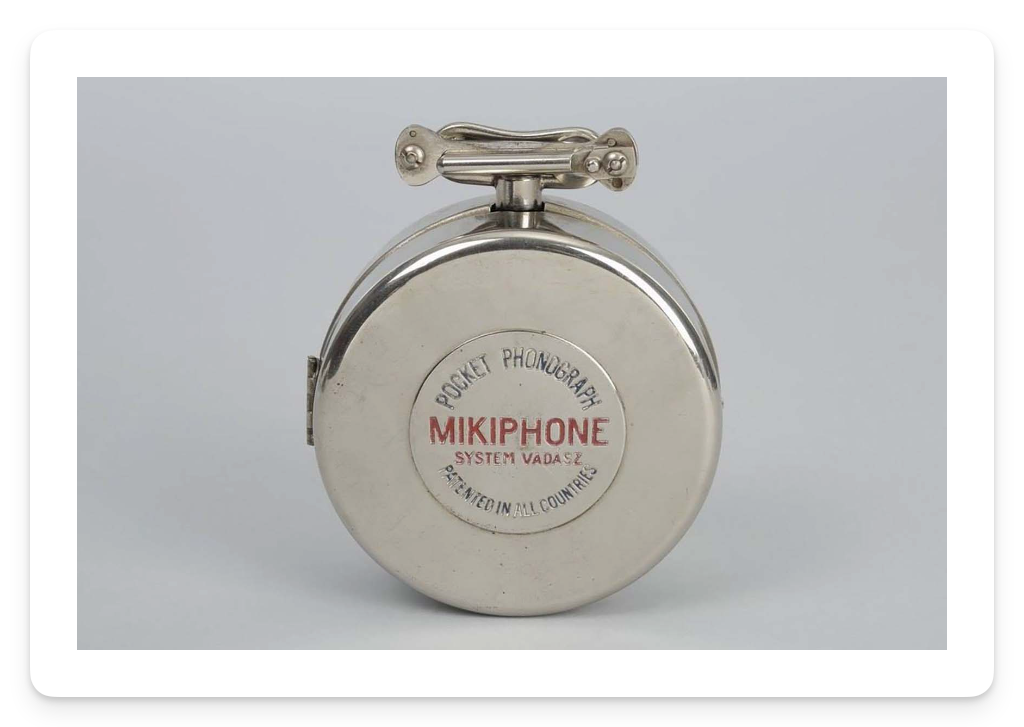
The 1924 Mikiphone: The World’s First Pocket Record Player
“Back in the 1920s, long before modern gadgets took over our daily lives, a nifty little invention brought music to people’s pockets. This wonder of the past was called the Mikiphone, a pocket-sized phonograph that let you carry your favorite tunes wherever you went. The Mikiphone, a portable phonograph small enough to fit in one’s pocket, was the brainchild of Hungarian siblings Miklós and Étienne Vadász. It entered mass production under a licensing agreement with Maison Paillard, based in Saint Croix, Switzerland.”

Love this roundup, Colin. On the "Freedom To Work" essay: do you think anything will be genuinely different this time where people will actually work less? Because it hasn't materialised for the previous generations who predicted it!