Tech Cartels, Basic Income for Artists, and Type School

Quotes from recent reads: three for everyone and another three for paid AG supporters.
Ohno Type School
You might expect the crossbar on A to hit exactly at the center, but nah…
That leaves A feeling really high-waisted, and ugly AF.
What we want is a balance between the top and bottom negative spaces.
Call it water, air, sand, crushed hopes and dreams, whatever! The important thing is that those two negative spaces are close to each other in size.
Another failure of geometry is the stroke weight where joints occur.
Completely even stroke weight would give us a joint that appears way too heavy!
I can get carried away with this, but you don’t have to be so dramatic. Important: joints should thin out a bit, and they don’t define your contrast.

How American Tech Cartels Use Apps to Break the Law
The death of competition spells doom for regulation. Competition is an essential component of effective regulation, for two reasons: First, competition keeps the companies within a sector from all telling the same lie to its regulators. Second, competition erodes companies’ profits and thus starves them of the capital they need to overpower or outmaneuver their regulators.
While not all regulation is wise or helpful, a world without regulation is a catastrophe. That’s because, in a highly technological world, your ability to do well (or even to live out the day) requires that you correctly navigate innumerable highly technical questions that you can’t possibly answer.
The Very Hungry Microbes That Could, Just Maybe, Cool the Planet
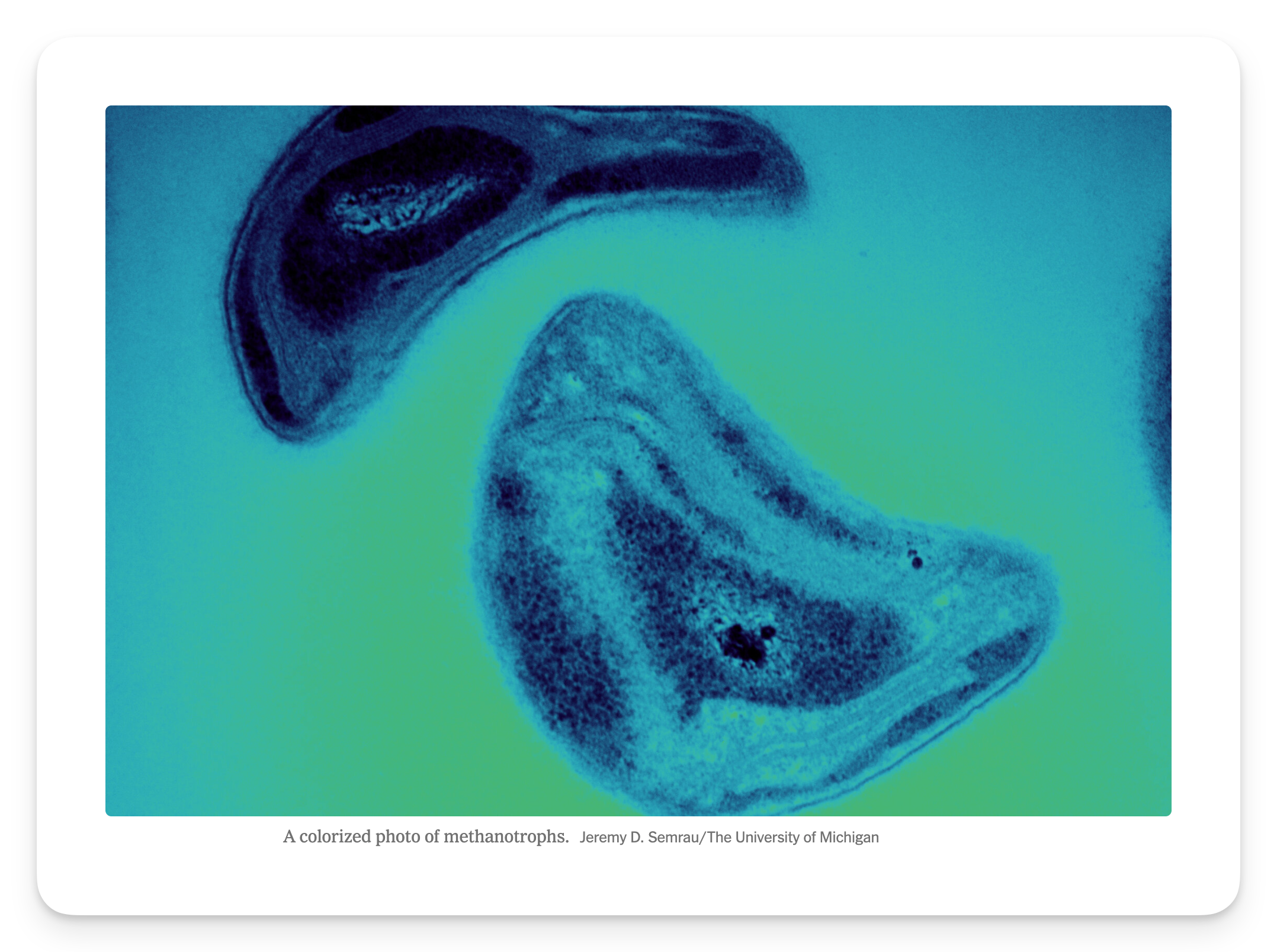
Fifty miles off the Tuscan coast, in a sparkling blue expanse broken only by rocky, forbidding islets, including the real-life Island of Montecristo, ancient creatures are roosting beneath the waves.
They spend their days feasting on an unlikely source of nourishment: methane, a potent greenhouse gas that leaks out of cracks in the seafloor.
Lately, researchers have been trying to put these microorganisms to work on an urgent task. If their appetites can be redirected to other sources of their favorite gas — namely, the hundreds of millions of tons of planet-warming methane emitted each year from oil and gas sites, livestock and wetlands — then they might just help slow climate change.
First, though, researchers need to better understand these microbes, which have been on this planet for billions of years but remain enigmatic in many ways.