

A weekly collection of links to interesting things curated by Colin Wright.
God Dog
Man gave names to things he thought were worthy of a story. The bitch below me was Devon, a Nederlandse Kooikerhondje. Later came Surprise, a border collie. Names around here swung from the gladiatorial (“D’Artagnan,” “Phire”), to the canonical and folksy (“Sparkle,” “Fido”), to Christian (“Steven”). Some of these dogs looked like they could pull covered wagons with their teeth. Others seemed easy to ball up with one hand and pitch over a fence. Most were handsomely groomed, well-insured, attempting penetration. But all dogs here, in all their combinatory combinations of rank, file, breed, and name, vesseled someone else’s plot.
Rodents’ Secret Weapon? Thumbnails.
While humans are Earth’s most dominant animal species, it’s really a rodent’s world and we are just living in it. Roughly half of all the mammal species on the planet are rodents such as rats, mice, squirrels, and hamsters and they are found on every single continent except for Antarctica. Their rapid reproductive rates, flexible bodies, diverse diets, and more have made them the ultimate survivors. Some of their success may also be due to a fairly innocuous body part—thumbnails.
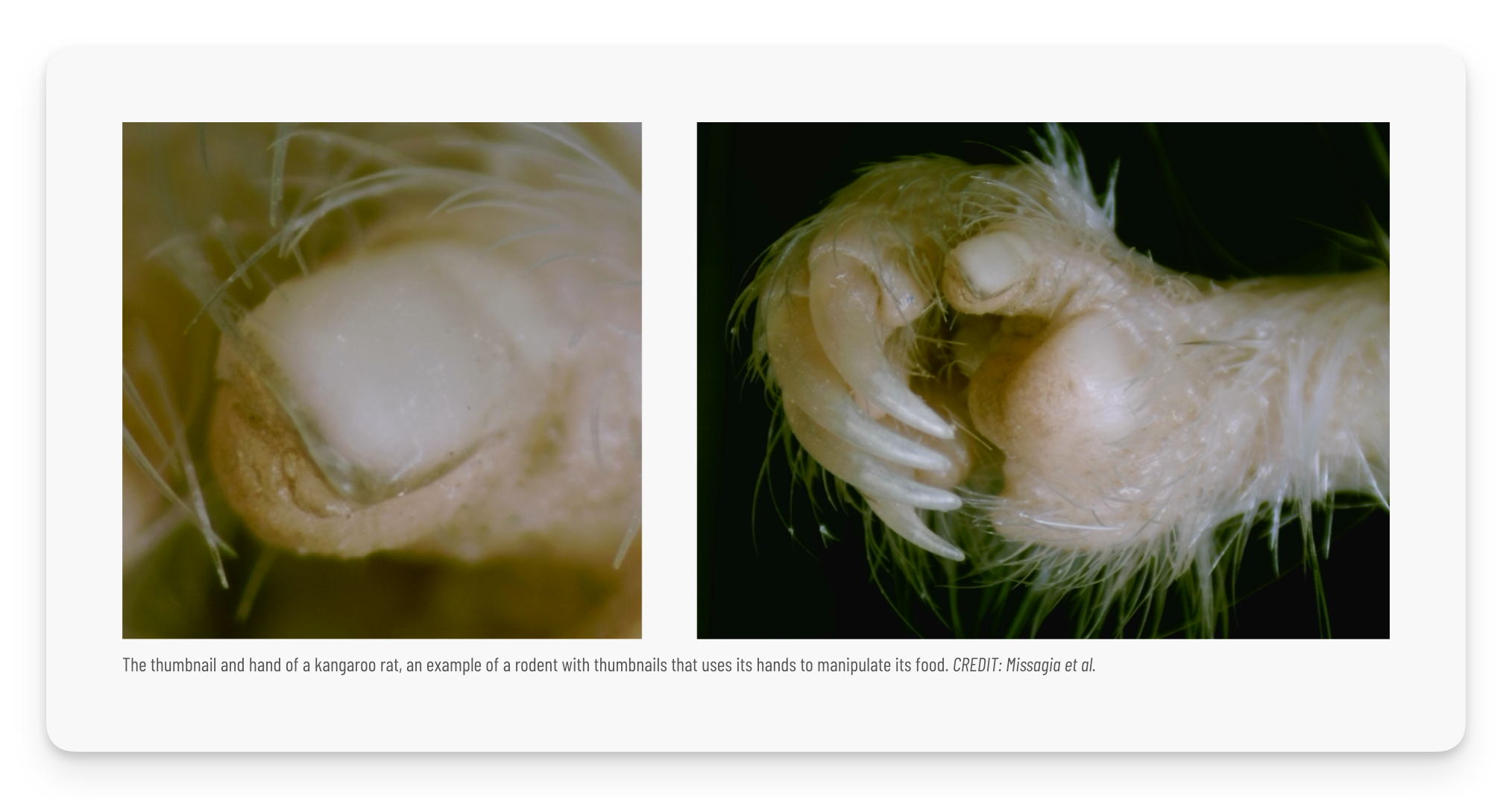
Instead of sharp, pointy claws, several rodent species including squirrels actually have smooth, flat nails on their thumbs. The nails compliment the curved claws on their other fingers, and help squirrels handle food with their front paws. A peek back into the rodent family tree indicates that these thumbnails may contribute to rodents’ evolutionary success, since they make it easier to eat. These findings are detailed in a study published September 4 in the journal Science.
Sweden’s ‘Secondhand Only’ Shopping Mall Is Changing Retail
As a fashion sustainability researcher, finding the ReTuna shopping mall in Eskilstuna was a delightful surprise. Stepping into this Swedish shopping centre felt refreshingly different – it is the first in the world to sell only secondhand and repurposed items.
During numerous visits to the shopping mall over the last 18 months, I have spoken to customers, managers and employees – all of whom seemed excited by ReTuna’s innovative business model.
The mall instantly feels very different to the cluttered charity shops or vintage boutiques most of us associate with pre-owned retail. There is a wide range of products on sale – fashion, sports equipment, household items, children’s toys, antiques – and even an Ikea secondhand store selling previously used and repaired furniture.
This is not just a retail space. It is a municipality-led experiment in circular consumption, where everything sold has been donated by the public.
Their Schools Banned Phones. Out Came the iPods and Cassette Players.
When Sebastien Wall found out that cellphones were about to be banned from his New Hampshire high school, he began making preparations.
Sebastien, 17, said he thought the policy was a good idea to keep students focused during class. But what about his lunchtime soundtrack? So, over the summer, he bought a used fifth-generation iPod for $80 and loaded it with songs by Pink Floyd and Rage Against the Machine.
Upon returning to school last week, he realized he was not the only teenager to greet the new phone ban with technology that is — by Gen Z’s standards, at least — Paleolithic.
“I’ve seen people walking around with CD players, and someone also has a Walkman,” Sebastien said. But an old device is now more than a nostalgia trip, he said: “It’s our last resort.”
If We Want Bigger Wind Turbines, We’re Gonna Need Bigger Airplanes
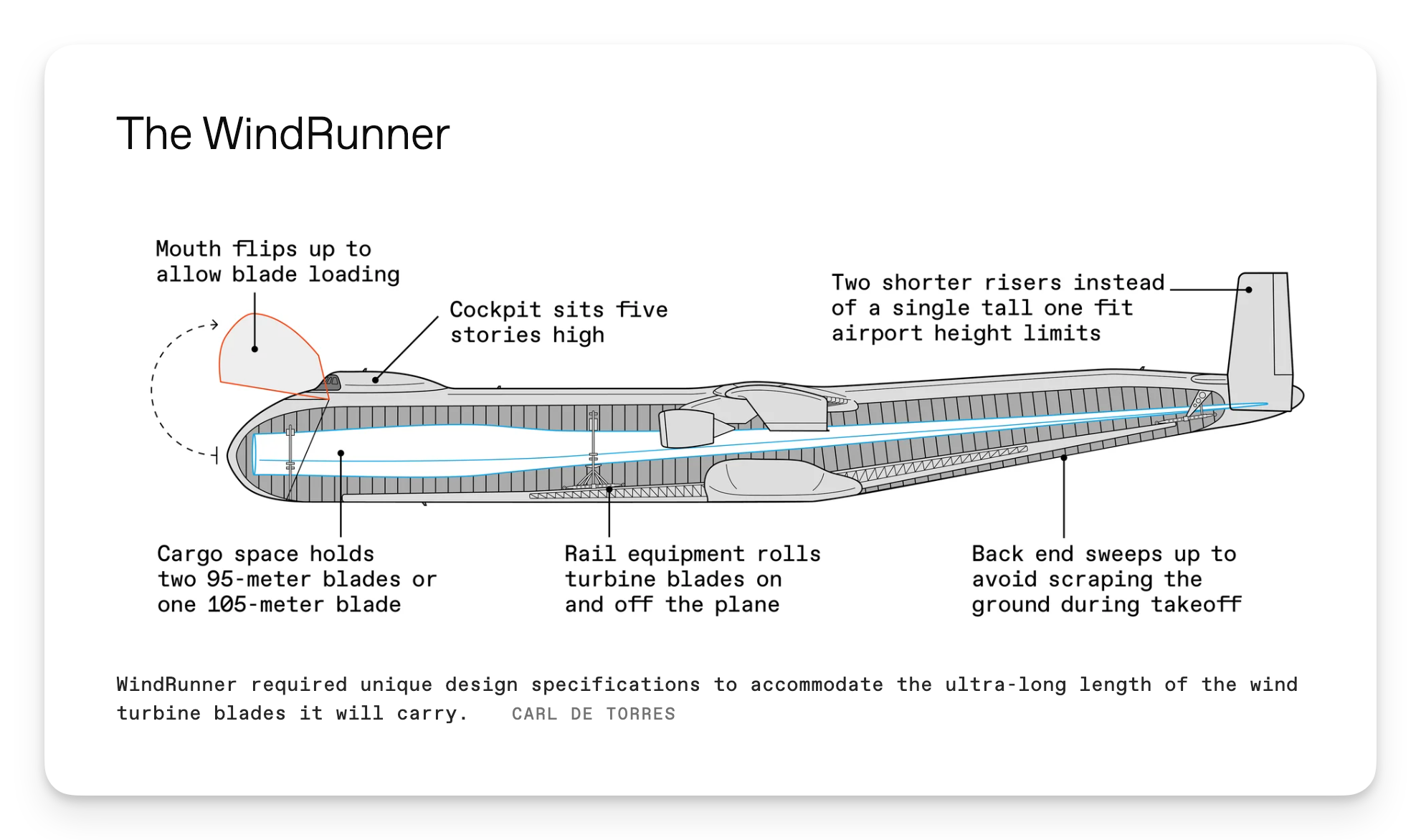
The world’s largest airplane, when it’s built, will stretch more than a football field from tip to tail. Sixty percent longer than the biggest existing aircraft, with 12 times as much cargo space as a 747, the behemoth will look like an oil tanker that’s sprouted wings—aeronautical engineering at a preposterous scale.
Called WindRunner, and expected by 2030, it’ll haul just one thing: massive wind-turbine blades. In most parts of the world, onshore wind-turbine blades can be built to a length of 70 meters, max. This size constraint comes not from the limits of blade engineering or physics; it’s transportation. Any larger and the blades couldn’t be moved over land, since they wouldn’t fit through tunnels or overpasses, or be able to accommodate some of the sharper curves of roads and rails.
Crispr Offers New Hope for Treating Diabetes
Crispr gene-editing technology has demonstrated its revolutionary potential in recent years: It has been used to treat rare diseases, to adapt crops to withstand the extremes of climate change, or even to change the color of a spider’s web. But the greatest hope is that this technology will help find a cure for a global disease, such as diabetes. A new study points in that direction.
For the first time, researchers succeeded in implanting Crispr-edited pancreatic cells in a man with type 1 diabetes, an autoimmune disease where the immune system attacks insulin-producing cells in the pancreas. Without insulin, the body is then unable to regulate blood sugar. If steps aren’t taken to manage glucose levels by other means (typically, by injecting insulin), this can lead to damage to the nerves and organs—particularly the heart, kidneys, and eyes. Roughly 9.5 million people worldwide have type 1 diabetes.