

A weekly collection of links to interesting things curated by Colin Wright.
Whiteouts, Ice Roads, and Wolverines: What Working at a Diamond Mine in the Far North Is Like
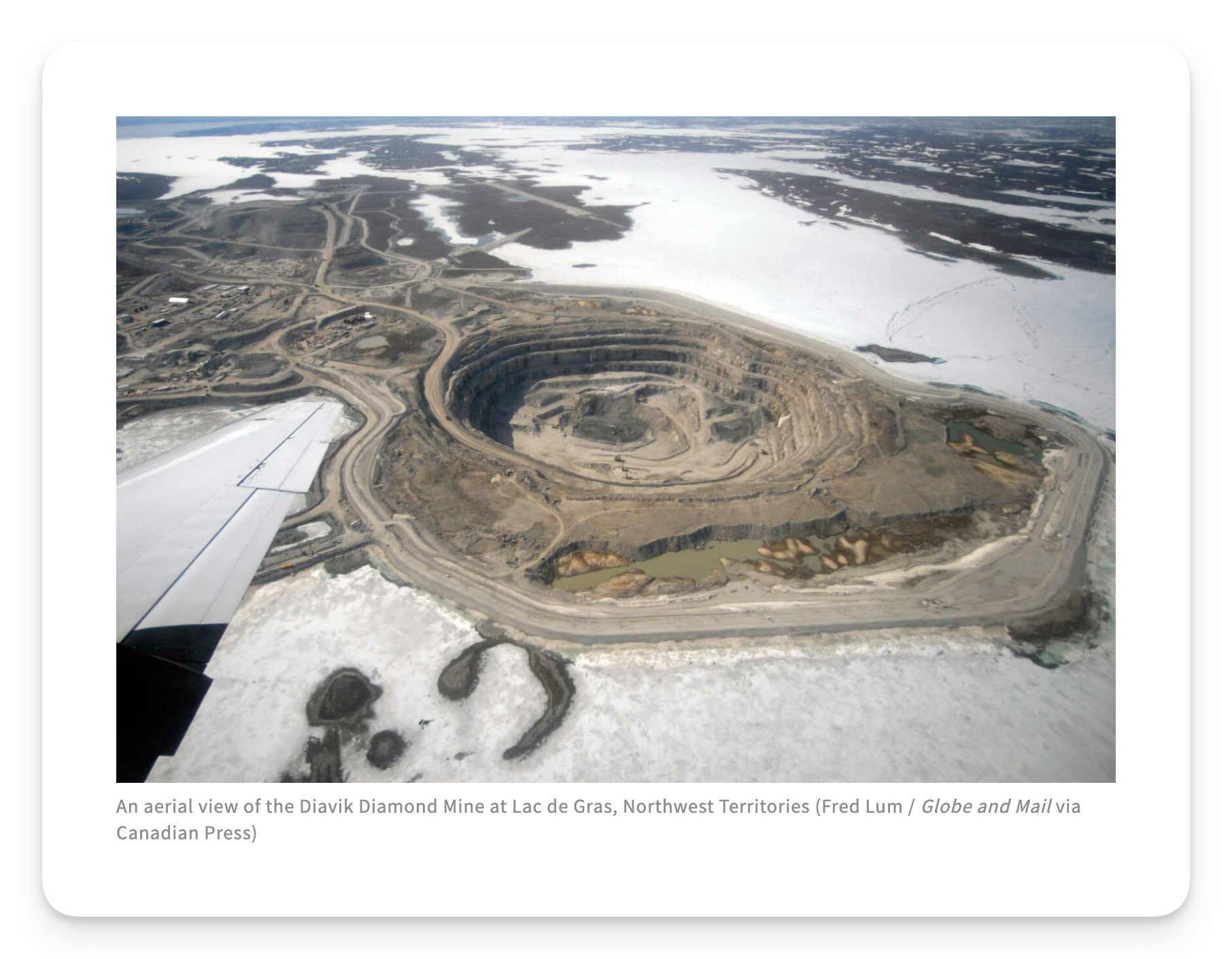
Descending into Diavik is like landing on a distant moon, the world sealed in a hard sheet of ice and snow stretching in every direction. The plane circled a few times and then slid into a landing pattern which brought it into contact with a rough strip that shook the outdated Canadian North Boeing 737, one of the few larger planes that can touch down on gravel.
The cold that ripped through the plane after the door was opened caused a wave of grumbling. The cabin speakers came on and the pilot welcomed us, casually noting that the temperature outside hovered around thirty below. This was why we had to fly with our boots and parkas in hand. I had seen men in fleece zip-ups and sneakers turned away at the boarding gate.
The second shock as you left the plane, after the freezing wind pulled your breath straight out of your chest, was catching sight of what looked like a 1970s Canadian school bus. It was our transport to the intake facility. Steamed-over windows, tattered green seats, and rubber floor mat: it was all exactly as I remembered from childhood. I was not a tall man, so having my knees bashing into the seatback ahead of me was a novelty, and I felt for the bigger gents whom I could hear complaining, and who must have been sitting sideways.
Meet the Fraudster Who Wants to Make California Its Own Country
Mitchell is the new CEO of Calexit, a California-based secessionist group that — as much as you can say of any fringe organization — is facing a genuine window of opportunity. This largely Democratic state has never been more at odds with the federal government in Washington. In June, Trump sent the country’s military into the state’s largest city to quell a local protest. Homeland Security Secretary Kristi Noem has promised her agency will “liberate” Los Angeles “from the socialists and the burdensome leadership.” Gov. Gavin Newsom and his attorney general Rob Bonta have filed a series of lawsuits challenging the Trump administration’s actions in an effort to punch back. Meanwhile, the state’s voters, well aware that they live in the largest economy in the country, and one of the largest in the world, are unhappily trapped in opposition to the electoral majority of the United States.
How the Domino’s Pizza Tracker Conquered the Business World
In 2009, Domino’s was in trouble. Sales were in decline. Its pizza tied for last in industry taste tests with Chuck E. Cheese. A YouTube video of a store employee putting cheese up their nose had gone viral.
J. Patrick Doyle was appointed CEO a year later to oversee a turnaround with a ballsy premise: publicly admitting that their pizza sucked and showing customers that they were improving their pies. “I used to joke that if it didn’t work, I would probably be the shortest-tenured CEO in the history of American business,” Doyle told Bloomberg.
Transparency became Domino’s modus operandi. They aired ads in which Doyle and others issued mea culpas for their crummy pizza and released a documentary about revamping their recipe. They shared footage of people visiting the farms that grew Domino’s tomatoes. They used real photos sourced from customers – even of pies mangled during delivery.
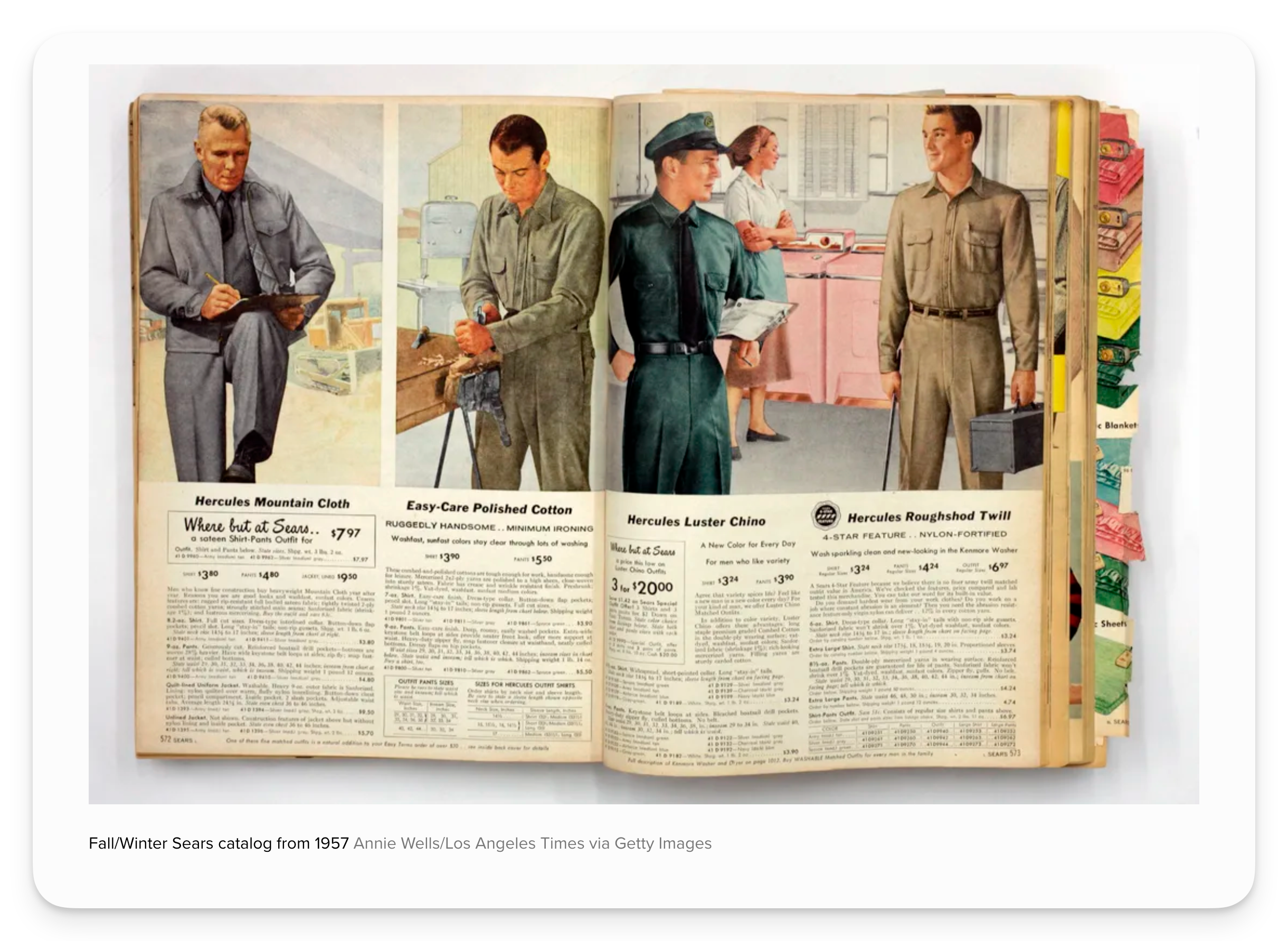
Before Folding 30 Years Ago, the Sears Catalog Sold Some Surprising Products
From heroin to houses, Sears had it all. But before the Chicago business became America’s largest retailer—and affixed its name to the world’s tallest building—Sears started by selling time.
In 1886, a 22-year-old station agent on the Minneapolis and St. Louis Railway purchased a shipment of unwanted gold watches from a local jeweler. Wristwatches had just hit the market, and since station agents needed to track train schedules, the young man thought he might hawk the watches to his fellow railway workers. The plan worked. Richard W. Sears turned a handsome profit, then moved to Minneapolis to establish the R.W. Sears Watch Company.
The following year, Sears moved to Chicago and partnered with Alvah C. Roebuck, a self-taught Hammond, Indiana, watchmaker he found through a Chicago Daily News classified ad. Roebuck soon asked Sears to buy him out, but not before lending his name to the company marquee: “Sears, Roebuck and Co.”
China’s New Mega Dam Triggers Fears of Water War in India
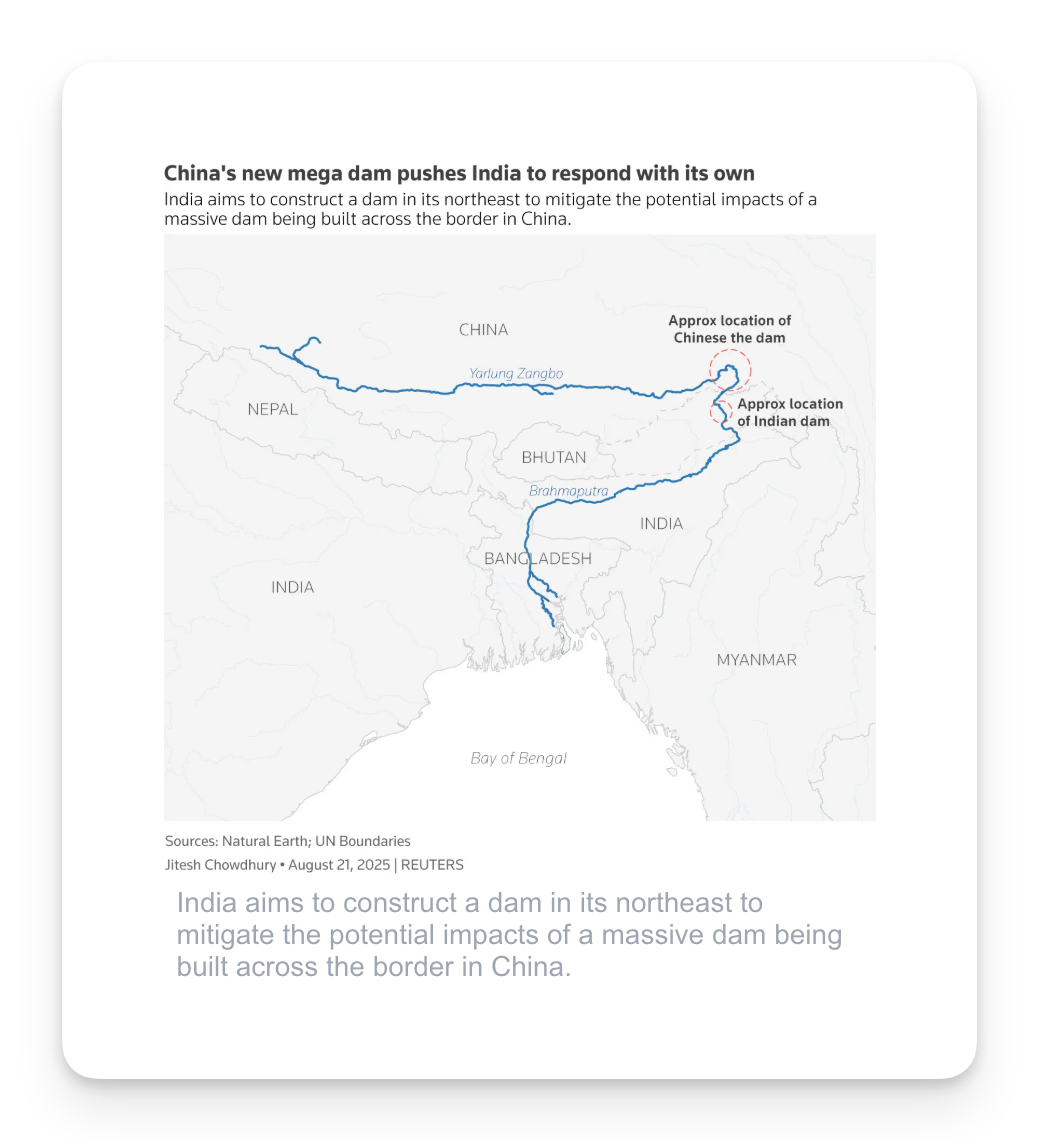
India fears a planned Chinese mega-dam in Tibet will reduce water flows on a major river by up to 85 per cent during the dry season, according to four sources familiar with the matter and a government analysis seen by Reuters, prompting Delhi to fast-track plans for its own dam to mitigate the effects.
The Indian government has been considering projects since the early 2000s to control the flow of water from Tibet’s Angsi Glacier, which sustains more than 100 million people downstream in China, India and Bangladesh.
But the plans have been hindered by fierce and occasionally violent resistance from residents of the border state of Arunachal Pradesh, who fear their villages will be submerged and way of life destroyed by any dam.
Then in December, China announced that it would build the world’s largest hydropower dam in a border county just before the Yarlung Zangbo river crosses into India.
IBM and NASA Develop a Digital Twin of the Sun to Predict Future Solar Storms
The Sun’s most complex mysteries could soon be solved thanks to artificial intelligence. On August 20, IBM and NASA announced the launch of Surya, a foundation model for the sun. Having been trained on large datasets of solar activity, this AI tool aims to deepen humanity’s understanding of solar weather and accurately predict solar flares—bursts of electromagnetic radiation emitted by our star that threaten both astronauts in orbit and communications infrastructure on Earth.
Surya was trained with nine years of data collected by NASA’s Solar Dynamics Observatory (SDO), an instrument that has orbited the sun since 2010, taking high-resolution images every 12 seconds. The SDO captures observations of the sun at various different electromagnetic wavelengths to estimate the temperature of the star’s layers. It also takes precise measurements of the sun’s magnetic field—essential data for understanding how energy moves through the star, and for predicting solar storms.