

A weekly collection of links to interesting things curated by Colin Wright.
Library of Time
After seeing the total solar eclipse of 8th April 2024 CE, I became interested in the fantastic ability of the math and astronomy used to calculate its time and location. I considered how such an event might have appeared to people in ancient times; they apparently found it as incredible as I did, because through my reading I was fascinated to hear that many ancient calendars were calibrated to modern calendars by the writings of eclipses by ancient peoples.
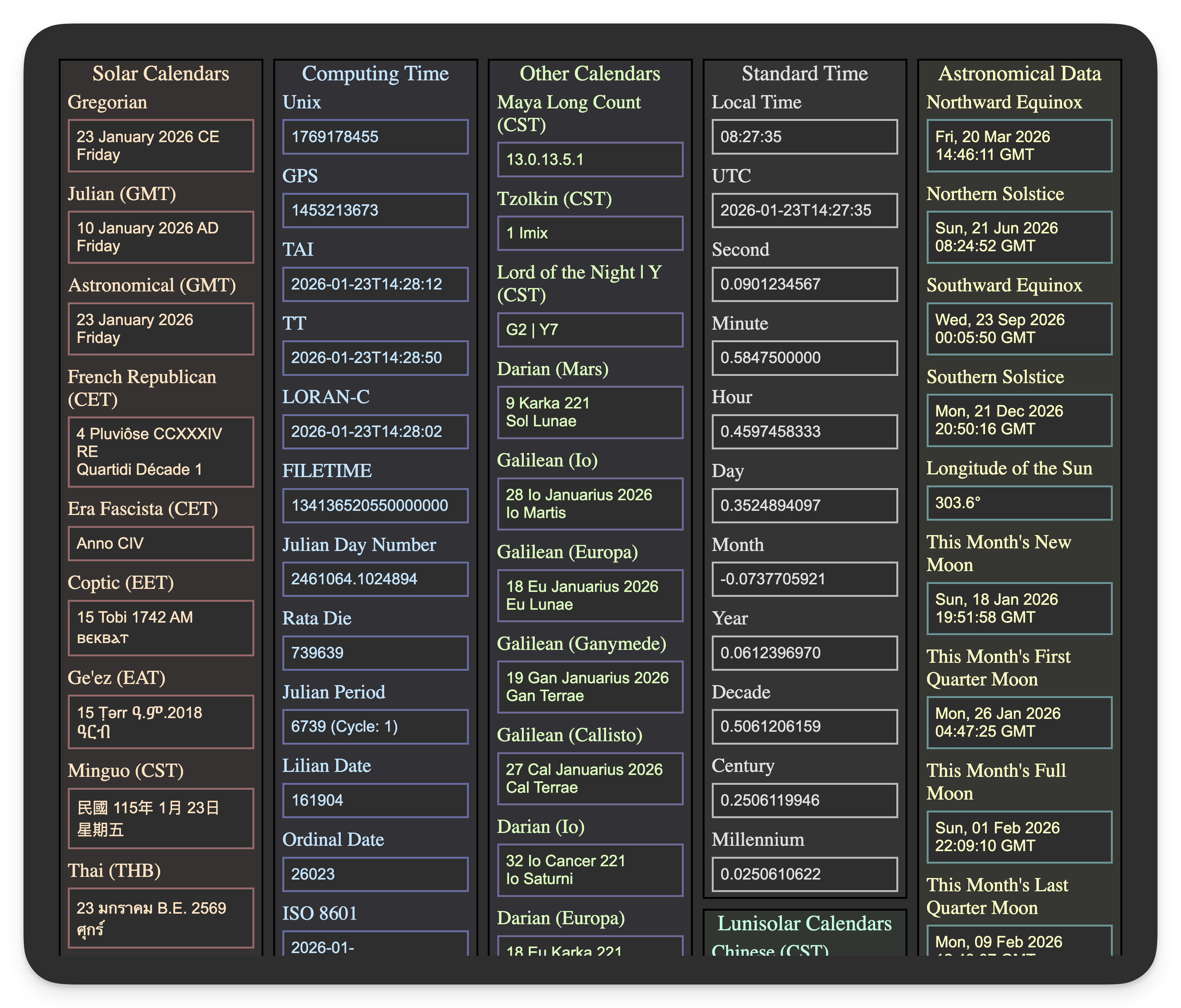
The mission of this website is to create a collection of every calendar with a verifiable date at a specific point in time, as well as other methods of timekeeping. It is to be a celebration of time as counted by humans from all walks of life, displaying all of the unique ways different people chose to satisfy one of humanity’s earliest and most universal curiosities.
The Gold Plating of American Water
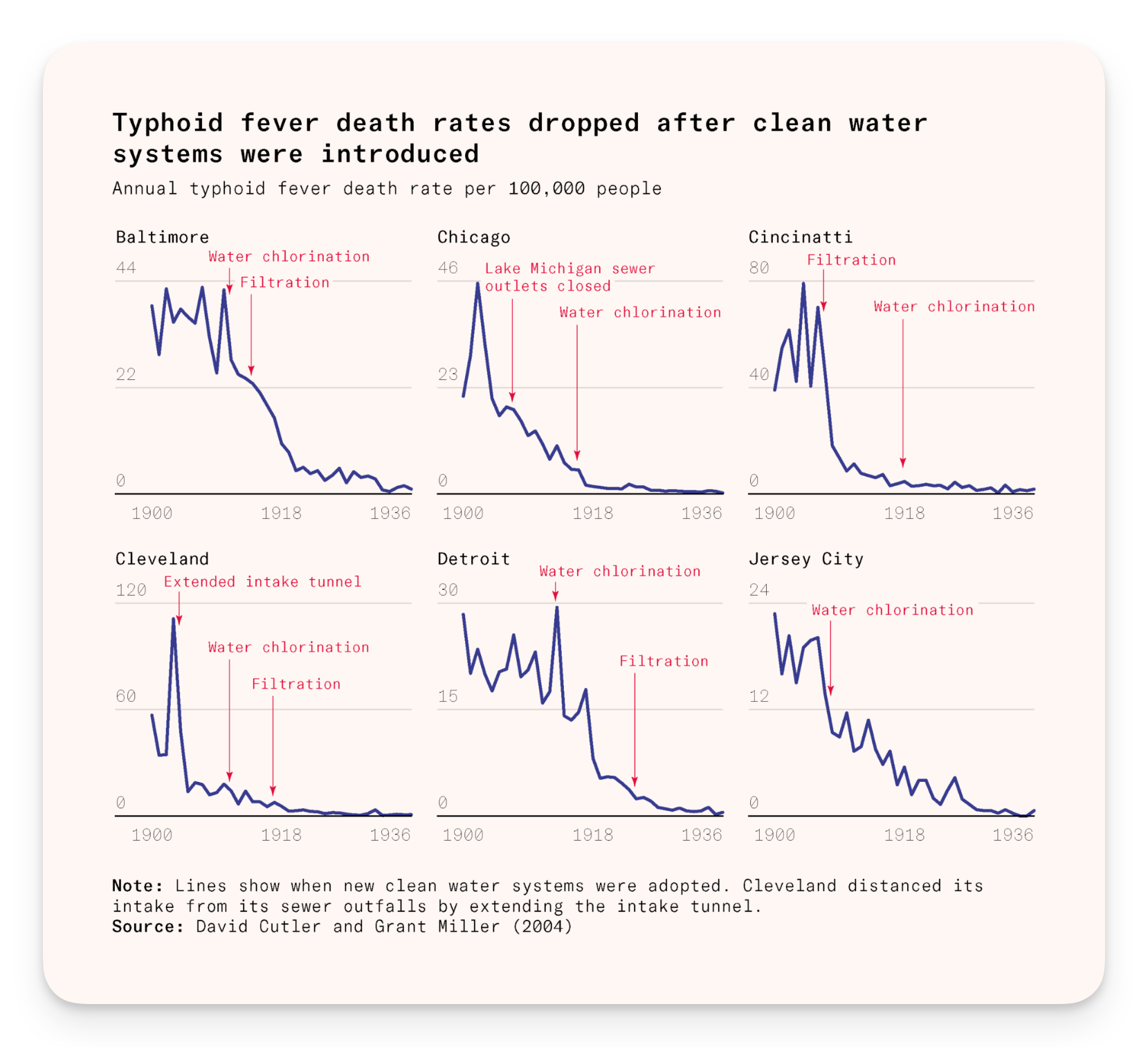
San Francisco has some of the strictest environmental rules on the planet. The city has legally committed itself to sending zero garbage to landfills by 2030 and to using 100 percent clean energy by 2040. It was among the first to ban plastic bags and new gas boilers. It has twice been named the number one city in America for clean energy.
Yet in 2019 the federal Environmental Protection Agency ordered the city to take action to limit its alleged contamination of the Pacific Ocean. In oral arguments before the US Supreme Court, the EPA’s lawyer condemned the city’s ‘decades-long failure’ to update its sanitation systems. This order came on top of an existing mandate requiring San Francisco to spend almost $11 billion, or $13,000 for every man, woman, and child in the city, updating its sewage systems.
Thoughts and Observations Regarding Apple Creator Studio
The problem isn’t with these icons in and of themselves. The problem is with the rules Apple has imposed for Liquid Glass app icons, along with their own style guidelines for how to comply with those rules. Given Apple’s own self-imposed constraints for how icons must look (with the mandatory squircle) and how Apple has decided its own app icons should look (a look which can best be described as crude), I actually think the icons in the Creator Studio are pretty good, relatively speaking. But that’s like saying one group of kids has pretty good haircuts, relatively speaking, at a summer camp where the rule is that the kids all cut each others’ hair using only fingernail clippers.
The best take on these icons is this zinger from Héliographe:
“If you put the Apple icons in reverse it looks like the portfolio of someone getting really really good at icon design.”

America Is Slow-Walking Into a Polymarket Disaster
For the past week, I’ve found myself playing the same 23-second CNN clip on repeat. I’ve watched it in bed, during my commute to work, at the office, midway through making carrot soup, and while brushing my teeth. In the video, Harry Enten, the network’s chief data analyst, stares into the camera and breathlessly tells his audience about the gambling odds that Donald Trump will buy any of Greenland. “The people who are putting their money where their mouth is—they are absolutely taking this seriously,” Enten says. He taps the giant touch screen behind him and pulls up a made-for-TV graphic: Based on how people were betting online at the time, there was a 36 percent chance that the president would annex Greenland. “Whoa, way up there!” Enten yells, slapping his hands together. “My goodness gracious!” The ticker at the bottom of the screen speeds through other odds: Will Gavin Newsom win the next presidential election? 19 percent chance. Will Viktor Orbán be out as the leader of Hungary before the end of the year? 48 percent chance.
These odds were pulled from Kalshi, which hilariously claims not to be a gambling platform: It’s a “prediction market.” People go to sites such as Kalshi and Polymarket—another big prediction market—in order to put money down on a given news event. Nobody would bet on something that they didn’t believe would happen, the thinking goes, and so the markets are meant to forecast the likelihood of a given outcome.
As Trump Talks Tariffs, His Argentine Ally Welcomes a First Shipload of Chinese EVs
The vast field of over 5,800 electric and hybrid vehicles gleamed on the cargo deck of the BYD Changzhou, an Chinese container vessel unloading Wednesday at a river port in eastern Argentina.
In other places, such a scene would not be noteworthy. Chinese automaker BYD has sped up its exports and undercut rivals the world over, alarming Washington, upsetting Western and Japanese auto giants and unnerving local industries across Southeast Asia, Africa and Latin America.
But the sight of so many new Chinese EVs gliding onto a muddy river bank in Buenos Aires province was unprecedented for Argentina, its crisis-stricken economy dominated for years by a left-wing populist movement that protected local industry with stiff tariffs and import restrictions.
Mark Carney’s Speech on Middle Powers Navigating a Rapidly Changing World
It seems that every day we’re reminded that we live in an era of great power rivalry. That the rules-based order is fading. That the strong can do what they can, and the weak must suffer what they must.
This aphorism of Thucydides is presented as inevitable — as the natural logic of international relations reasserting itself. And faced with this logic, there is a strong tendency for countries to go along to get along. To accommodate. To avoid trouble. To hope that compliance will buy safety.
It won’t.
So, what are our options?