A weekly collection of links to interesting things curated by Colin Wright.
Ancient Clues to Psychoactive Plants in Scripture
Human civilization is impossible without plants. Not only are plants vital for food, shelter, and warmth, but their influence in trade, medicine, and spiritual practice predates the advent of society. Indeed, the need to control plants is what led to one of the greatest human inventions of all time—agriculture. Plants and civilization are so intimately connected that some scholars believe that the seeds of modern religion come from prehistoric relationships with psychoactive and medicinal plants. Indeed, every major spiritual text reserves some special plants for divine purposes, including the Holy Bible.
What Technology Takes From Us – and How to Take It Back
Silicon Valley is full of tyrants of the quantifiable. For decades, its oligarchs have preached that our criteria for what we do and how we do it should be convenience, efficiency, productivity, profitability. They have told us that to go out into the world, to interact with others, is perilous, unpleasant, inefficient, a waste of time, and that time is something we should hoard rather than spend.
The Post-Scale Media Model Is Taking Shape in Gaming Journalism
Over the past several years, gaming media has seen a contraction. Polygon cut roughly 25 staff following its acquisition by Valnet in 2025. USgamer was shuttered after a decision from ReedPop, and layoffs rippled across the former Gamer Network following its acquisition by IGN Entertainment. Some consolidation is inevitable after mergers, but the cuts point to a deeper issue: large, traffic-dependent gaming news operations can’t seem to justify their size.
Industry observers justified the cuts saying that gamers increasingly receive news directly from developers and publishers, and audiences have shifted toward video and livestreaming platforms, where advertising dollars are flowing rapidly. Sponsored stream viewership on YouTube Gaming reached 10.8 million hours watched in 2025, up 71% year over year, according to Stream Hatchet’s Live Streaming Trends Report.
But even as scaled ad-based gaming journalism is retrenching, smaller journalist-owned outlets are launching and finding traction.
How an Australian Farmer Is Planning to Get US Consumers Hooked on Camel Milk
Caroline’s sultry and soulful eyes are hooded and heavy-lashed.
“She’s straight out of central,” Paul Martin whispers, gazing at his star performer with admiration.
Martin is not speaking of central casting – the camel farmer is referring to the Central Desert region of Australia, where at least half a million of Caroline’s kin roam wild.
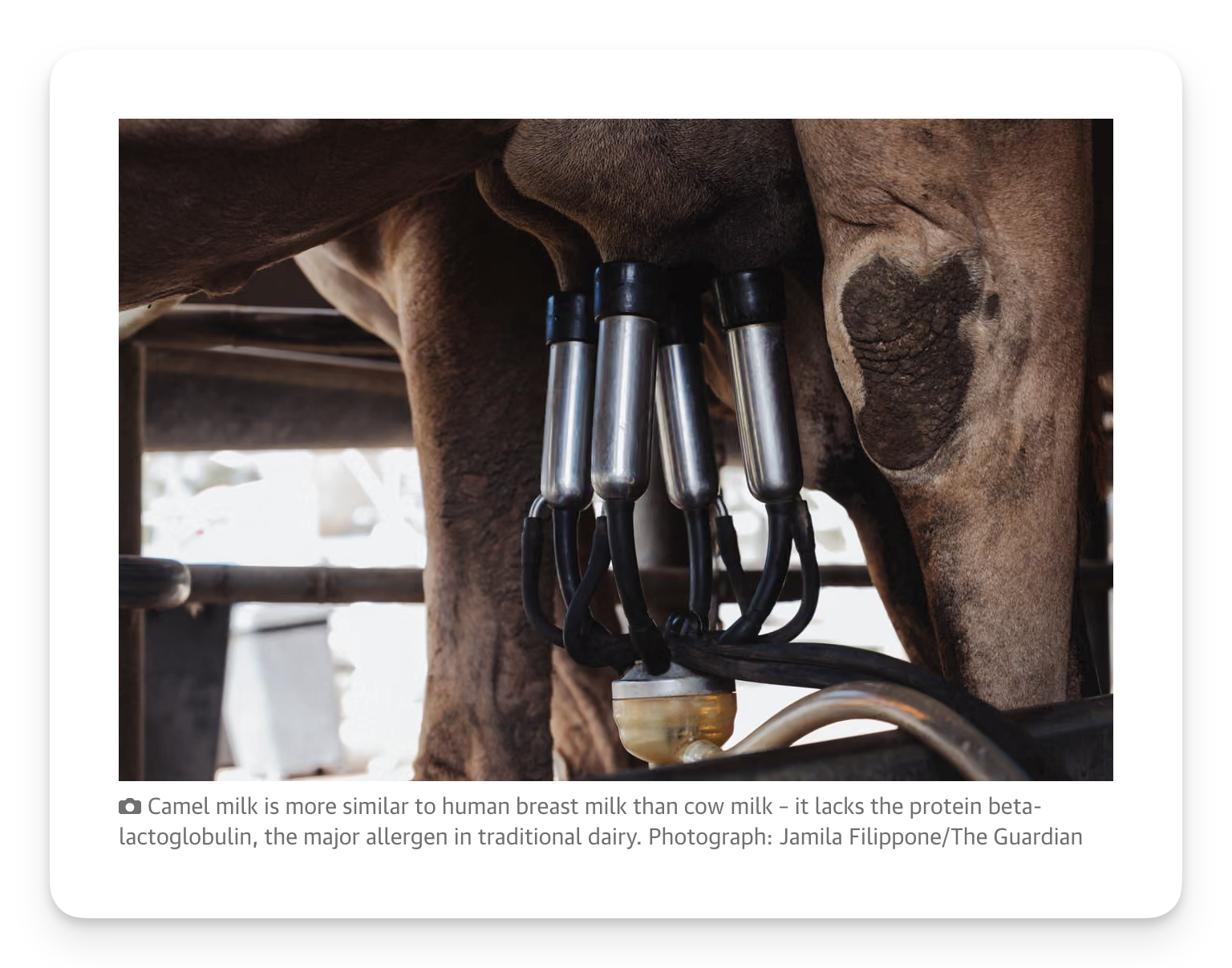
Now far from feral, Caroline quietly chews cud as suction cups on her teats gurgle away, hoses connected to 8-litre glass bottles filling up with pure white milk.
Behind Caroline is Mildred, the second in a line of 10 in this open-air dairy shed, an hour’s drive from the metropolis of Brisbane and thousands of kilometres from Australia’s arid heart. Instead of red dunes and vast spinifex plains, these camels are surrounded by lush pasture and a horizon of jagged and wooded peaks.
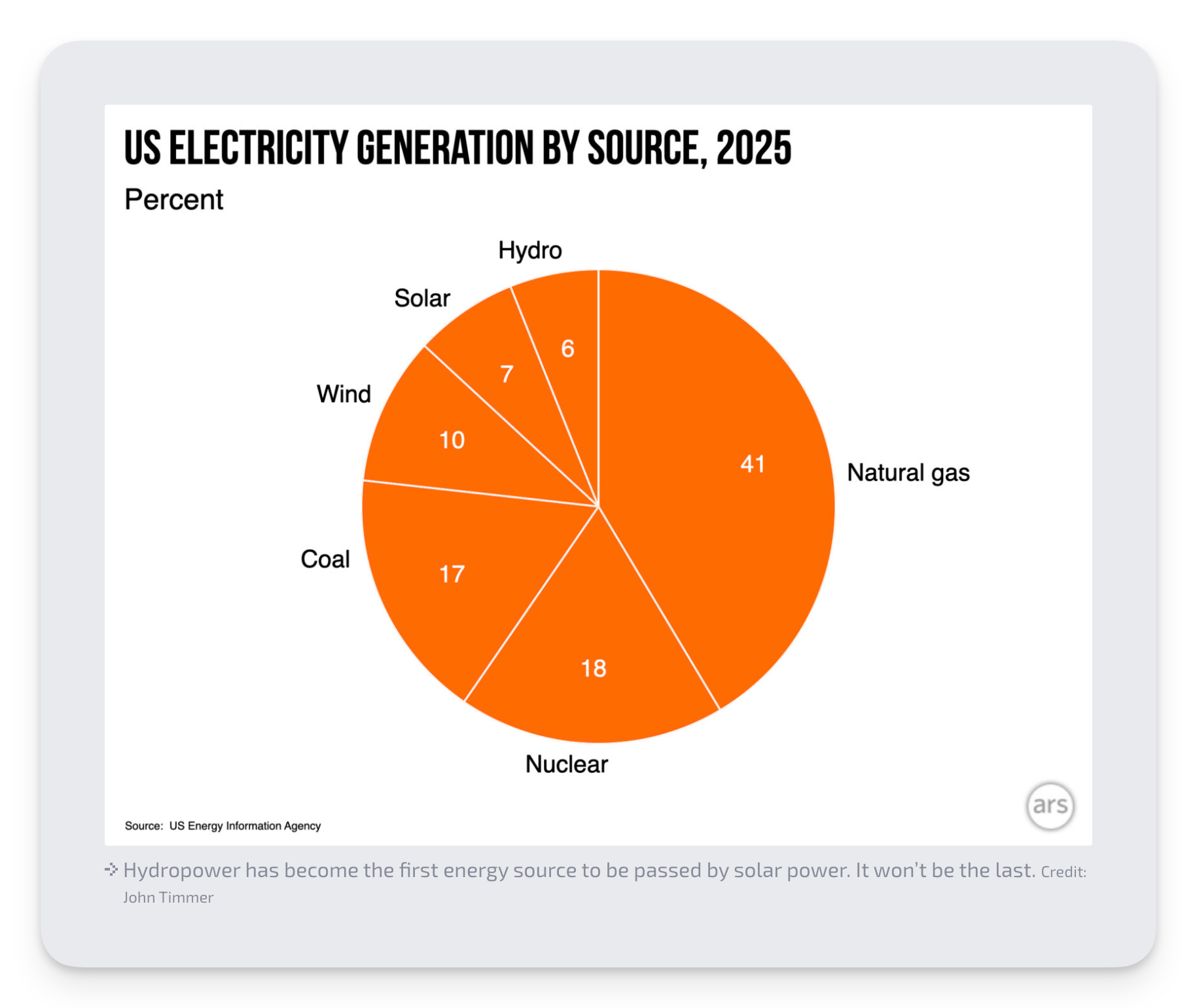
Following 35% Growth, Solar Has Passed Hydro on US Grid
Overall, electrical consumption in the US rose by 2.8 percent, or about 121 terawatt-hours. Consumption had been largely flat for several decades, with efficiency and the decline of industry offsetting the effects of population and economic growth. There were plenty of year-to-year changes, however, driven by factors ranging from heating and cooling demand to a global pandemic. Given that history, the growth in demand in 2025 is a bit concerning, but it’s not yet a clear signal that the factors that will inevitably drive growth have kicked in.
(These factors include things like the switch to heat pumps, the electrification of transportation, and the growth in data centers. While the first two of those involve a more efficient use of energy overall, they involve electricity replacing direct use of fossil fuels, and so will increase demand on the grid.)
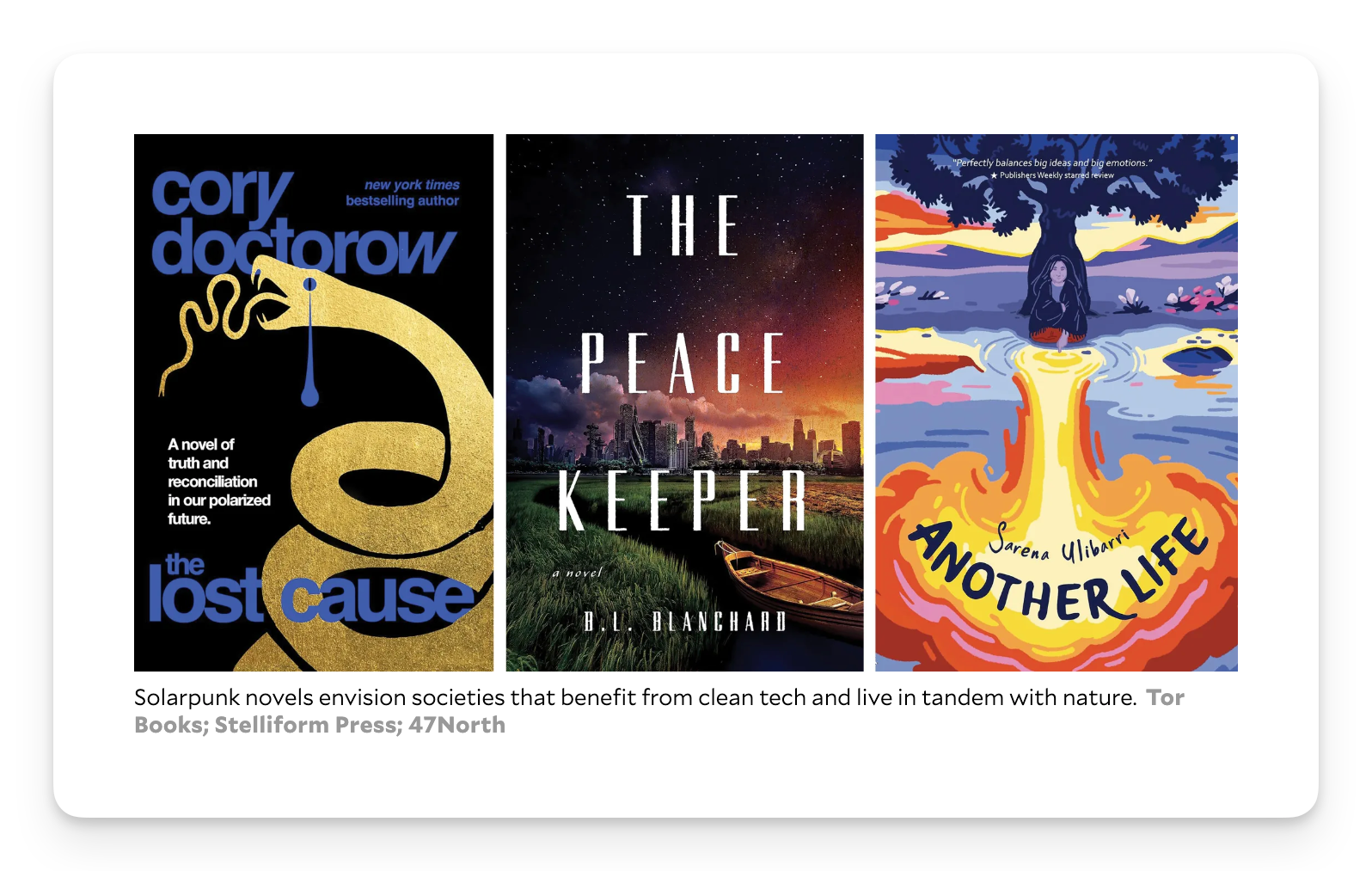
Tired of Dystopian Sci-Fi? You Might Like Solarpunk.
I was doomscrolling again. It was a fall evening in 2023, and I found myself sucked into a stream of posts about our collapsing climate: droughts causing billions in Dust Bowl–style crop damage, Florida’s worst-ever coral bleaching, a record melt in Greenland.
To distract myself, I picked up The Lost Cause, the latest sci-fi novel from author Cory Doctorow, a friend and fellow nerd. To my deep surprise, it stirred something unexpected: a feeling of hope.
At first glance, the novel’s backdrop is an absolute bummer. It takes place in America several decades from now, when rising seas have destroyed entire coastal towns and millions of climate refugees wander around homeless. Small farmers work as sharecroppers for Big Agriculture. The West is choked with forest fires so ferocious that Californians take hits from oxygen cans.