A weekly collection of links to interesting things curated by Colin Wright.
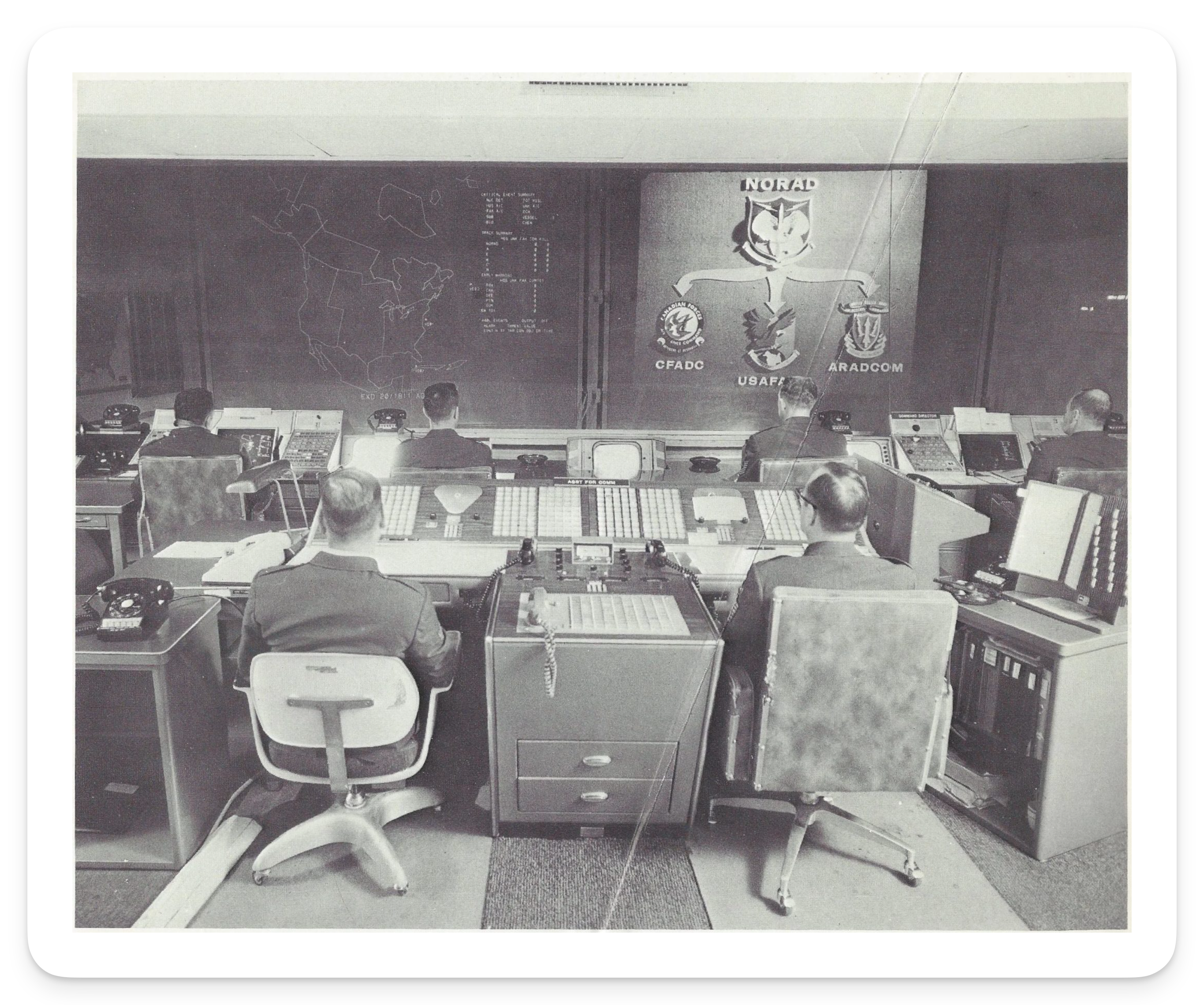
Inside NORAD’s Cheyenne Mountain Combat Center, c.1966
In 1966, the North American Air Defense Command (NORAD) Cheyenne Mountain underground facility became America’s command and control centre for when the Cold War turned white and the nuclear apocalypse became real.
We can take a look around the bunker in pictures published in a 1966 official NORAD report by David W. Shircliffe, Directorate of Command History, Command Public Affairs Office, and the 1970s book NORAD Command Post: The City Inside Cheyenne Mountain by Henry W. Hough.
How Ancient Knowledge Is Making Modern Science Sit Up and Pay Attention
Tanya Charles says her ancestors’ history may not be written down in books, but it is written into the land.
“My nan used to say scientists will never catch up to us, we’re too old,” she says, as rain falls on the dry lake bed known as Lake Mungo.
In 1968 when Mungo Lady and Mungo Man were found in the lunette dunes nearby, they rewrote the history books.
Up until then, scientists believed Aboriginal people had been living on the Australian continent for 20,000 years. But Lake Mungo reshaped the timeline.
Ms Charles believes Mungo Lady revealed herself to tell the world about Aboriginal peoples’ continuous connection to country, stretching back to a time when giant animals roamed the Earth and when the land looked very different from today.
“To me it started here with Lady Mungo coming to life and putting her hand up and saying, ‘Hey, I’ve been here longer than you and survived all of them different climates’ — megafauna, ice age, big droughts, just surviving along with the animals and the plants, looking after Mother Earth,” she says.
Rap Falls Off the Billboard Top 40 for the First Time in 35 Years
Rap has officially dipped out of the top 40 songs on the Billboard charts for the first time in 35 years.
Billboard reported today that there are currently no rap songs in the top 40 of the Billboard Hot 100. The genre has been producing chart toppers at this level for three decades.
On October 25, Kendrick Lamar and SZA’s song “luther” fell off the Hot 100. At its peak, it spent 13 weeks at number 1. The other highest-ranking rap song on that date was “Shot Callin’” by YoungBoy Never Broke Again, at number 44. The Youngboy single has not broken the top 40 this week, either, meaning rap is still absent from that ranking.
The last time there were no rap songs in the “Hot 100’s” top 40 was on February 2, 1990. Biz Markie’s single “Just a Friend, was climbing the charts at number 41 that week, landed at 29 by the next week, and eventually peaked in the top 10. From that moment on, rap music stayed in the top 40.
The shock of the news immediately made music listeners question the state of rap and whether it has lost its mainstream dominance. Hip-hop’s market share has been declining since it hit a peak in 2020 at almost 30 percent. In 2025, the market share stands at 24 percent.
Airlines Are Running Out Of Flight Numbers, And They Don’t Know What To Do About It
Airlines use up to four digits for flight numbers. That means they can have up to 9,999 flights (since there’s no flight zero), and no one comes close. American Airlines operates around 6,700 daily flights including its American Eagle regional services. So they should have plenty of room to grow!
Except they don’t. American Airlines, Delta, and United are running out of flight numbers, and nobody knows what to do about it.
In fact, this topic came up at an American Airlines employee meeting last week. After the airline’s second quarter earnings call, top executives talk to employees and take questions. A worker in IT raised it: “We’re running out of flight numbers. Are we looking at 5-digit or some other solution?”
Heaven or High Water
“Sunny day flooding” is flooding where water comes right up from the ground, hence the name, and yes, it can certainly rain during sunny day flooding, and yes, that makes it worse. Sunny day flooding happens in many parts of Miami, but it is especially bad in Sunset Harbour, the low-lying area on Miami Beach’s west side.
The sea level in Miami has risen ten inches since 1900; in the 2000 years prior, it did not really change. The consensus among informed observers is that the sea will rise in Miami Beach somewhere between 13 and 34 inches by 2050. By 2100, it is extremely likely to be closer to six feet, which means, unless you own a yacht and a helicopter, sayonara. Sunset Harbour is expected to fare slightly worse, and to do so more quickly.
Thus, I felt the Sunset Harbour area was a good place to start pretending to buy a home here. Amazingly, in the face of these incontrovertible facts about the climate the business of luxury real estate is chugging along just fine, and I wanted to see the cognitive dissonance up close.
Let the Mind-Control Games Begin!
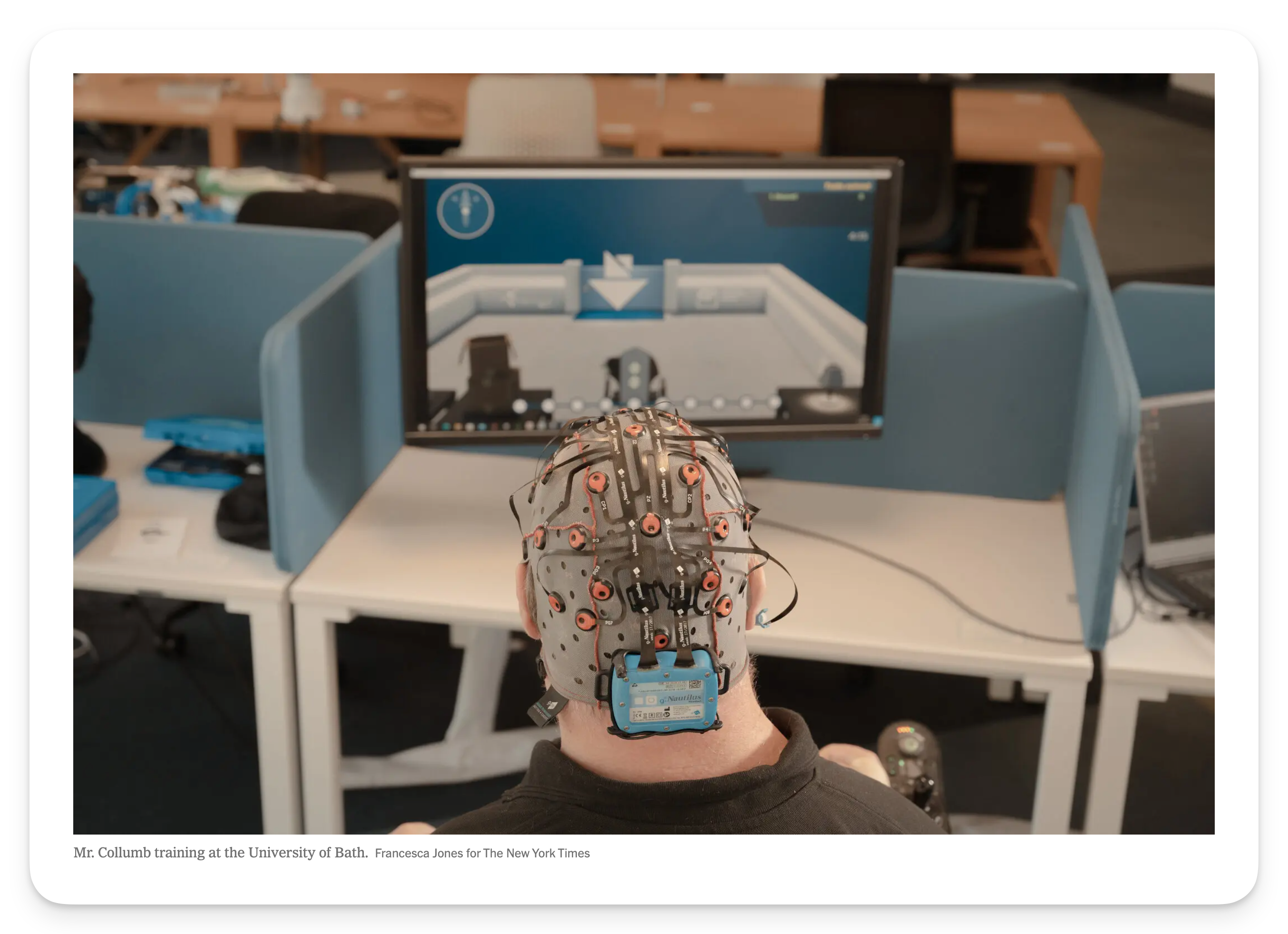
In the summer of 2024, Mr. Collumb and Ms. Filipiek flew to Bath, England, to train for the Cybathlon, an international competition run every four years to encourage the development of assistive technologies. The competition, hosted in Switzerland by the university ETH Zurich, consists of eight races for teams and their pilots (which is what the primary competitors, with varying disabilities, are called), each targeting different innovations, such as arm prostheses, leg prostheses and vision assistance.
Each race consists of remote tasks that are supposed to simulate everyday life for the pilots: walking across a room, picking up a grocery bag, throwing a ball. One of Cybathlon’s founders, Roland Sigrist, compared it to Formula 1. Teams are encouraged to develop prototypes toward the ultimate goal of “the independence of people with disabilities,” but the competition is straightforward and real, with all its accompaniments: nerves, heartbreak, glory. The pilots are the ones that put themselves on the line. “They’re the masters of the technology, and not the other way around,” Mr. Sigrist said.
Mr. Collumb, who is now 54, has participated in the Cybathlon since its first iteration, in 2016, as a pilot in the competition’s most abstract category: brain-computer interfaces. Imagine staring at a cursor at the center of your computer and willing it to move to the right. A brain-computer interface, which allows humans to control computers with just their minds, can turn that willing into action. As someone who lacks almost all ability to move his body, a brain-computer interface could allow Mr. Collumb to play video games, use the internet and direct his wheelchair himself.