A weekly collection of links to interesting things curated by Colin Wright.
The Hidden Bias in Language That Turned Left-Handedness Into a Bad Thing
Historically speaking, humanity has not been kind to those who are considered different, especially when those differences can be easily seen. While certainly not as discriminated against as other populations, left-handed people have been shunned and forced to change their nature in many different cultures.
While handedness has now become one of the least-vilified human features, historical prejudice against the left side and the left hand has remained in many languages, both through individual words and phrases. Since language has been proven to have an impact on how we perceive the world, it is significant that this bias is so deeply ingrained in our languages.
How Almost Everything We Thought We Knew About the Maya Is Wrong
As a seven-year-old, Francisco Estrada-Belli was afraid all of history would have been discovered by the time he was old enough to contribute. The year was 1970 and he and his parents had come from Rome to visit relatives in the Central American country of Guatemala. On the trip, they visited the ancient Maya ruins at Tikal. “I was completely mesmerised,” Estrada-Belli told me recently. “It was jungle everywhere, there were animals, and then these enormous, majestic temples. I asked questions but felt the answers were not good enough. I decided there and then that I wanted to be answering them.”
Fifty-five years later, Estrada-Belli is now one of the archaeologists helping to rewrite the history of the Maya peoples who built Tikal. Thanks to technological advances, we are entering a new age of discovery in the field of ancient history. Improved DNA analysis, advances in plant and climate science, soil and isotope chemistry, linguistics and other techniques such as a laser mapping technology called Lidar, are overturning long-held beliefs. Nowhere is this more true than when it comes to Maya archaeology.
Can DIY Clothes Unravel Fast Fashion’s Climate Disasters?
Stark is one of many creators on TikTok and Instagram who are posting content about making their own clothes as an alternative to fast fashion and hyper-consumerism. The fashion industry is harmful for so many reasons. For one, social-justice activists have consistently called out the fashion industry for its lack of diversity—in particular its exclusion of fat bodies, Black and brown bodies, and disabled bodies. For another, fast fashion is responsible for 8 to 10 percent of global carbon emissions and nearly 20 percent of wastewater, using up more energy than aviation and shipping combined, at a time when scientists are warning of an upcoming fatal climate catastrophe.
And then there’s the issue of the industry’s reliance on exploitative labor, which allows it to cater to the ever-changing social-media trends that change almost every week. According to the United Nations Environment Programme, fast fashion and the fickleness of online trends have increased the number of clothes consumers buy and decreased the number of times these garments are worn. On average, consumers are buying 60 percent more clothes than they did in 2000, and wearing them half as often.
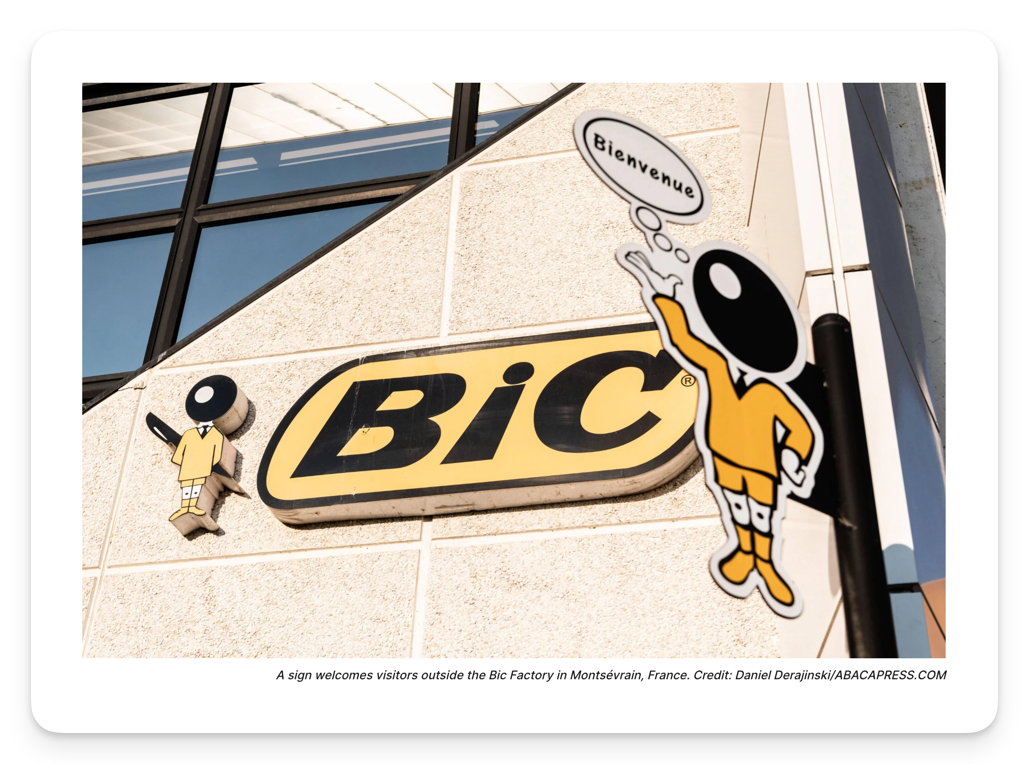
The Pen That Became a Symbol of France
Four men dressed in skin-tight hooded jumpsuits – one black, one blue, one green and one red – are waiting, some sitting down, others doing handstands, in what looks like a space-age white pod. No-one says anything; the atmosphere is tense. Suddenly, an alarm sounds and the black-clad and the blue-clad men rush forwards, aiming for a small aperture in the far wall of the pod. What is going on? Who are these men and what are they competing for? The answer lies in the last sequence, where the scene shifts to a classroom: a young girl sits at her desk holding a four-colour ballpoint pen and pushing down the pen’s blue and black buttons at the same time.
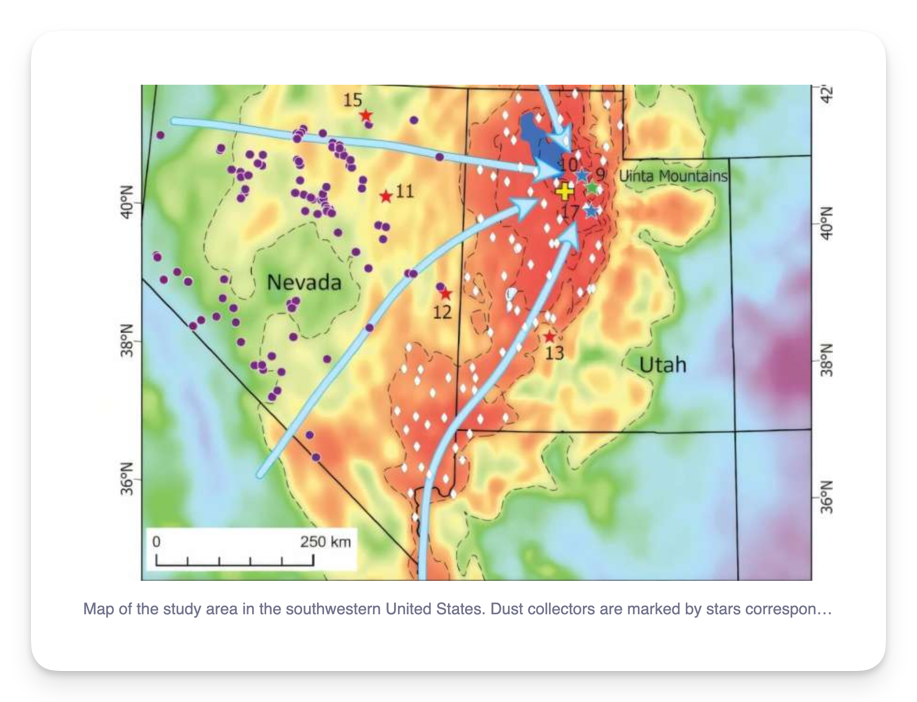
How Cities Alter Natural Airborne Particles
Airborne dust pollution is a growing problem for residents of Utah and other Western states, especially with the exposed lakebed of Great Salt Lake potentially becoming more hazardous as the lake dries. Natural dust blows from the Great Basin and settles along the western edge of the Wasatch Front, Utah’s major population center, and the surrounding mountains.
While airborne, the dust mixes with local human-made materials, potentially contaminating the nearby watershed and resulting in other negative consequences, according to new research from the University of Utah that investigates the influence of urban environments on transient dust.
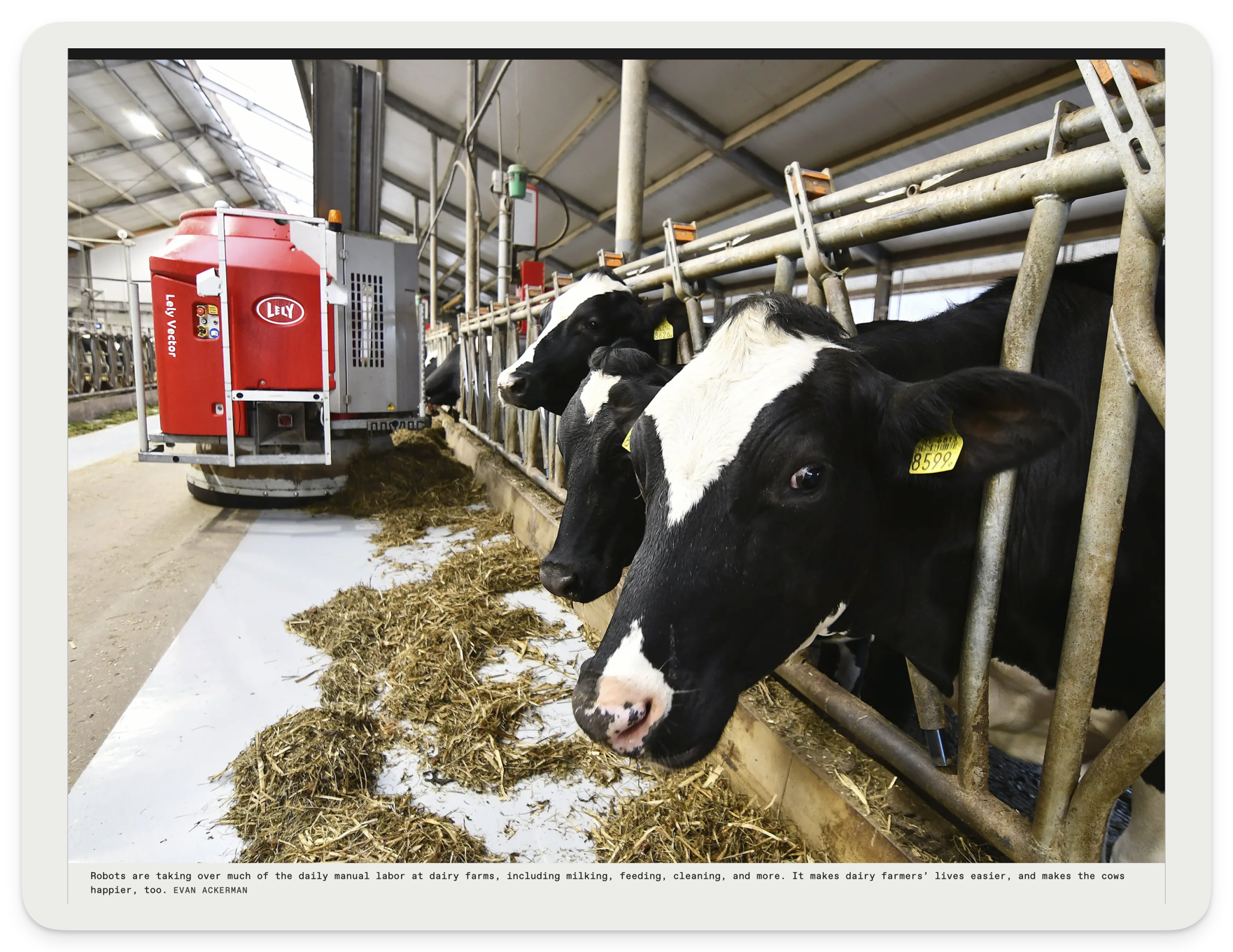
How Dairy Robots Are Changing Work for Cows (and Farmers)
This dairy barn is full of cows, as you might expect. Cows are being milked, cows are being fed, cows are being cleaned up after, and a few very happy cows are even getting vigorously scratched behind the ears. “I wonder where the farmer is,” remarks my guide, Jan Jacobs. Jacobs doesn’t seem especially worried, though—the several hundred cows in this barn are being well cared for by a small fleet of fully autonomous robots, and the farmer might not be back for hours. The robots will let him know if anything goes wrong.