A weekly collection of links to interesting things curated by Colin Wright.
What’s In a Domain Name?
“Twitch.tv. Discord.gg. Github.io. Three memorable addresses for three major websites that all have something in common: Their iconic URLs come from small island nations and territories.
The three platforms use the domain suffixes — short codes at the end of URLs — theoretically reserved for sites from Tuvalu, Guernsey, and the British Indian Ocean Territory. But the country codes also carry other meanings: TV has long stood for television, gamers use “gg” as an abbreviation for “good game,” and I/O is a common technical term. And so, these small island states are among a significant number who are selling off their memorable web addresses.”
Orange Is the New Yolk
“An egg yolk is precious; a hundred are terrifying. In an Instagram reel from last year, a pair of disembodied hands tips a large metal bowl full of neon-orange yolks into a well of flour, an act whose ostensible purpose is to make fresh pasta but whose effect is to freak me out. The wet yolks cluster densely as if just emancipated from a sac, the sort of potential life form that portends doom in a sci-fi movie: When all of these hatch, we’re fucked. Without this shock of near-unnatural color — which ranges from clementine to cadmium — the video would lose its effect; the yolks are so dark and so plentiful you worry they might fight back. But with the whisk of a fork, their borders disappear, and they become a thick, placid pool of goo. The video ends before they get the chance to become dough.
In recent years, these shockingly orange yolks have infiltrated America’s supermarket shelves, boasting virtue and vitamins. At your local upscale grocer you might find a robin’s-egg blue carton of “heritage free range” eggs from the Happy Egg Co., six of them blue and six of them brown. The label is a dusty cobalt, interrupted by a bright orange circle: a yolk, naked and flashing you from its cracked-open shell, no white in sight.”
Making Architecture Easy
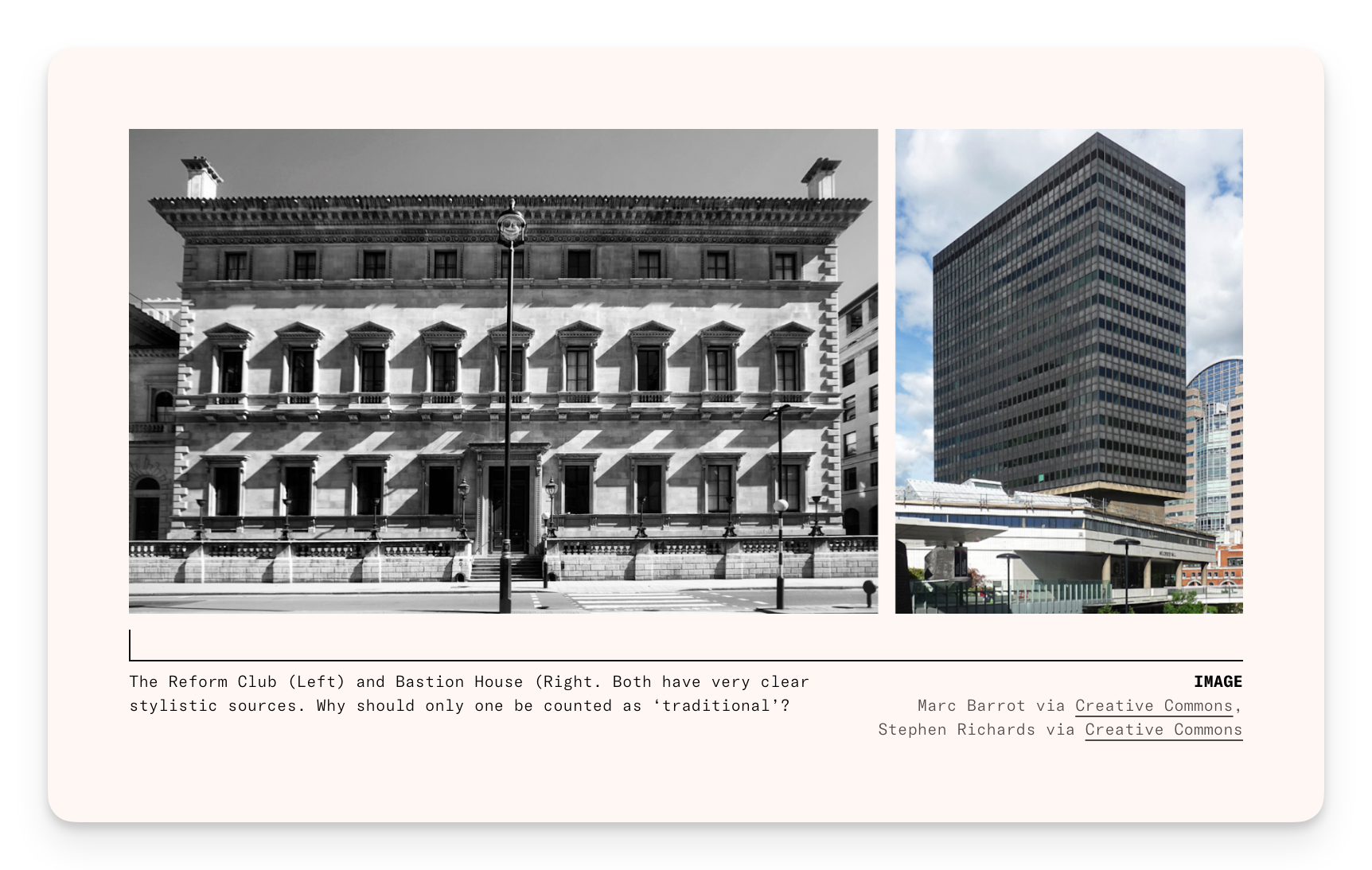
“Since at least the nineteenth century, debate has intermittently flared up around the question of what styles of architecture we should build. In recent decades the two sides have often been characterised as ‘traditionalists’ and ‘modernists’, supporting the use of traditional and modernist architectural styles respectively.
To some people, this framing feels strange. These people have the impression that we used to make fewer ugly buildings and dysfunctional places. They don’t accept the idea that technological modernity somehow morally requires us to build in an austere ‘modernist’ style. But they also find it bizarre to be dogmatically in favour of the use of old architectural styles rather than new ones. People in this group feel that the debate has gone wrong somewhere. They are ideologically homeless: they are obviously not ‘modernists’, but they are also uneasy with the ‘traditionalist’ label. I count myself in this category, and I think quite a few other people fall into it too.”
Lead Poisoning Could Be Killing More People Than HIV, Malaria, and Car Accidents Combined
“Everyone knows lead is bad for you. We’ve known this for a very long time: In the first century BCE, the Roman architect Vitruvius warned against using lead in pipes, observing the “pallid color” of plumbers forced to work with it. We know leaded gasoline leads to premature death in the elderly, that high lead exposure can substantially reduce IQ, and that there is likely a relationship between lead exposure in children and high rates of crime later on.”
Howdy 7Up!
“The soft drink that would be known as 7Up was created in 1929 by Charles Leiper Grigg in St.Louis as part of his “Howdy” line of sodas and was originally called “Bib-Label Lithiated (it contained the mood stabilizer lithium citrate until 1950) Lemon-Lime Soda”. It was almost immediately re-labeled “7 (7 natural flavors) Up Lithiated Lemon-Lime”, and then finally just “7Up”.”

Researchers Sequence Genomes of Rare Parrot To Help It Thrive
“Kākāpō (its name means “night parrot” in Māori) are large flightless parrots endemic to New Zealand. In 1894, conservationist Richard Henry relocated mainland birds to a supposedly safe island, but they were met by unsuspected predators. More kākāpō were found on the mainland and some surrounding islands in the 1970s. Though the mainland birds were later moved to those islands, only one survived. He was appropriately named Richard Henry.
The peculiar parrots now roam five islands free of predators, and their population has risen from a precarious 51 in 1995 to 252 in 2022. Still, the limited genetic diversity of such a small population has made breeding problematic. Breeding programs have found that most kākāpō are severely inbred and susceptible to disease and infertility. In an unprecedented move to conserve the species, researchers from the University of Otago have now sequenced the genome of nearly all existing birds in an effort to find out whether there are genetic variants in the population that could help keep the kākāpō from vanishing.”
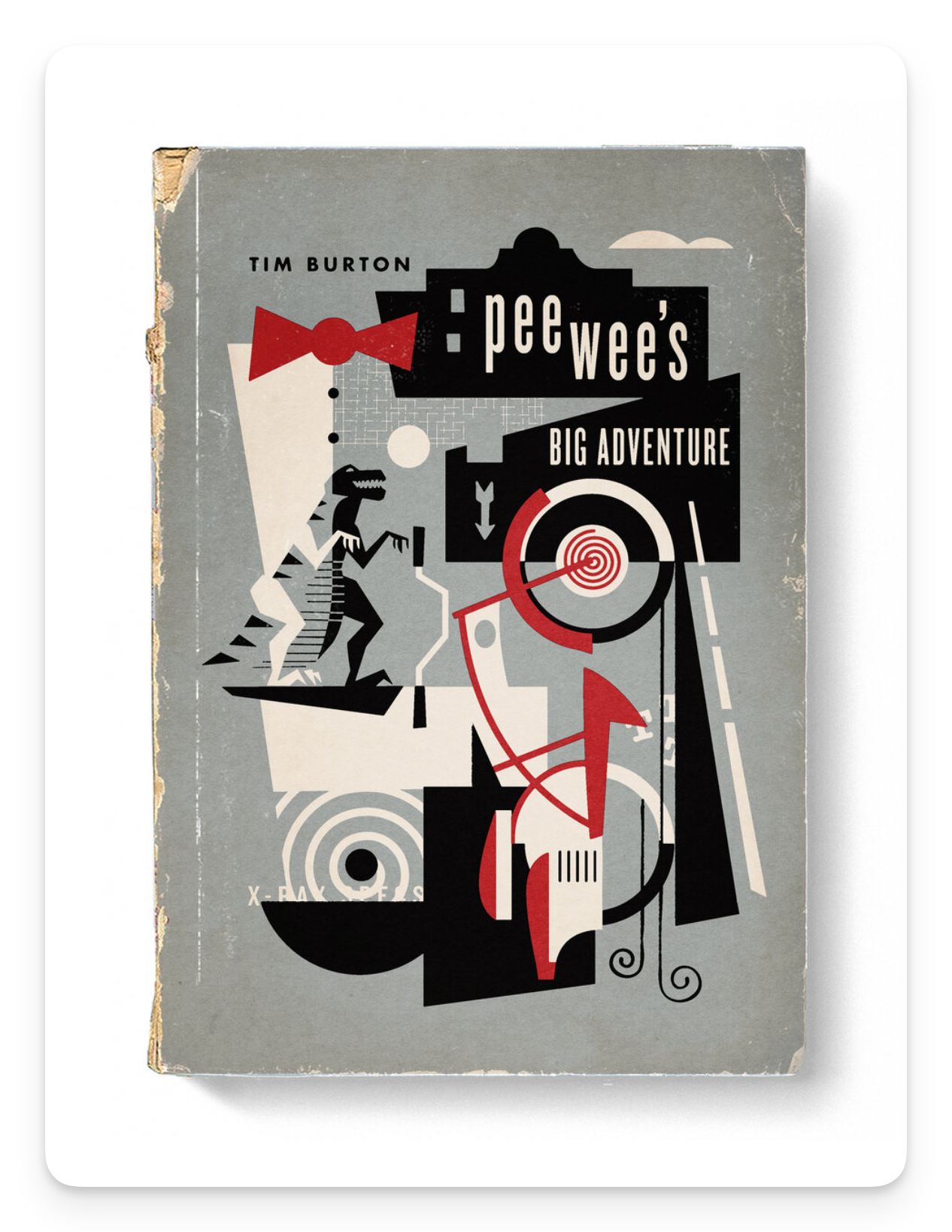
Good Movies As Old Books
“An ongoing personal project, I envision some of my favorite films as vintage books. Not a best of list, just movies I love.”