

A weekly collection of links to interesting things curated by Colin Wright.
Yoshie Shiratori’s Remarkable Prison Escapes
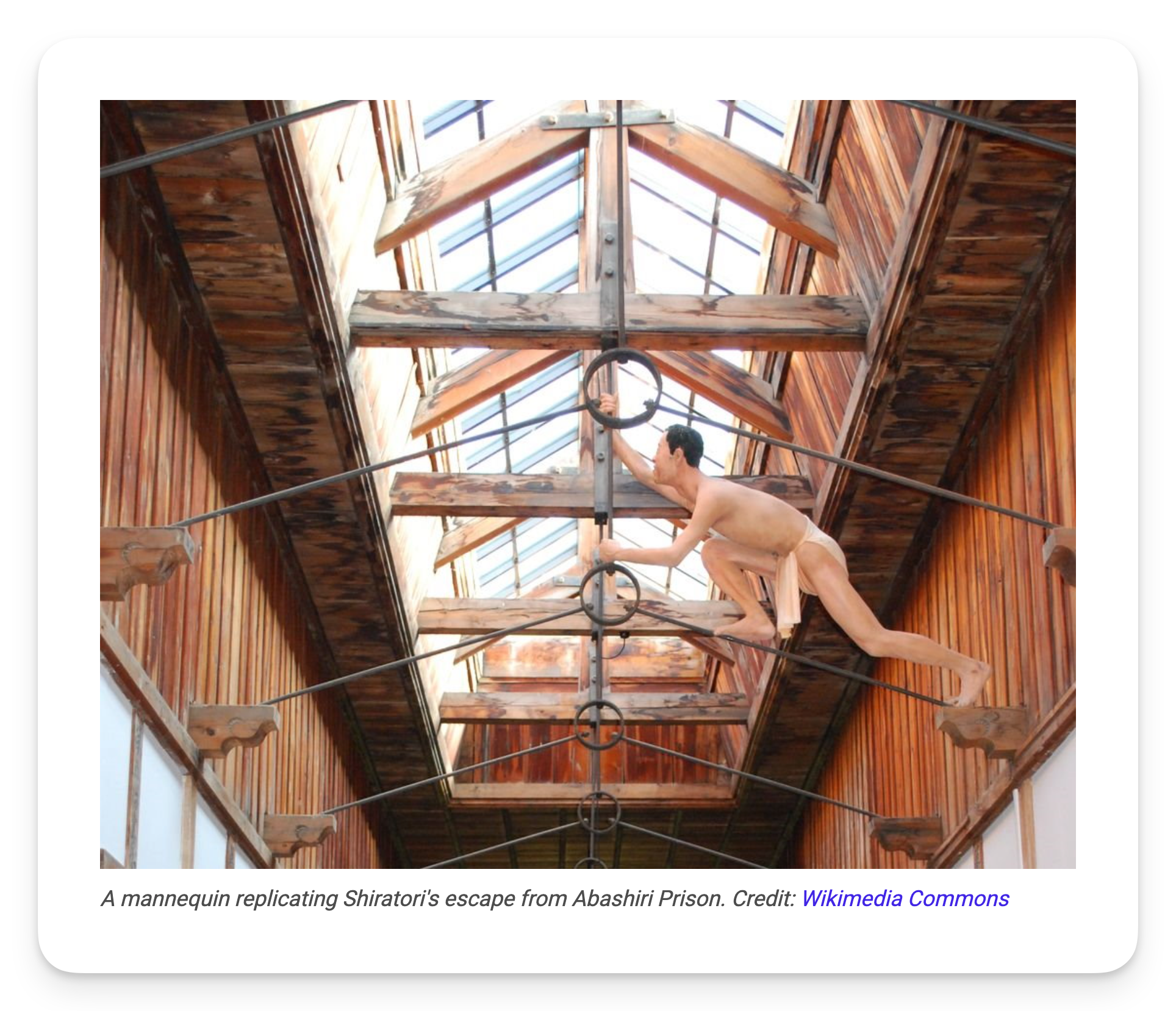
In 1936, Shiratori was sent to Aomori Prison, where the conditions were brutal and the guards even worse. When he protested the filth and cruelty, his punishments only grew harsher. Shiratori began watching the guards, studying their movement and memorizing their routines. He noticed that in the morning there was always a fifteen-minute lull between patrols. It was a small window, but enough.
In June that year, he made his move. Using a thin piece of wire stripped from a bathing bucket, Shiratori picked the lock of his cell. He then slipped through a cracked skylight, leaving behind a decoy of floorboards arranged under his blanket to resemble a sleeping body. When guards passed, they assumed he was still in bed. By the time they realized, he was gone.
The Strange History of the Anti-Vaccine Movement
Back in the early 1800s, a series of controlled experiments by Jenner and other doctors quickly showed inoculation to be extremely effective, granting immunity against smallpox in well over 95% of those vaccinated. Public health authorities worldwide took action to roll it out. In the UK, a series of Vaccination Acts, passed in 1840, 1853 and 1871, made immunisation for children first free, then compulsory.
But almost immediately, another challenge emerged: a spate of anti-vaccination leagues sprung up around the country.
They produced pamphlets with provocative and fittingly Victorian gothic titles, like Vaccination, a Curse and Horrors of Vaccination, anti-vaccination tracts, books and even periodicals, including The Anti-Vaccinator (1869) and The Vaccination Inquirer (1879).
New Hampshire Sparks a Revolution in Electricity Supply
The global race for artificial intelligence and the inability of the U.S. electricity sector to keep pace have state policymakers scratching their heads. Some respond by restricting data centers’ use of local grids; others put existing customers and taxpayers on the hook for investments to accommodate the new demand. The electricity sector is in a state of crisis.
New Hampshire recently approved an elegant solution: Let anyone build. In August Gov. Kelly Ayotte signed HB 672, which minimizes red tape for electricity providers that don’t connect to the existing grid, thus bringing more competition, speed and innovation to the state. In the spirit of reducing bureaucracy, the bill itself fits neatly on one page.
The AI Bubble Is 17 Times the Size of the Dot-Com Frenzy and Four Times Subprime, This Analyst Argues
Let’s start with the boldest claim first - it’s not just that AI is in a bubble, but one 17 times size the dot-com bubble, and even four times bigger than the 2008 global real estate one.
And to get that number, you have to go way back to 19th century Swedish economist Knut Wicksell. Wicksell’s insight was that capital was efficiently allocated when the cost of debt to the average corporate borrower was two percentage points above nominal GDP. Only now is that positive after a decade of Fed quantitative easing pushed corporate bond spreads low.
He then calculates the Wicksellian deficit, which to be clear is not only AI spending but also includes housing and office real estate, NFTs and venture-capital. That’s how you get this chart on misallocation - a lot of variables, but think of it as the misallocated portion of GDP fueled by artificially low interest rates.
Toyota Aims to Launch the ‘World’s First’ All-Solid-State EV Batteries
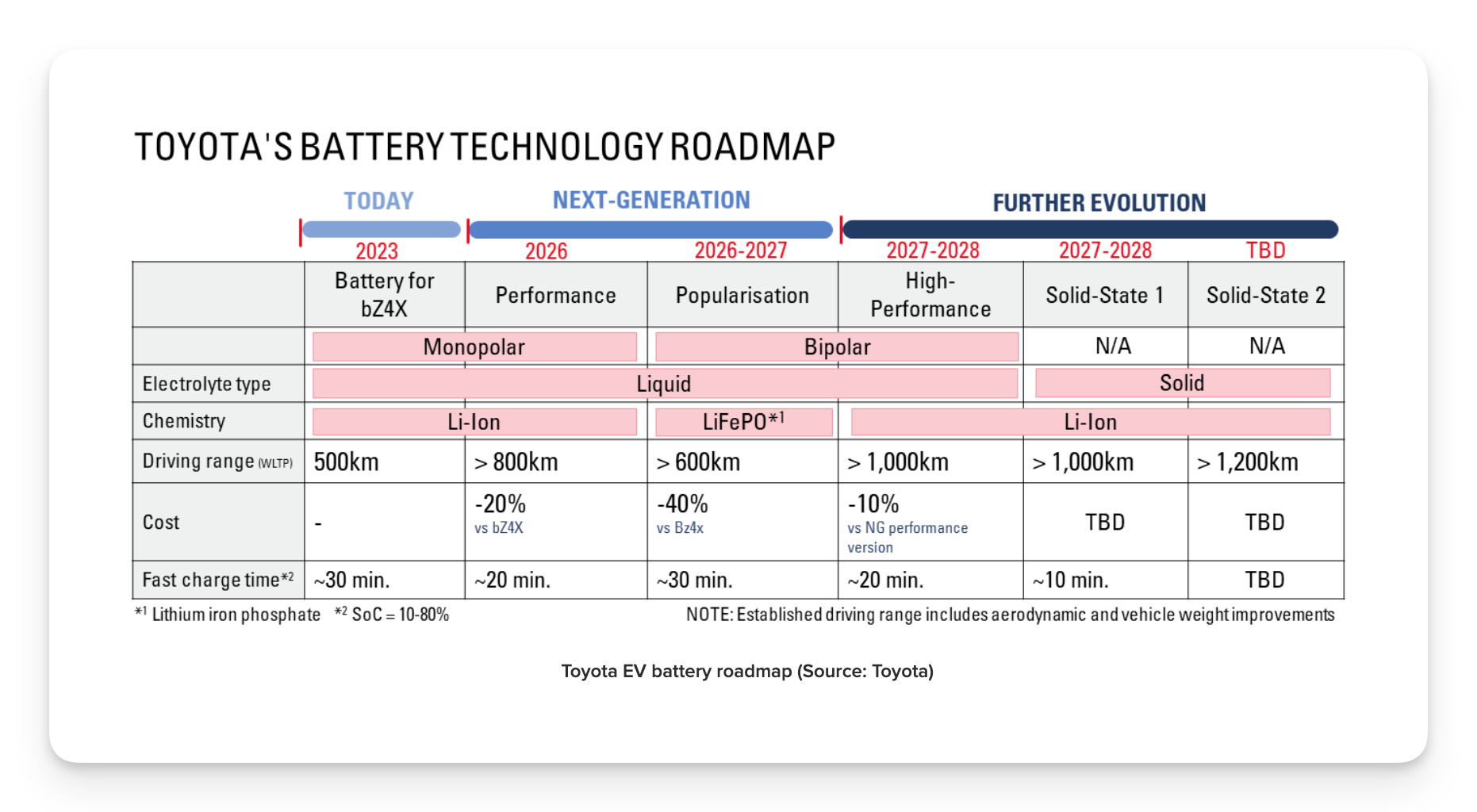
After announcing a new partnership with Sumitomo Metal Mining Co. to mass produce cathode materials for the new battery tech on Wednesday, Toyota said it aims “to achieve the world’s first practical use of all-solid-state batteries in BEVs.”
Toyota said that its new batteries could significantly enhance driving range, charging times, and output, potentially transforming the future of automobiles.
Compared to current liquid-based batteries, which use electrolyte solutions, Toyota’s all-solid-state batteries utilize a cathode, an anode, and a solid electrolyte. According to Toyota, the next-gen battery tech “offers the potential for smaller size, higher output, and longer life.”
The Remarkable Rise of eBird—the World’s Biggest Citizen Science Project
The Cornell Lab of Ornithology has been one of the most influential organizations in the world when it comes to encouraging people to engage in natural history projects. While some form of amateur involvement in science projects has been around since 1900, when the Audubon Society organized the first Christmas Bird Count, it was the Cornell Lab that formalized citizen science as a sound and reliable means of collecting data on birds.
It didn’t take much thought to realize that one of the richest sources of information about birds resided in the notebooks virtually every birder has kept, often from childhood. It’s a given that birdwatchers list everything. The problem is that zillions of such notebooks sit forgotten in drawers or in dusty boxes in the attic.
If only all of that information could be gathered together, organized in sensible ways and then made available to anyone who wanted to use it. What a resource that would be!
After lots of trials and discussion, a small team at the Lab came up with the idea of eBird. It started in a humble way back in 2002, as simply somewhere birders could store their records in a central location.
Today, “humble” is no longer an appropriate description. In 2022, its 20th anniversary year, a total of more than 1.3 billion records had been received from more than 820,000 participants. In the month of August this year, reports eBird, 123,000 birders submitted 1.6 million lists of sightings. It has now hit a total of 2 billion bird observations since inception.