

A weekly collection of links to interesting things curated by Colin Wright.
My Life in Weeks
Hi, I’m Gina. This is a map of my life, where each week I’ve been alive is a little box. Tap a box to see what I was doing where that week.

Almost One in 10 People Use the Same Four-Digit PIN
The last line of security for much of your digital life probably isn’t as secure as you think.
Whether it’s to unlock your smartphone, access your online banking or get cash out of the ATM, a four-digit PIN is often there to keep your secrets and your money safe.
It’s an important little code, but not all choices are equally secure.
That’s why we analysed 29 million of them from Have I Been Pwned? – an Australian-run site that helps people all over the world find out if they’ve been affected by data breaches.
The most commonly used PINs turned out to be staggeringly popular, meaning they’re particularly easy to guess when phones and bank cards fall into the wrong hands.
The Making of a Gene Circuit
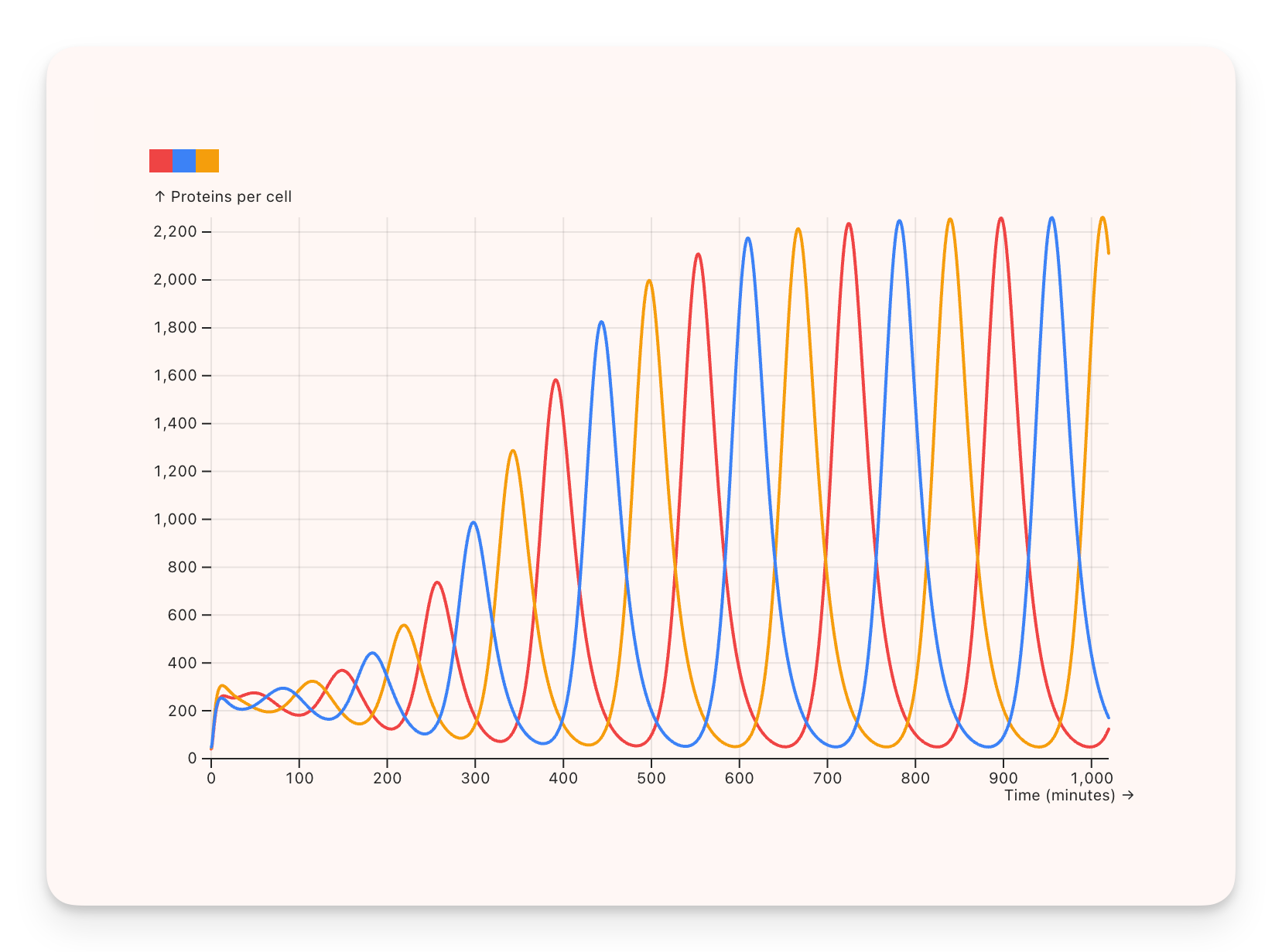
Richard Feynman’s iconic admonition — “What I cannot create, I do not understand” — resonated with Elowitz, who decided to answer his own questions by building a synthetic molecular clock; one not found anywhere in nature. Inspired by his readings, Elowitz began designing an oscillator that would force living cells to flash on and off in a periodic rhythm. However, even despite initial enthusiasm, doubts quickly mounted.
“When I asked people what they thought of the project,” he said, “I got very different answers. A few well-known biologists would say, ‘No, it’ll never work that way. It just won’t work.’ And I’d ask them, ‘Why won’t it work?’ And they’d say, ‘Biology just doesn’t really work that way. You can’t predict what’s going to happen.’”
Travelers Discover Vacationing in a Ghost Town Can Be Grim
For a vacation to Italy, Ramy Awad wanted an adventure. So he picked Fossa, a town deep in the middle of the country that was abandoned after a 2009 earthquake. But things quickly went sideways for the 35-year-old and two friends he brought with him.
It took the group almost three days to find the town, with GPS leading them in circles. When they finally arrived late at night and got ready to settle in, they heard strange voices. They didn’t know if they were real or imagined, but nobody wanted to leave the tent to investigate. In the morning, they woke up to the sound of a drone that followed them for the next three days.
At some point, Awad wondered if he should have settled for the Leaning Tower of Pisa. “My least favorite part was getting chased by drones,” said Awad, a content creator based in New York City. “That’s something I will never forget.”

The Americans Pledging to Buy Less—or Even Nothing
Instagram, TikTok and other social-media sites are usually overwhelmed by people showing off what they bought. This year, people are pivoting to something else: displaying how they’re buying nothing.
The “no buy 2025” trend encourages people to purchase as little new stuff as possible. Some people make lists of specific items they won’t purchase, while others vow not to buy any nonessentials.
Is Our Universe Trapped Inside a Black Hole?
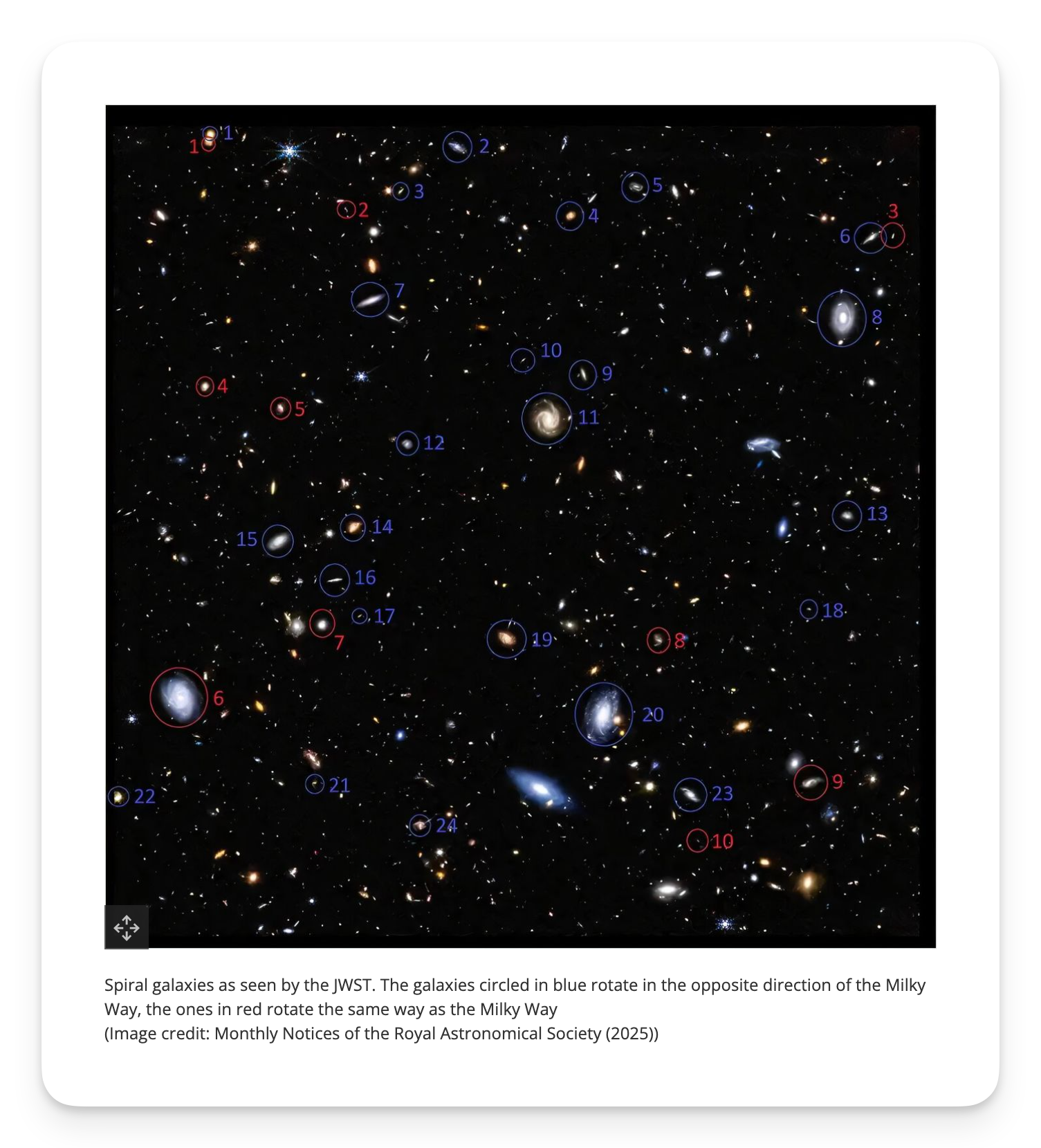
The $10 billion telescope, which began observing the cosmos in the Summer of 2022, has found that the vast majority of deep space and, thus the early galaxies it has so far observed, are rotating in the same direction. While around two-thirds of galaxies spin clockwise, the other third rotates counter-clockwise.
In a random universe, scientists would expect to find 50% of galaxies rotating one way, while the other 50% rotate the other way. This new research suggests there is a preferred direction for galactic rotation.
Malawi Makes Serious Improvements
Malawi continues to show significant strides in critical areas of public health, education, and development, as revealed by the 2024 Malawi Demographic and Health Survey (MDHS). The survey highlights notable progress in reducing fertility rates, improving child nutrition, increasing literacy levels, and addressing teenage pregnancies, among other achievements.