

A weekly collection of links to interesting things curated by Colin Wright.
Frontier of the Year 2025
How did the world change this year? Which results are speculative? Which are biggest, if true?
We collected and scored 202 results. Filter by field, our best guess of the probability that they generalise, or their impact if they do.
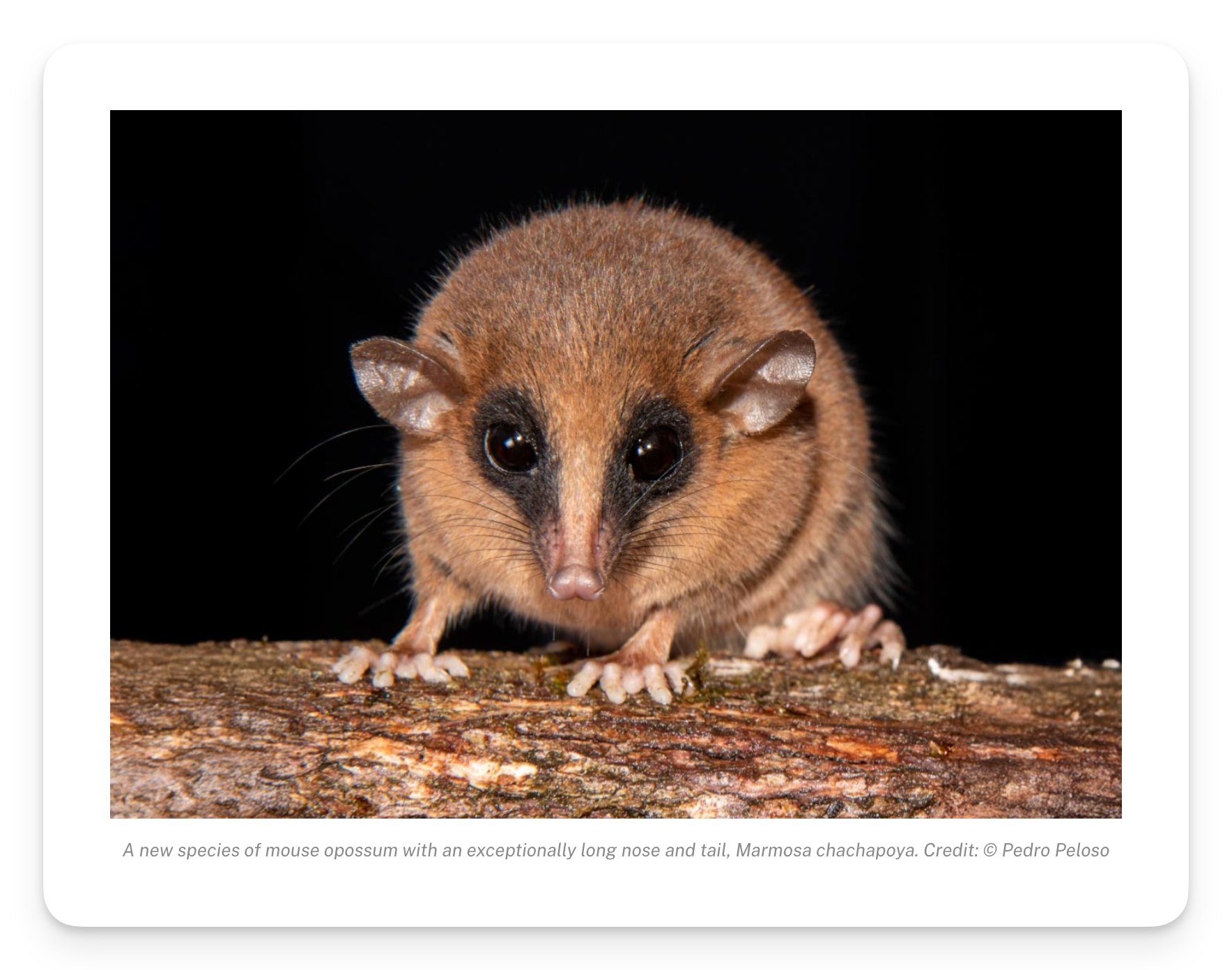
Scientists Just Discovered 70 New Species and Some Are Truly Wild
Scientists at the American Museum of Natural History identified more than 70 species new to science this year, uncovering life forms that range from biting fruit flies and a tiny mouse opossum to a feathered dinosaur preserved with traces of its final meal. The discoveries span an impressive breadth of life, including dinosaurs, mammals, fishes, reptiles, insects, arachnids, marine invertebrates, and even a mineral never documented before. Together, these findings reinforce the Museum’s role as a global leader in exploring and understanding the natural world.
Finnish Children Learn Media Literacy at 3 Years Old. It’s Protection Against Russian Propaganda
The battle against fake news in Finland starts in preschool classrooms.
For decades, the Nordic nation has woven media literacy, including the ability to analyze different kinds of media and recognize disinformation, into its national curriculum for students as young as 3 years old. The coursework is part of a robust anti-misinformation program to make Finns more resistant to propaganda and false claims, especially those crossing over the 1,340-kilometer (830-mile) border with neighboring Russia.
Now, teachers are tasked with adding artificial intelligence literacy to their curriculum, especially after Russia stepped up its disinformation campaign across Europe following its full-scale invasion of Ukraine nearly four years ago. Finland’s ascension into NATO in 2023 also provoked Moscow’s ire, though Russia has repeatedly denied it interferes in the internal affairs of other countries.
“We think that having good media literacy skills is a very big civic skill,” Kiia Hakkala, a pedagogical specialist for the City of Helsinki, told The Associated Press. “It’s very important to the nation’s safety and to the safety of our democracy.”
Google AI Overviews Put People at Risk of Harm With Misleading Health Advice
People are being put at risk of harm by false and misleading health information in Google’s artificial intelligence summaries, a Guardian investigation has found.
The company has said its AI Overviews, which use generative AI to provide snapshots of essential information about a topic or question, are “helpful” and “reliable”.
But some of the summaries, which appear at the top of search results, served up inaccurate health information and put people at risk of harm.
In one case that experts described as “really dangerous”, Google wrongly advised people with pancreatic cancer to avoid high-fat foods. Experts said this was the exact opposite of what should be recommended, and may increase the risk of patients dying from the disease.
In another “alarming” example, the company provided bogus information about crucial liver function tests, which could leave people with serious liver disease wrongly thinking they are healthy.
SpaceX Completes 11th Starship Test Flight
Elon Musk’s mammoth SpaceX Starship on Monday completed its 11th test flight from a Texas launch site.
This was the last test flight before SpaceX starts test-launching a new version of the giant rocket equipped with more features for Moon and Mars missions.
The Starship was launched Monday from SpaceX’s south Texas launch facilities just after 6:25 pm local time (2325 UTC). The rocket included the Starship upper stage stacked atop its Super Heavy booster.
After sending the Starship stage to the edge of space, Super Heavy returned for a controlled entry in the Gulf of Mexico 7 minutes after takeoff.
After its flight, the upper stage splashed down as planned into the Indian Ocean.
Acting NASA Administrator Sean Duffy said on X that the mission was “another major step toward landing Americans on the Moon’s south pole.”
When Face Recognition Doesn’t Know Your Face Is a Face
Autumn Gardiner thought updating her driving license would be straightforward. After getting married last year, she headed to the local Department of Motor Vehicles office in Connecticut to get her name changed on her license. While she was there, Gardiner recalls, officials said she needed to update her photo. That’s when things started to go wrong.
Every time staff tried to take her photo, Gardiner says, the system would reject it. “Everyone’s watching. They’re taking more photos,” she recalls. Gardiner, who works as a grant manager for an environmental conservation charity, is one of a small number of people globally who live with Freeman-Sheldon syndrome. Sometimes known as Whistling Face syndrome, the genetic condition impacts muscles around the face and skull, which can result in an undersized mouth.
As more staff members at the DMV were called to help, Gardiner says she started to believe the rejected photos were being caused by her facial difference. The camera system didn’t seem to work for her, she says. “It was humiliating and weird. Here’s this machine telling me that I don’t have a human face,” Gardiner says.