A weekly collection of links to interesting things curated by Colin Wright.
Silicon Valley’s Gold Rush Roots
“One of California’s most eloquent observers, Joan Didion, wrote about a great divide between the “Old” California families, the early settlers of the 19th century who endured the hardships of the frontier, and the “New” Californians, the migrants who arrived during and after World War II to populate aerospace and other blue-sky industries and who knew only good times. But Didion also noted that Old and New in fact were not so different: Both came to California to make a buck. That buck often came through technology.”
How Scientists Are Preparing for Apophis's Unnervingly Close Brush With Earth
“In about five years’ time, a potentially hazardous asteroid will swing by Earth at an eerily close distance of less than 20,000 miles (32,000 kilometers). During this rare encounter, Apophis will be ten times closer to Earth than the Moon and scientists want to take full advantage of its visit.
Apophis is a on trajectory towards an Earth flyby on April 13, 2029. When it was first discovered in 2004, the 1,100-foot-wide (335 meters) near-Earth object was designated as a hazardous asteroid that could impact our planet. Later observations, however, reassured scientists that there’s no need to panic just yet, and that the asteroid has no chance of crashing into Earth for at least another century.
That’s very good news given the size of this object and the serious damage it would inflict should it some day strike our planet. Hopefully that’ll never happen, but objects of this size tend to hit Earth about once every 80,000 years, unleashing catastrophic damage and global-scale impact winters.”
The Tokyoiter
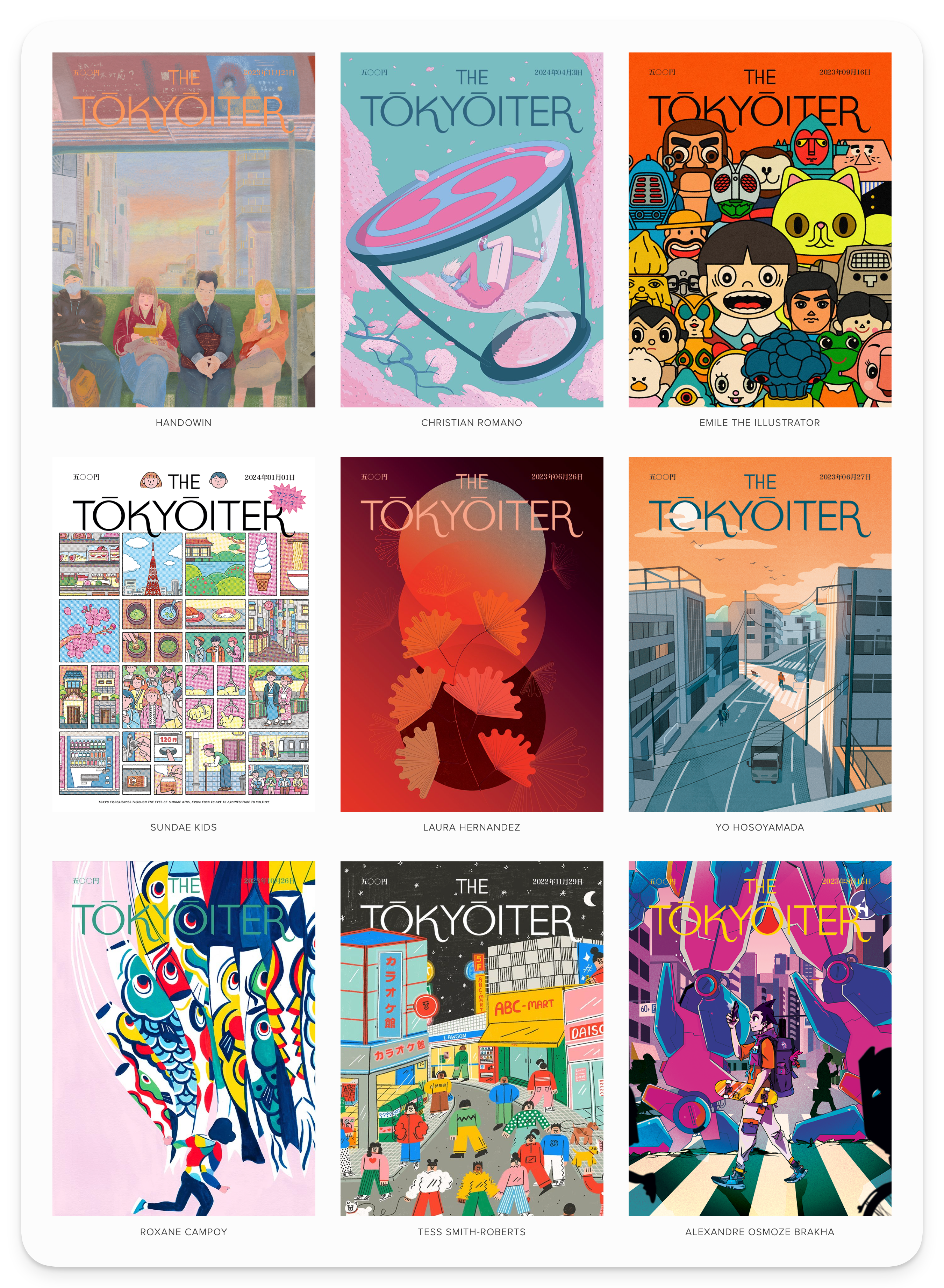
“The Tokyoiter is made by illustration and drawing freaks who are willing to present the talent of artists they like to a larger audience. Some of us are illustrators and some are just living in Tokyo a wonderful city full of stories and daily inspiration. We want to celebrate the passion for this city and its inhabitants' story.”
From Toxic Fungus to Soy Sauce Superstar
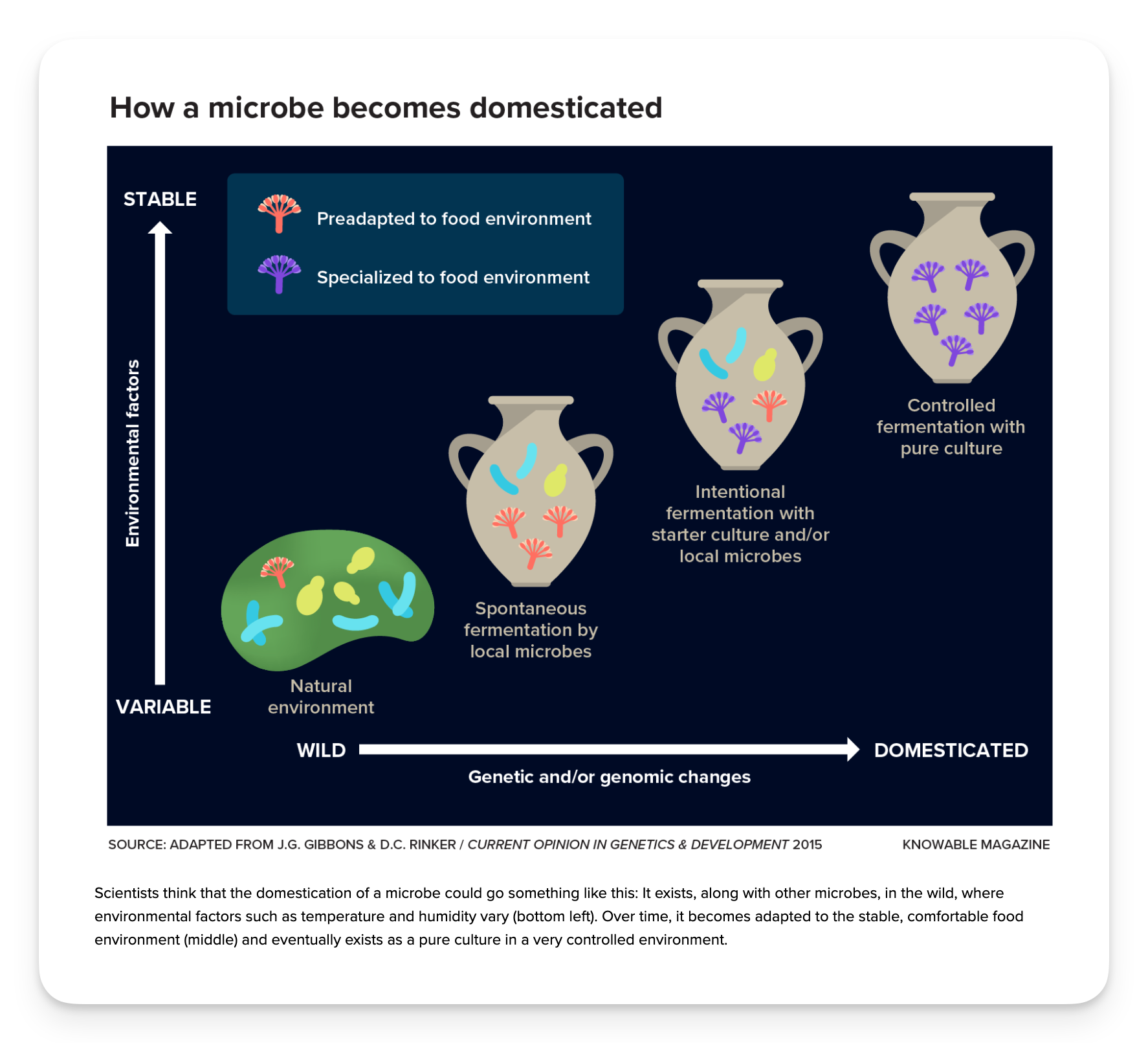
“Nearly 9,000 years ago, around the time that humans were first domesticating corn and pigs, some people in China were taming fungi.
One such fungus, the mold Aspergillus oryzae, would go on to become a culinary superstar. Through fermentation of raw ingredients like soybeans or rice, A. oryzae helps to bring us soy sauce, sake and several other traditional Asian foods. It does so by breaking down proteins and starches so that other microbes can finish off the fermentations.
But A. oryzae wasn’t always so obliging. The wild version of the mold makes potent toxins that can poison the consumer and lead to cancer in the liver and other organs. Plus, it’s a destructive agricultural pest that causes millions of dollars in damage each year to crops like peanuts and corn.”
Anatomy of an Absolutely Wild 1970s Hijacking You’ve Never Heard Of
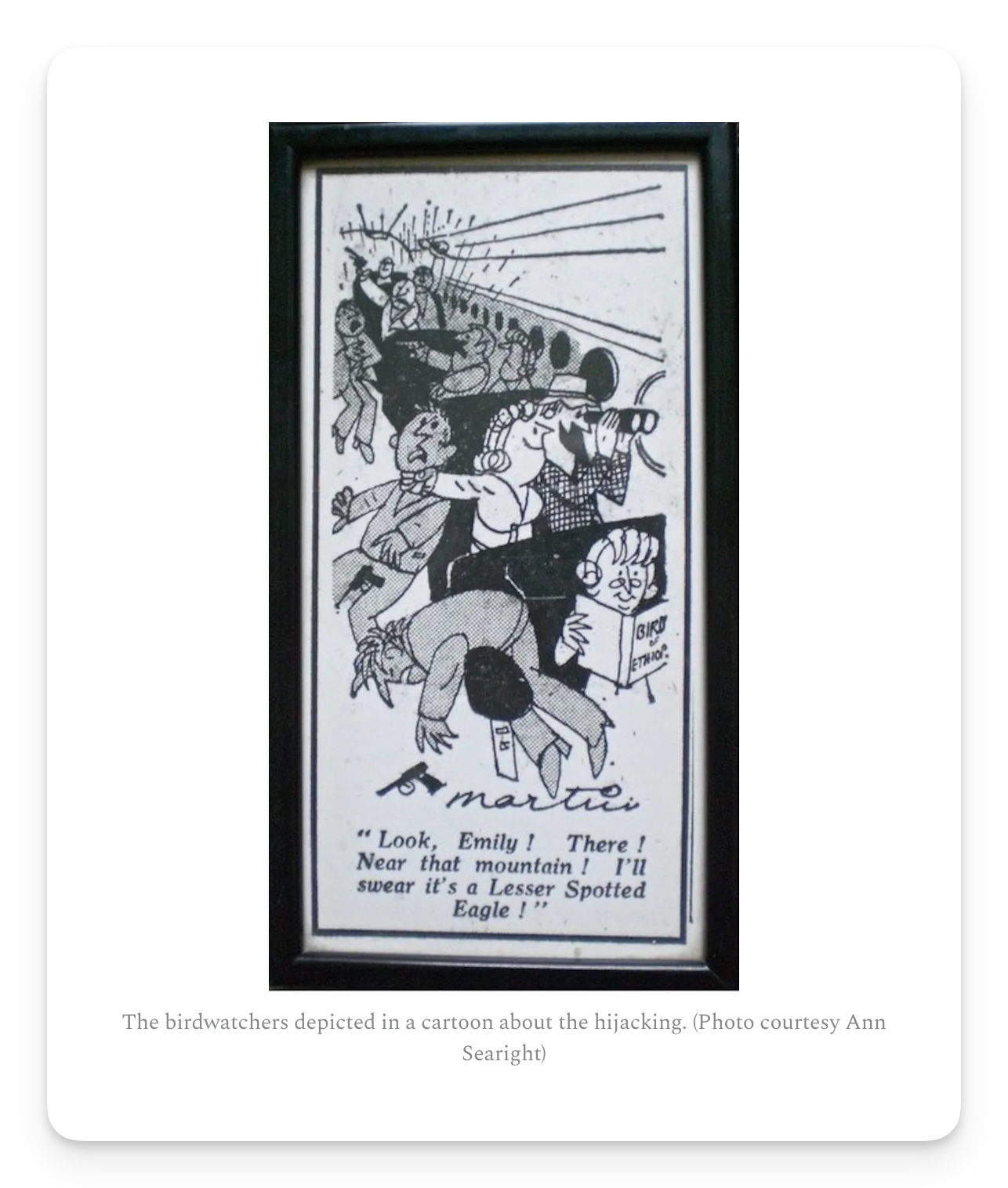
“The early 1970s are sometimes referred to, with unsubtle irony, as the “Golden Age of Hijacking.” Spurred both by a surge in international terrorism and the (somewhat valid) perception that airlines were far happier to pay ransoms than lose planes, an astonishing number of passenger flights were commandeered between 1968 to 1972: some 326 aircraft worldwide, sometimes two on the same day. The survivable hijackings — for the passengers, at least — often hinged on the actions of trained personnel: air marshals, undercover police or private security guards, whose numbers soon increased dramatically to counter the threat. But Rod Hilsinger was none of these things. He was a 41-year-old university professor, with a wife and four kids — ages 7 to 14 — waiting for him back home in Philadelphia. Now he found himself at the epicenter of one of the most unusual — and terrifying — hijackings of them all. He had no way of knowing it, but in a few seconds, the lives of all 94 passengers and crew would rest squarely on his shoulders.”
Where the Language Changes
“We are on the Porcupine River, half a day’s travel still from its confluence with the Yukon River. Gwich’in land. Stanley Njootli and I have known each other since I moved to his village on the Porcupine as his dog-sledding apprentice more than twenty years ago. Now in his seventies, he’s become like a second father, and he remains spry and keen to spend weeks with our lives tethered to his flat-bottomed aluminum boat as we travel towards the Yukon’s Delta, where in the long meeting of the river with the Bering Sea the channel grows to half a mile wide. Stanley has friends in every village, and family in many of them. I know no one who can better read the tempers of water, or of people.”
An Incomplete Timeline of Online Exhibitions and Biennials
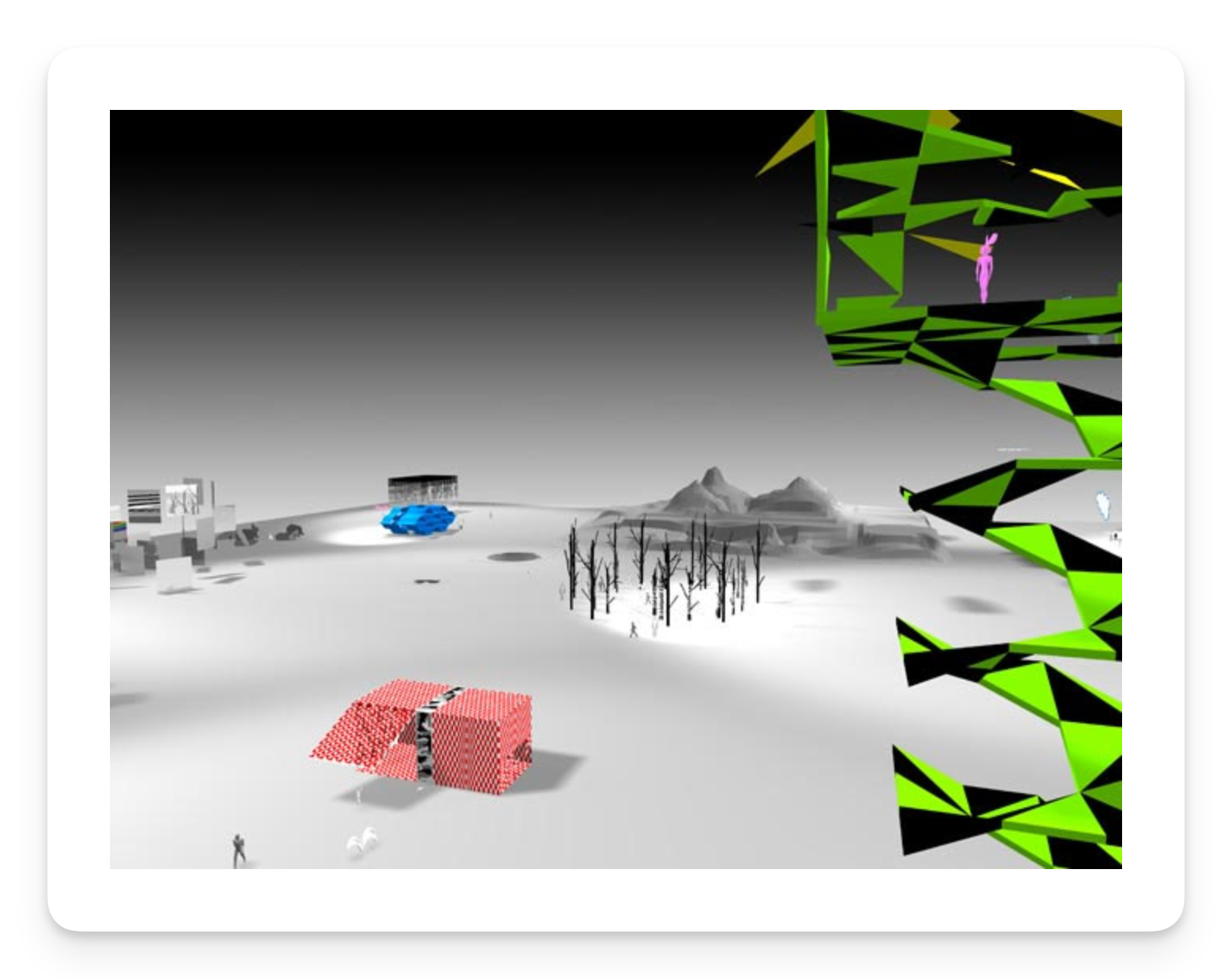
“2002: Neen World is an open-ended architectural experiment which started as an ActiveWorlds place for members of the Neen art movement to meet, walk and talk online: a chat-room. Architecture by Andreas Angelidakis. Commissioned by Miltos Manetas and the electronicOrphanage in the occasion of the Afterneen exhibition in CASCO.”