A weekly collection of links to interesting things curated by Colin Wright.
The Asbestos Times
“Few materials fell from grace like asbestos. Once cherished as an almost-magical material, it is now the archetypal carcinogen. We spent over a century integrating it into buildings, wiring, pipes, brake pads, and more, and we now spend billions of dollars a year removing it.
But the standard story of asbestos as a mistake – or even a crime – of massive proportions does not do justice to the real benefits it brought. Asbestos was central to mitigating urban fires, which cost thousands of lives each year as modern cities grew larger, denser, and more flammable. But as we learned to control urban fires without it, asbestos’s health costs seemed less and less worth bearing. Asbestos is in its final days and soon the material will almost disappear entirely. ”
On the Insanity of Being a Scrabble Enthusiast
“The first time you realize that your opponent is stuck with the Q and you make a crucial play to deny her the legal two-word layup QI, securing yourself the victory, well—that’s magic. It was this sequence of unfolding skills that eventually endeared me to the game—I realized what this game is, that it is the creation of something from nothing. It felt valuable to learn and exercise a craft, even if it was “just a game.””
What Is an Electronic Sackbut?
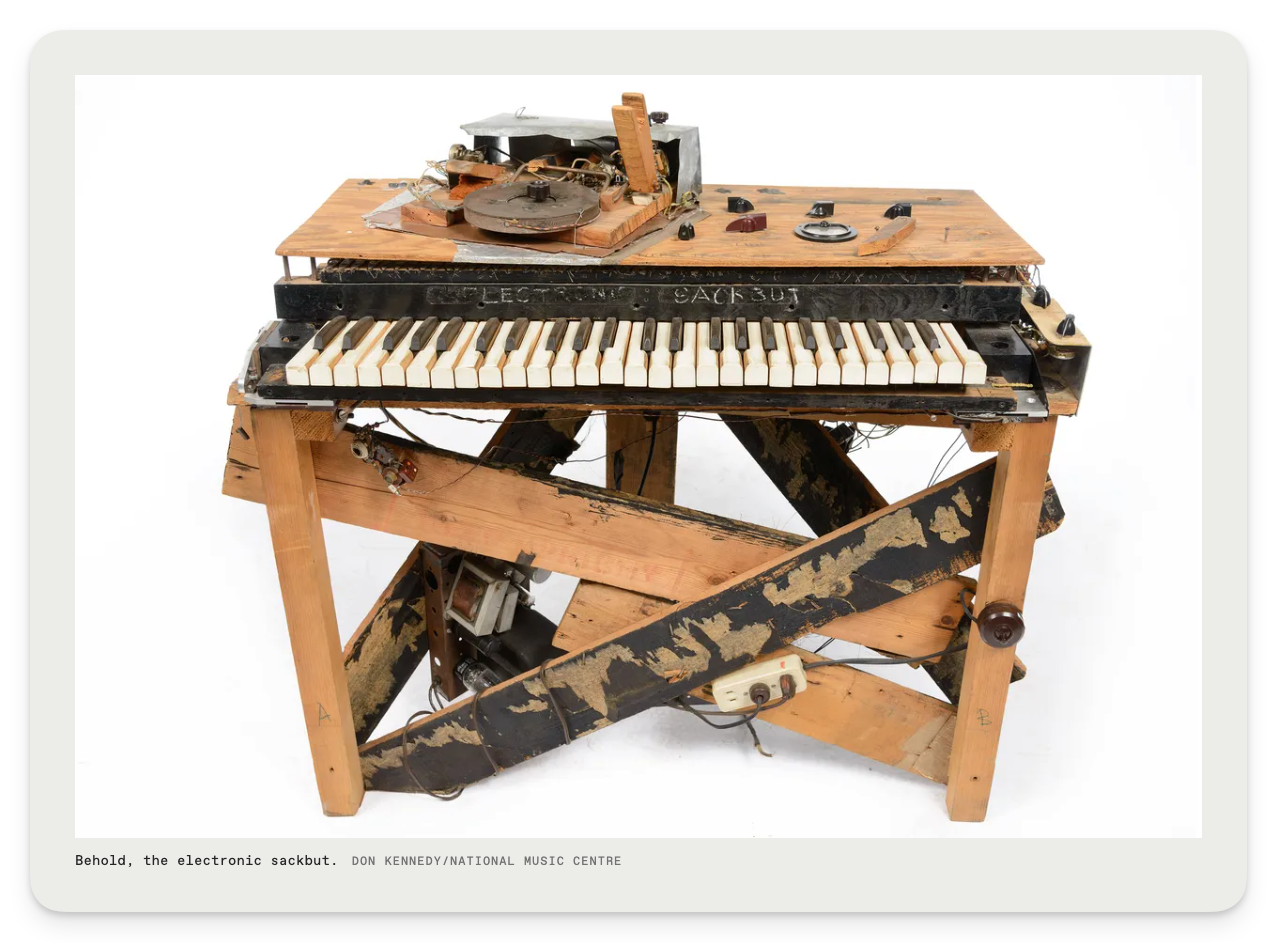
“If you, like me, think of musical synthesizers as an artifact of 1970s rock and disco, then you, like me, will be surprised to learn that the first electronic synthesizer predates those genres by several decades
In 1945, Hugh Le Caine, a physicist at Canada’s National Research Council, began working in his spare time on a single-channel musical instrument he dubbed the Electronic Sackbut. He was intrigued by the fact that the three auditory sensations associated with music—namely, pitch, loudness, and timbre—had counterparts in electronics—namely, frequency, amplitude, and the harmonic spectrum obtained by Fourier analysis. To demonstrate those qualities, Le Caine created a synthesizer that mimicked, among other things, a brass horn known as the sackbut. It could also synthesize other horns, as well as string and reed instruments. He envisioned using the electronic sackbut in live performances, to play orchestral, big band, and experimental jazz music.”
Notes On Awe
“Awe is most typically described as an emotion, but it (or something similar like “elevation” or “wonder”) frequently also gets named among the virtues. A virtue is a characteristic habit; an emotion usually is not, unless it expands to become part of one’s personality. So this is a little confusing.
Part of the problem is that the virtue associated with awe does not seem to have a name in English, so we use the name of the emotion as a placeholder. The virtue, I suggest, has two main non-emotional components:
Openness to (or maybe “welcoming of” or “seeking out”) experiences of awe.
Skill in processing those experiences so as to get the most value from them (not being merely “awe-struck”).”
Bookshop In Fort Collins Is Paying People To Sit Down and Read Quietly
“The reader-in-residence position at Perelandra Bookshop doesn’t make sense on paper. Unlike an artist-in-residence or a writer-in-residence program, which provide a stipend and studio space for creating new work, the reader-in-residence isn’t expected to produce anything.
The reader-in-residence doesn’t have to write an essay. They don’t have to host a book club or moderate a panel discussion. They don’t have to contribute to a blog or create sponsored content. They don’t have to do anything, except show up to the bookstore a couple of times per week and read.”
Riders In the Smog
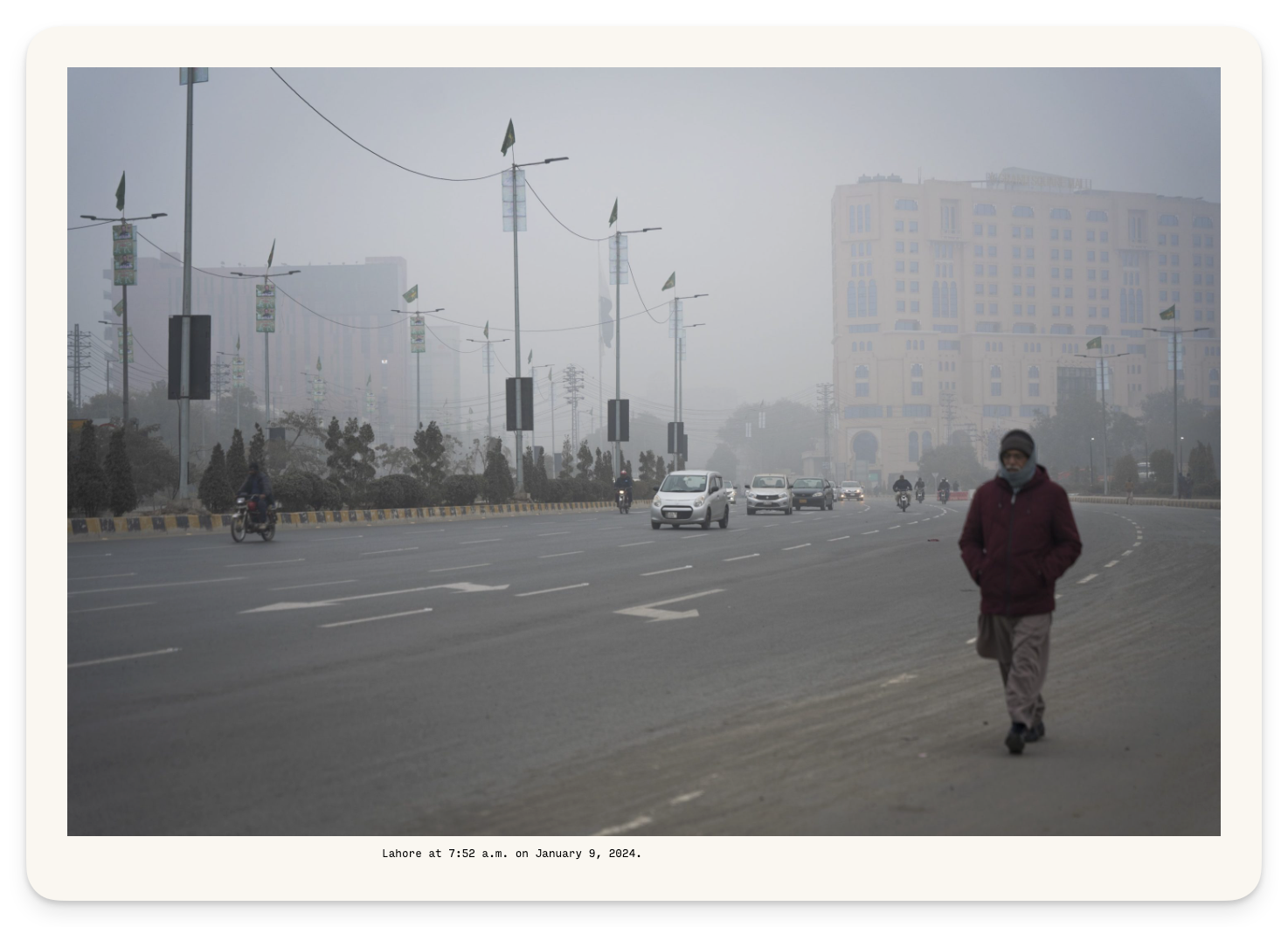
“Lahore is the most polluted city in the world, according to Swiss air quality monitoring platform IQAir. In November, the air was so poisonous that authorities issued a citywide lockdown, closing schools, markets, and parks for four days, and advising people to stay indoors.
Other cities in South Asia have similarly alarming levels of air quality: Eight out of the top 10 most polluted cities globally are in the region. Causes include rapid urbanization, construction, vehicular pollution, coal-fueled power plants, crop burning, and the operation of brick kilns. Air quality in the region is at its worst from October to February due to atmospheric conditions which cause pollutants to be trapped closer to the ground.
Exposure to this pollution can have serious health impacts — from headaches and breathing difficulties to heart and lung disease, stroke, and cancer. For gig workers, who often have no choice but to work in the smog, the effects are clear. By the end of a day’s work, Iqbal said, his whole body feels lifeless. “I also experience exhaustion, I get a lot of headaches. I get body aches,” he said.”
How To Fix A Runway In Antarctica
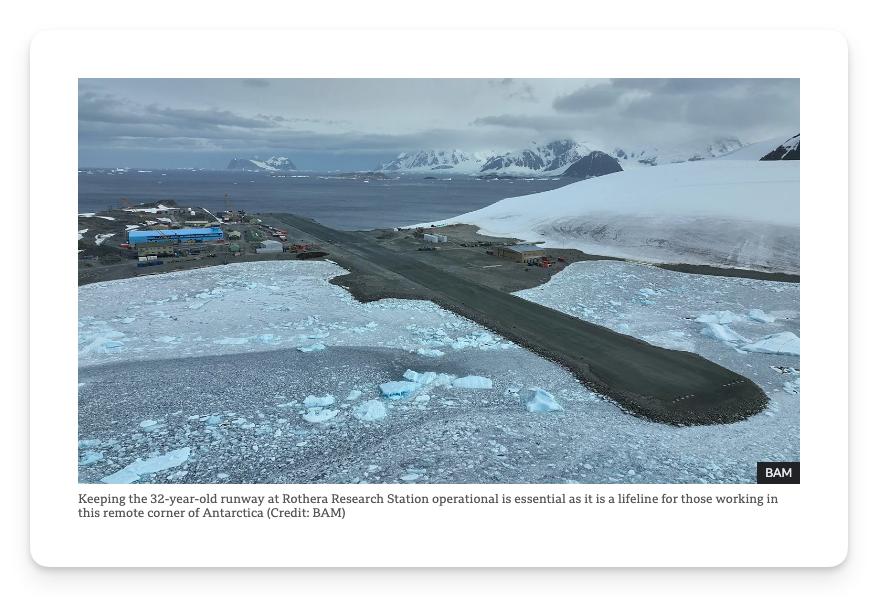
“Rothera airstrip, on Antarctica's Adelaide Island, is a dash of grey amid the seemingly endless expanse of snow and ice. It serves the largest British Antarctic facility, Rothera Research Station, a centre for biological research, and the 100 people who live and work there during the summer months. In the Antarctic summer, which lasts from October to February as the continent is in the southern hemisphere, the runway is surrounded by water. When the last smudge of yellow fades to grey as the sun dips below the horizon, the Antarctic winter sets in – and just 22 people can be found living at the station. In the months of darkness, persistent surface winds rush from snow-covered plateaus downwards towards the coast, and freezing temperatures as low as −128.6°F (−89.2 °C) grip this land of ice. ”