

A weekly collection of links to interesting things curated by Colin Wright.
The Shrouded, Sinister History Of The Bulldozer
If, like gods, we aspire to create machines in our own image, then it’s fitting that the original bulldozers were humans. Leading up to the corrupted U.S. election of 1876, as the Southern states were being reconstructed following the Civil War, terrorist gangs of predominantly white Democrats roamed about, threatening or attacking Black men who they thought might vote for the Republican Party. The men were the bulldozers, and the acts they carried out were bulldozing.
Wearing black masks or black face paint, and, on occasion, goggles, they brutally whipped, beat and sometimes murdered their victims. In June of that year, a Louisiana newspaper reported that bulldozers took a Black Republican voter named W. Y. Payne from his bed in the night and hung him from a tree 2 miles away. Later that month, in nearby Port Hudson, a Black preacher named Minor Holmes was hanged from the wooden beams of a Baptist church by bulldozers, but they cut him down before he died.
The Making of the Buru Quartet
On October 6, 1973, Pramoedya Ananta Toer was ordered by prison guards to run double-time across Buru Island. The writer had been arrested eight years before, taken into custody in the middle of the night. Detained without charges alongside thousands of other men and women, Toer was sent to Buru—a prison island far east of Java and Bali—and forced to toil under the scorching sun. He was desolate, not only because of the Sisyphean labor he was made to perform, the inability to write, and the gnawing feeling of injustice, but also because he was separated from his family. Before prison, he had been happily married to his beloved Maimoenah, his second wife and mother to five of his children. After several years of seclusion from the outside world, Toer was hopeful that the press junket he was being forced to attend could be an opportunity to petition for the freedoms that had been revoked when he was imprisoned, if not ensure his release. It would be the closest he would get to a trial, during which he could publicly question the validity of his arrest.
Private Equity Finds a New Source of Profit: Volunteer Fire Departments
The Norfolk Volunteer Fire Department operates on an annual budget of $132,000, barely enough to sustain its aging rigs, train unpaid crews and keep the lights on at the station in the hills of northern Connecticut.
Not long ago, it faced a different kind of emergency: The software system it relied on to track detailed incident information was no longer going to be usable. A company backed by private equity investors, ESO Solutions, had acquired the platform and planned to shut it down. The alternative software it was offering would raise the community’s costs from $795 per year to more than $5,000.
Urgently looking for an alternative, the department found a cheaper system, but then ESO bought up the other brand. It left the department in a bind. “We don’t have a big tax base,” said Matthew Ludwig, an assistant fire chief in Norfolk. “We have to watch our pennies.”
Much of the software used by firefighters and other emergency responders was initially created by people who worked in those fields and felt a calling to keep prices affordable. But now fire chiefs around the country are scrambling to manage shrinking options and soaring costs as corporations flush with cash from Wall Street have raced to dominate the market.
Can Cruising Survive Influencers?
It was a balmy July day and Joseph had dick on the brain. The 25-year-old Brooklyn barista had agreed to walk a friend’s dog in Washington Square Park, so he figured that while he was in Manhattan he’d check in on one of his favorite cruising spots: a men’s restroom at Penn Station. Those in the know know this bathroom; Joseph (his middle name) estimates he’d cruised for sex there about eight times before. He likes that among the fresh faces he will often see the same old queens catching up in their de facto third space. Sure, he could open Grindr or Scruff to find a hookup, but then he’ll get picky and end up scrolling endlessly. Cruising feels more authentic, more real. It’s a ritual. A hunt.
In the early hours of the afternoon, he’d expected the restroom to be livelier. (Rush hour can bring too many commuters seeking to use the bathroom for its intended purpose.) But there was one guy standing at a urinal: a handsome Latino man with dark hair and eyes, and big, beefy arms protruding from his orange high-visability safety vest. This man nodded to Joseph as he entered, which he took as a sign to install himself at the adjacent urinal. The construction worker appeared to be rubbing himself and smiling, Joseph recalled. “He was looking at me. He was trying to peek over. He was doing it. He seemed seasoned at this,” Joseph said. “He was giving an Oscar-winning performance.”

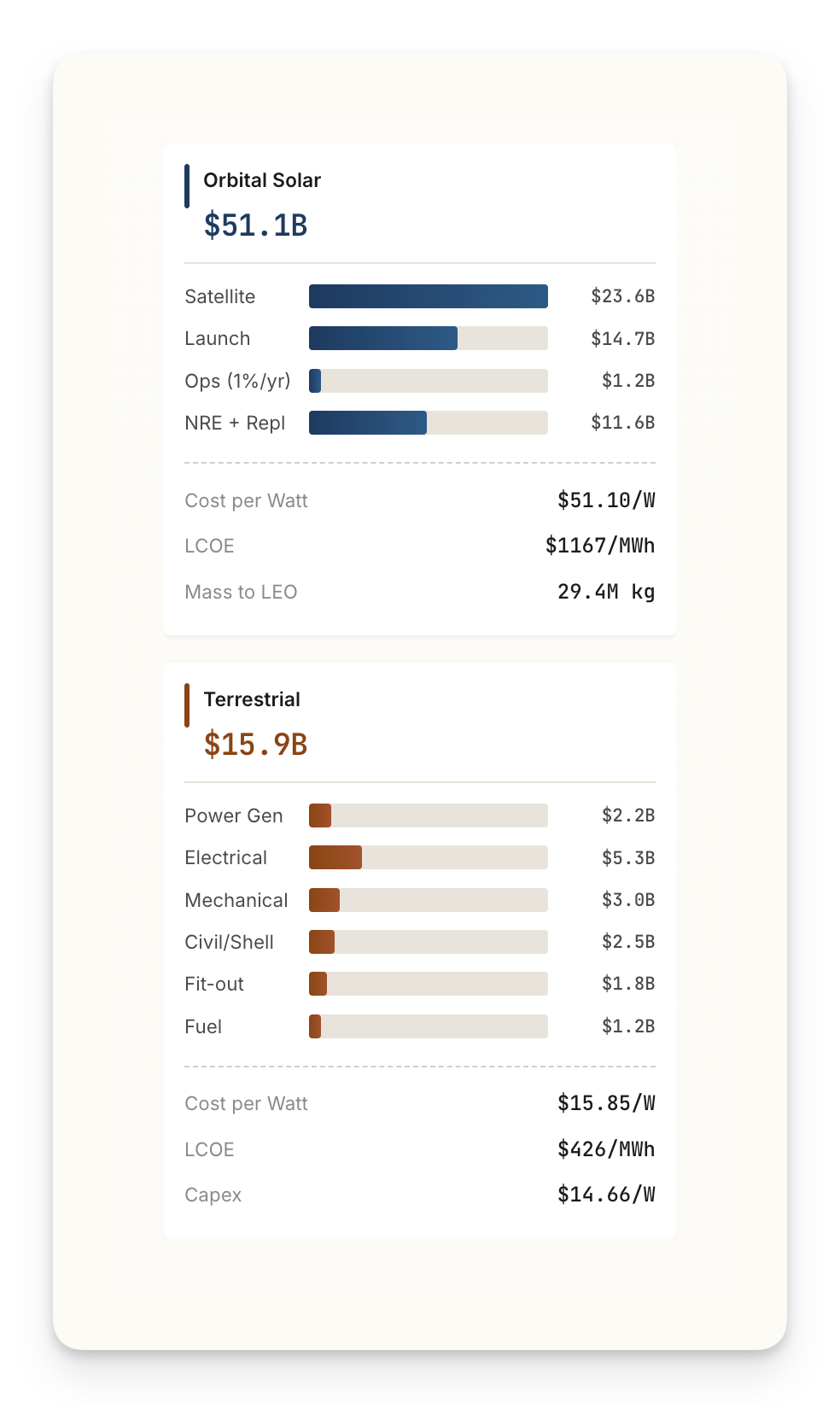
Economics of Orbital vs Terrestrial Data Centers
Before we get nerd sniped by the shiny engineering details, ask the only question that matters. Why compute in orbit? Why should a watt or a flop 250 miles up be more valuable than one on the surface? What advantage justifies moving something as mundane as matrix multiplication into LEO?
That “why” is almost missing from the public conversation. People jump straight to hardware and hand-wave the business case, as if the economics are self-evident. They aren’t. A lot of the energy here is FOMO and aesthetic futurism, not a grounded value proposition.
Ford Is Starting a Battery Storage Business to Power Data Centers and the Grid
Amid Ford’s shift away from making large electric vehicles, the automaker is adding a new product line to find a home for its batteries.
Ford said Monday that instead of scuttling plans to build the batteries for those vehicles, it will pivot that capacity into a new battery storage business. Those storage systems, which will use cheaper lithium iron phosphate batteries, will be used to power data centers and help buffer demand on the electric grid.
Ford says the battery storage systems will start shipping in 2027 and that the company plans to build 20GWh of annual capacity.