

A weekly collection of links to interesting things curated by Colin Wright.
Marriage Over, €100,000 Down the Drain: The AI Users Whose Lives Were Wrecked by Delusion
Towards the end of 2024, Dennis Biesma decided to check out ChatGPT. The Amsterdam-based IT consultant had just ended a contract early. “I had some time, so I thought: let’s have a look at this new technology everyone is talking about,” he says. “Very quickly, I became fascinated.”
Biesma has asked himself why he was vulnerable to what came next. He was nearing 50. His adult daughter had left home, his wife went out to work and, in his field, the shift since Covid to working from home had left him feeling “a little isolated”. He smoked a bit of cannabis some evenings to “chill”, but had done so for years with no ill effects. He had never experienced a mental illness. Yet within months of downloading ChatGPT, Biesma had sunk €100,000 (about £83,000) into a business startup based on a delusion, been hospitalised three times and tried to kill himself.
A Wind-Powered Tumbleweed That Heals the Desert as It Rolls
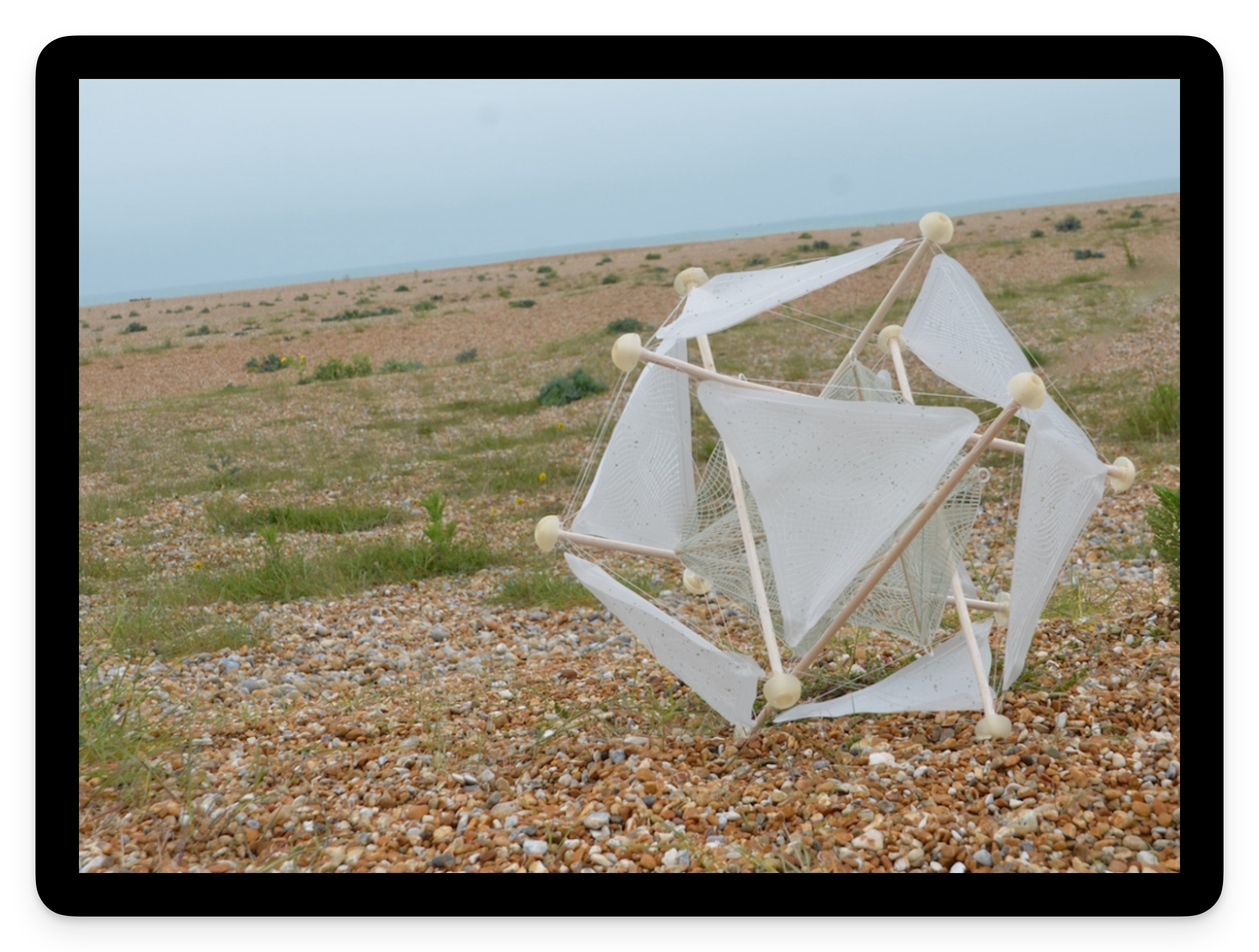
I have to be upfront: I did not expect a tumbleweed to be one of the most exciting design concepts I’d encounter this year. Tumbleweeds, in the cultural imagination, belong to Westerns and dusty ghost towns. They’re the kind of thing that drifts across an empty street right before a showdown, the universal shorthand for desolation. So when I first came across the Wasteland Nomads: Bionic Tumbleweed Sower System by Yizhuo Guo, I laughed a little. But as I looked closer, I started getting impressed.
Guo is a multidisciplinary designer with a master’s degree in Material Futures from Central Saint Martins, and she has previously collaborated with Google DeepMind. Her work appeared at Milan Design Week 2024. She is, in other words, someone who operates at the intersection of cutting-edge materials science and ecological design thinking. With Wasteland Nomads, developed alongside Daheng Chu through the University of the Arts London and Imperial College London, she took the one plant most associated with barren landscapes and used it as a blueprint for restoring them. The logic is almost poetic. The tumbleweed doesn’t fight the desert. It works with it. It uses wind as its engine and travels wherever the landscape allows. Guo’s question, essentially, was: what if we could engineer something that did exactly the same thing, but deliberately seeded the ground as it went?
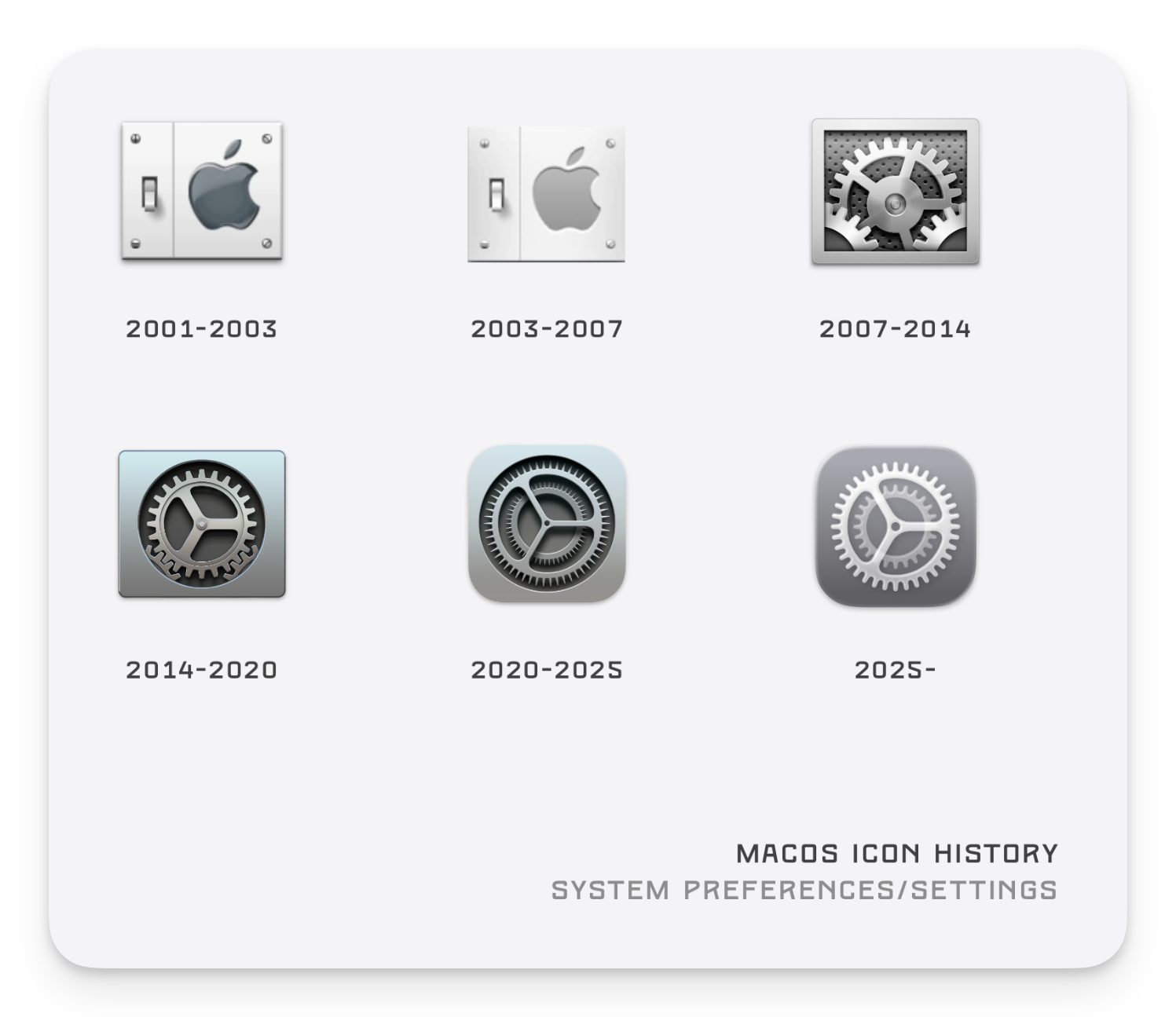
macOS Icon History
With macOS 26, Apple has announced a dramatically new look to their UI: Liquid Glass. Solid material icon elements give way to softer, shinier, glassier icons. The rounded rectangle became slightly more rounded, and Apple eliminated the ability for icon elements to extend beyond the icon rectangle (as seen in the current icons for GarageBand, Photo Booth, Dictionary, etc.).
With this release being one of the most dramatic visual overhauls of macOS’s design, I wanted to begin a collection chronicling the evolution of the system icons over the years. I’ve been rolling these out on social media over the past week and will continue to add to and update this collection slowly over the summer. Enjoy!
The $4-Million Girlfriend Experience
Jon Generous had blown through dozens of cam girls. According to his online bio, he was 54 years old and a successful real estate developer with cash to burn but nowhere to spend it. He was single, and he’d already provided his two adult children with hefty inheritances. Nothing he was buying made him happy, and that included the cam girls on MyGirlFund, an interactive sex site similar to OnlyFans. Jon wanted more than the typical snapshot or 30-second clip, though those were not off the table. He wanted thrills, sure, but also something more enduring—emotional connection. In the fantasy market, this pretend, paid relationship with benefits has a name: the girlfriend experience. Jon had the money and the patience. He just needed to find the one.
Here’s What Has to Happen if NASA Wants to Land on the Moon Every Month
NASA’s goal of reaching the Moon’s surface as many as 21 times over the next two and a half years will require an overhaul of the agency’s approach to buying lunar landers and success in rectifying the myriad problems that have, so far, caused three of the last four US landing attempts to falter.
It will also require improved oversight of NASA’s industrial base and better management of a supply chain that has often failed to deliver on time.
These landers are separate from NASA’s Human Landing System program, which has contracts with SpaceX and Blue Origin to develop and deliver human-rated landers to ferry crews to and from the lunar surface for the agency’s Artemis program. Alongside the crew landers, dozens of robotic and cargo landings will deliver payloads to scout for a future Moon base and demonstrate technologies for larger vehicles, mining and resource utilization, and sustained operations during the two-week-long lunar night.
Engineers at NASA’s Jet Propulsion Lab Make a Breakthrough in Rotor Technology
A little more than three years since NASA’s Ingenuity helicopter ended its pioneering mission at Mars, engineers at the Jet Propulsion Laboratory in California are designing next-generation Martian rotorcraft to carry heavier payloads longer distances through the planet’s low-density atmosphere.
Ingenuity was a resounding success, becoming the first airborne platform to explore another world. The dual-bladed helicopter made 72 flights, overachieving NASA’s original goal of five flights over 30 days, after delivery to Mars by the Perseverance rover. By the time the mission ended with a crash-landing in January 2024, Ingenuity had shown scientists a new way to explore other worlds, using air to travel longer distances and reach locations inaccessible to ground vehicles.