

A weekly collection of links to interesting things curated by Colin Wright.
Your Phone Screen Doesn’t Have the Same Color Range as the Human Eye
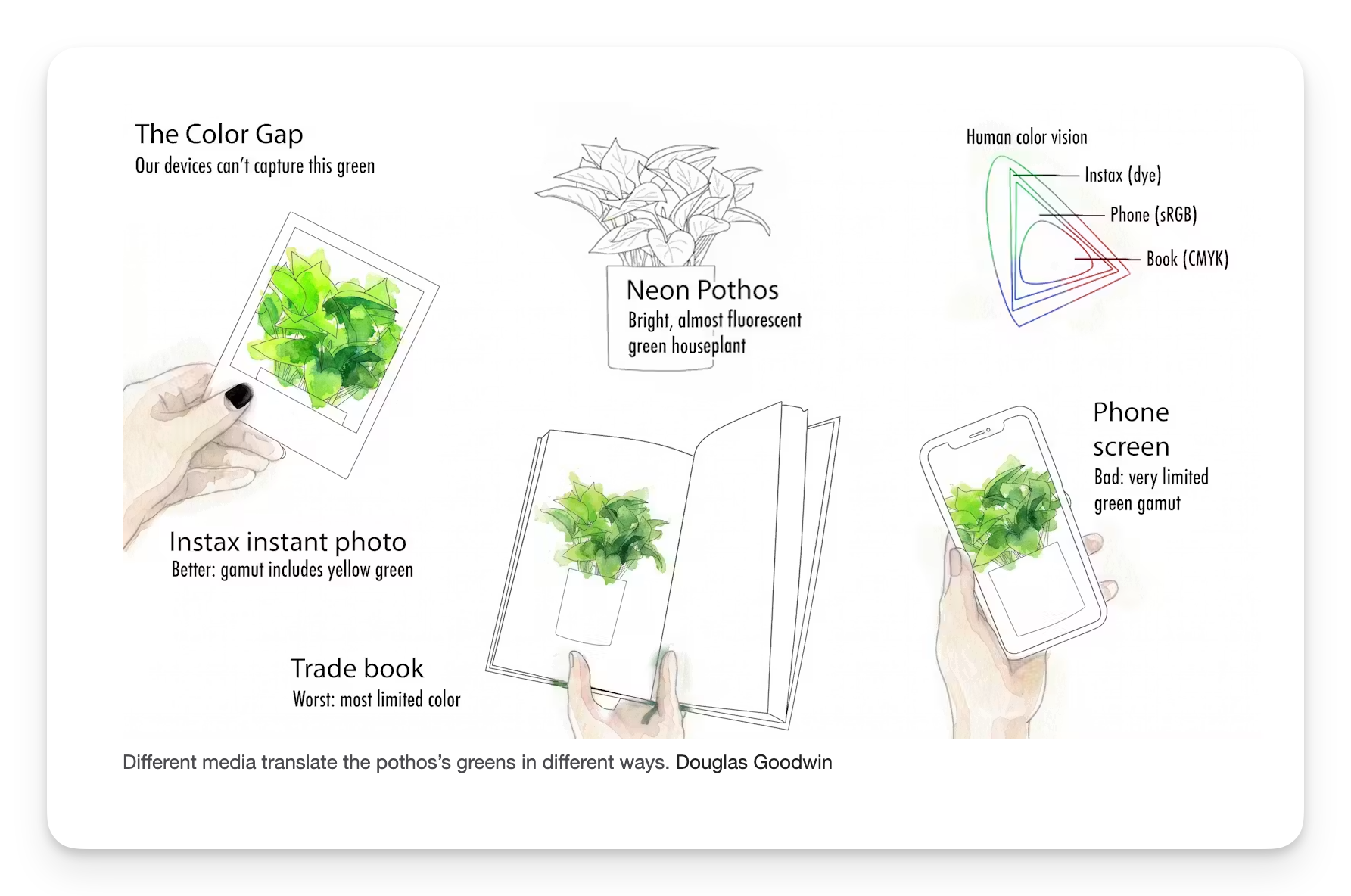
A peacock feather in sunlight shifts from blue to green to bronze as you turn it. Photograph it, and this shimmer collapses into one angle, one exposure, one compromise.
A digital image is not a record of what your eye sees. The standard color space that most digital images use was built for an older display world, when cathode-ray tube monitors swept beams of electrons across phosphor-coated glass. This standard color space made color predictable across many devices, but the compromise was a narrower range of colors for screens, cameras and image files to share.
Whatever the screen offers feels complete. It is not that your eyes cannot see more; digital images give them less to work with.
Samurai City
Cities are often centers of agglomeration, places where people gather to collaborate with one another. But this is not the only reason they exist. Sometimes, cities are chiefly centers of consumption, where elites gather to devour resources extracted from the rest of the country. And occasionally, they are something like prisons, where troublesome social groups are concentrated so that the authorities can keep an eye on them. Many premodern cities, like Versailles, Naples, or Imperial Rome, were a little like this. But perhaps the greatest example was Tokugawa Edo.
Between 1600 and 1868, Japan was dominated by the Tokugawa family. The Tokugawas had prevailed over their rivals after a series of civil wars, establishing a sort of dictatorship known as the Shogunate. They developed a remarkable social system, crafted to preserve their power, and with it, the peace and social stability of Japan. At the apex of this system was the city of Edo (today’s Tokyo), at times the largest city in the world, and one of the strangest urban structures in history.
After a 40-Year Wait, Technology Finally Enables Three-Sided Zipper Design
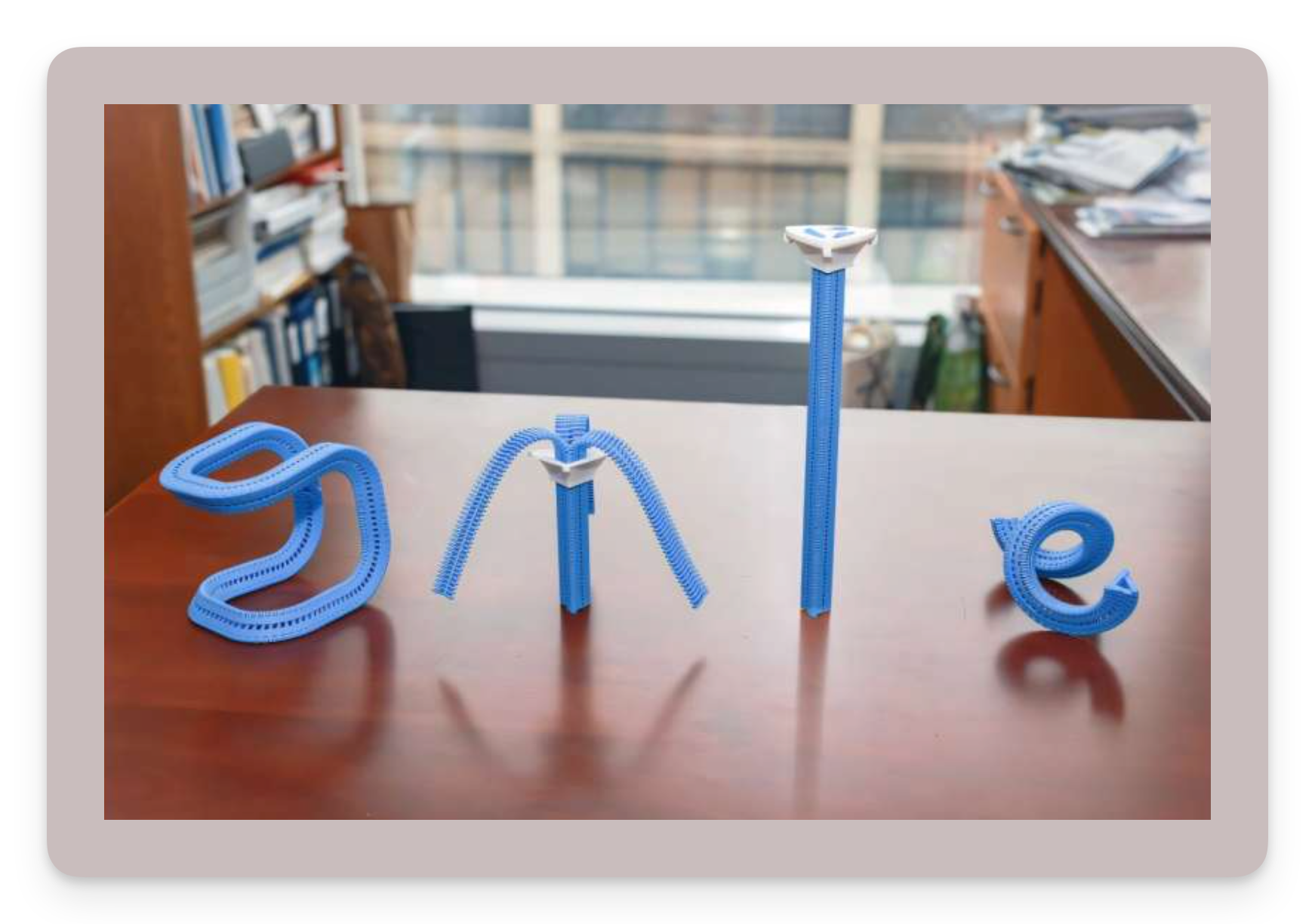
In 1985, the Innovative Design Fund placed an ad in Scientific American offering up to $10,000 to support clever prototypes for clothing, home decor, and textiles. William Freeman Ph.D., then an electrical engineer at Polaroid and now an MIT professor, saw it and submitted a novel idea: a three-sided zipper. Instead of fastening pants, it’d be like a switch that seamlessly flipped chairs, tents, and purses between soft and rigid states, making them easier to pack and put together.
Freeman’s blueprint was much like a regular zipper, except triangular. On each side, he nailed a belt to connect narrow wooden “teeth” together. A slider wrapping around the device could be moved up to fasten the three strips into place, straightening them into a triangular tube. His proposal was rejected, but Freeman patented his prototype and stored it in his garage in the hopes it might come in handy one day.
New Industry Report Reveals 212 Million Americans Are Gamers
On Wednesday, the Entertainment Software Association (ESA) released its annual Essential Facts About the U.S. Video Game Industry report for 2026, a comprehensive study of the state of video games across the nation. And despite the recent spate of console and PC price hikes, more Americans are playing video games than ever.
212.3 million Americans, or 67% of the population between 5 and 90 years old, play video games one or more hours per week. That’s an increase of 7.2 million people, or 3% of the population, compared to 2025. What’s more, a whopping 83% of households report having played at least one gaming device (phone, PC, console, or VR) within the last 12 months. On average, active players log in 12 hours each week, though 27% of that group play for 16 or more hours every seven days.
The Skeptic’s Guide to Humanoid Robots Going Viral on the Internet
It may appear that humanoid robots capable of handling any task have almost arrived—especially when tech companies showcase them performing acrobatic feats or handling household chores. But there is still a significant gap between these robot demonstrations and proving that the same robots can reliably and repeatedly manage such tasks in the real world.
The latest wave of robot videos can be particularly tricky, given the human tendency to anthropomorphize objects with a humanoid figure. A robot arm doing a dance move may simply seem “cool,” but a humanoid robot doing the same dance move can trigger more misleading assumptions, said Jonathan Hurst, cofounder of Agility Robotics and a robotics researcher at Oregon State University.
“People automatically extrapolate and assume that the robot that looks like a person can do all the things that a person who can dance could do—which is not true,” Hurst told Ars. “But a lot of the startup companies do kind of prey on that for being able to raise a lot of money.”
How a Deep-Ocean Desalination Startup Hopes to Rewrite California’s Water Future
An elephant standing full weight on a smartphone. That’s the pressure 1,400 feet underwater that a startup hopes to use to push seawater through ultrafine filters and make drinking water off the coast of Malibu — without much of the controversy that surrounds desalination.
Desalination plants are notoriously large electricity users. Some have natural gas pipelines running to them to fuel dedicated power plants. The company OceanWell estimates its technology will cut that electricity use by up to 40%.
Its goal is to anchor an array of units 4.5 miles offshore, at a cost of $500 million to $1 billion, to deliver 60 million gallons of water per day. That’s enough for about 400,000 people.
Prompted by severe water cutbacks four years ago, the Las Virgenes Municipal Water District has been working with Menlo Park-based OceanWell to develop a cheaper, less power-hungry way to turn saltwater into drinking water without sucking in tons of sea life.
In a recent test at a local reservoir, it worked.