A weekly collection of links to interesting things curated by Colin Wright.
The Feeling of the Old World Fading Away
For a long time, I’ve been experiencing something I can only describe as the feeling of the old world fading away. It’s as if some deeply embedded internal architecture is slowly dissolving and leaving in its particle wake a sorrow, for which there is no name. The causes are spoken of: the global conflicts, the ecological catastrophes, the social injustices—but the actual, visceral, experience of losing a coherence that held reality together, remains under examined. To be clear, this sorrow is not about nostalgia or “getting older”, this is about living in a moment when the question, “Has the world changed or have I?” is irrelevant because the separation of the self and the world no longer makes any sense.
Sinophobic Sinophilia
“Over the last two and a half years,” then Secretary of State Hillary Clinton wrote in the December 2011 issue of Foreign Policy, “one of my top priorities has been to identify and expand areas of common interest, to work with China to build mutual trust, and to encourage China’s active efforts in global problem-solving.” Clinton’s essay, a major statement of the Obama Administration’s so-called pivot to Asia, should of course not be read in good faith. It’s vapid in the ways such documents are typically vapid (“our most potent asset as a nation is the power of our values”) and ominous in the ways they are typically ominous (“a more broadly distributed military presence across the region will provide vital advantages”). And still, a text like “America’s Pacific Century” marks an already bygone moment. The China described by Clinton was a rising but not yet threatening power, a challenger who might still be made a (junior) partner. A sense of regal entitlement could be felt even in the article’s headline, with its presumptuous possessive: as if American dominion over the 20th century could be carried into the 21st with only a change of scenery.
The Great Chinese EV Exodus
China’s electric-vehicle makers are going global to avoid going under.
A price war at home and shrinking government support have thrown the industry into flux, with analysts predicting only 15 of the country’s 129 EV brands will remain profitable by 2030. China this year halved a purchase tax exemption for EVs, imposing a 5% levy on buyers for the first time.
The fallout is spreading beyond China’s borders, reshaping auto industries from Bangkok to Dubai to São Paulo. China exported 3.43 million EVs last year, almost three-quarters more than in 2024, according to the China Passenger Car Association.
“The pressure to deliver both at home and abroad has never been higher,” Lei Xing, a U.S.-based China auto industry consultant, told Rest of World.
A.I. Is Giving You a Personalized Internet, but You Have No Say in It
Early in the new year, when millions of people logged into Google Mail, they were confronted with a tool they hadn’t signed up for. Gemini, Google’s artificially intelligent assistant, was summarizing their emails.
The shift felt similar to what happened two years ago when the company started showing AI Overviews, or automatically generated responses to people’s questions, at the top of Google search results, with no ability to opt out.
Google’s tactics mirrored Meta’s deployment of its own A.I. chatbot, Meta AI, which became an unremovable tool inside apps including Instagram, WhatsApp and Messenger.
The impact of this A.I. takeover has been subtle but significant. The internet is beginning to look different for everyone, with tailored ads, bespoke advice and unique product prices shown to people depending on what they say to the chatbots. And there is typically no “off” switch.
China Showcases New Moon Ship and Reusable Rocket in One Extraordinary Test
A test version of the Mengzhou spacecraft, flying without anyone onboard, climbed into the stratosphere on top of the Long March booster before activating its launch abort motors a little more than a minute into the flight as the rocket reached the moment of maximum aerodynamic pressure, known as Max-Q. The abort motors pulled the capsule away from the booster, simulating an in-flight escape that might be necessary to whisk crews away from a failing rocket. The Mengzhou spacecraft later deployed parachutes and splashed down offshore from Hainan Island.
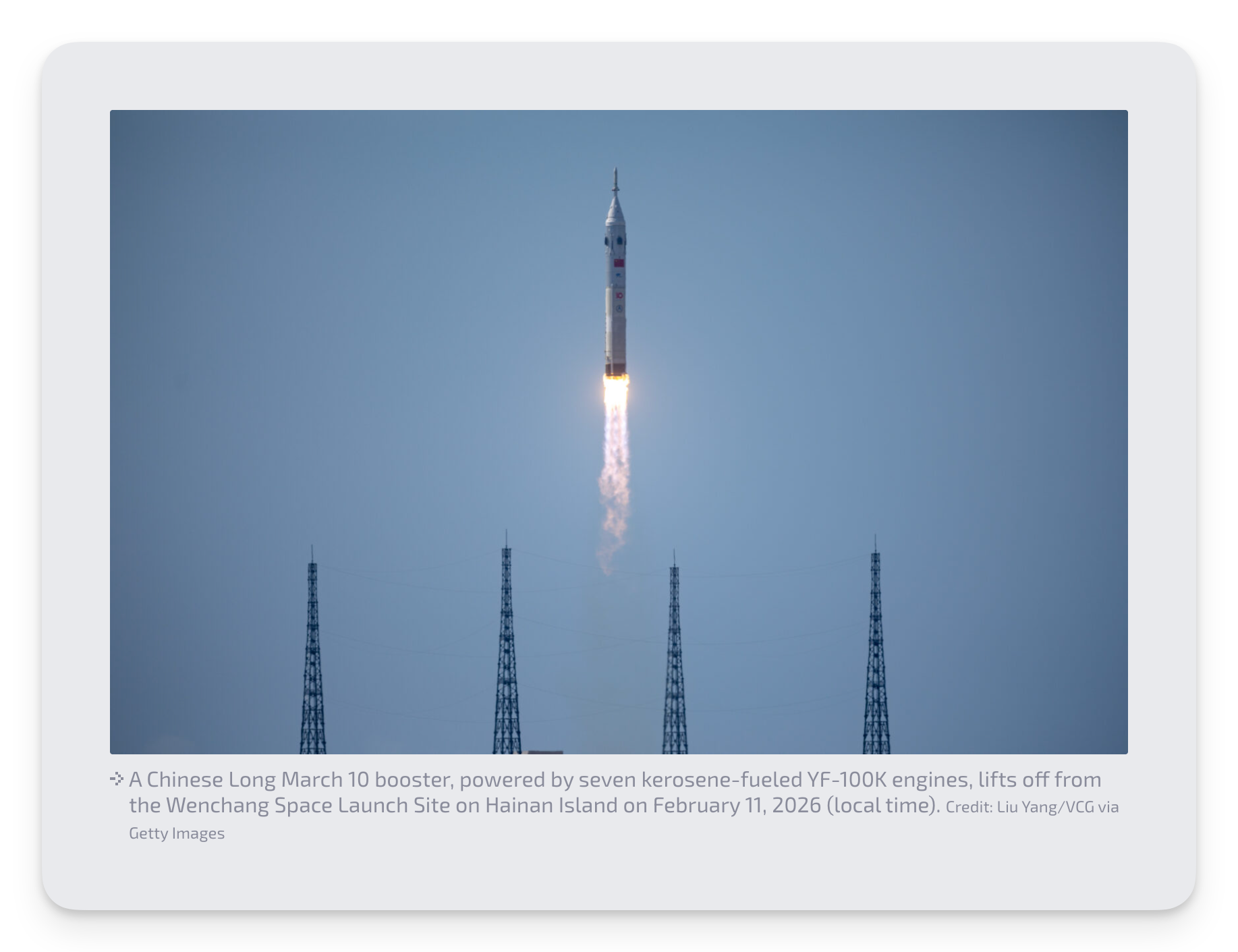
NASA and SpaceX performed similar in-flight abort tests before flying astronauts on the Orion and Dragon spacecraft. The test boosters on the Orion and Dragon abort tests were expended, but the Long March 10 rocket wasn’t finished after the Mengzhou abort command. Remarkably, the booster continued its ascent without the crew capsule, soaring into space on the power of its kerosene-fueled YF-100 engines before reentering the atmosphere, reigniting its engines, and nailing a propulsive landing in the South China Sea, right next to a recovery barge waiting to bring it back to shore.
Scent, In Silico
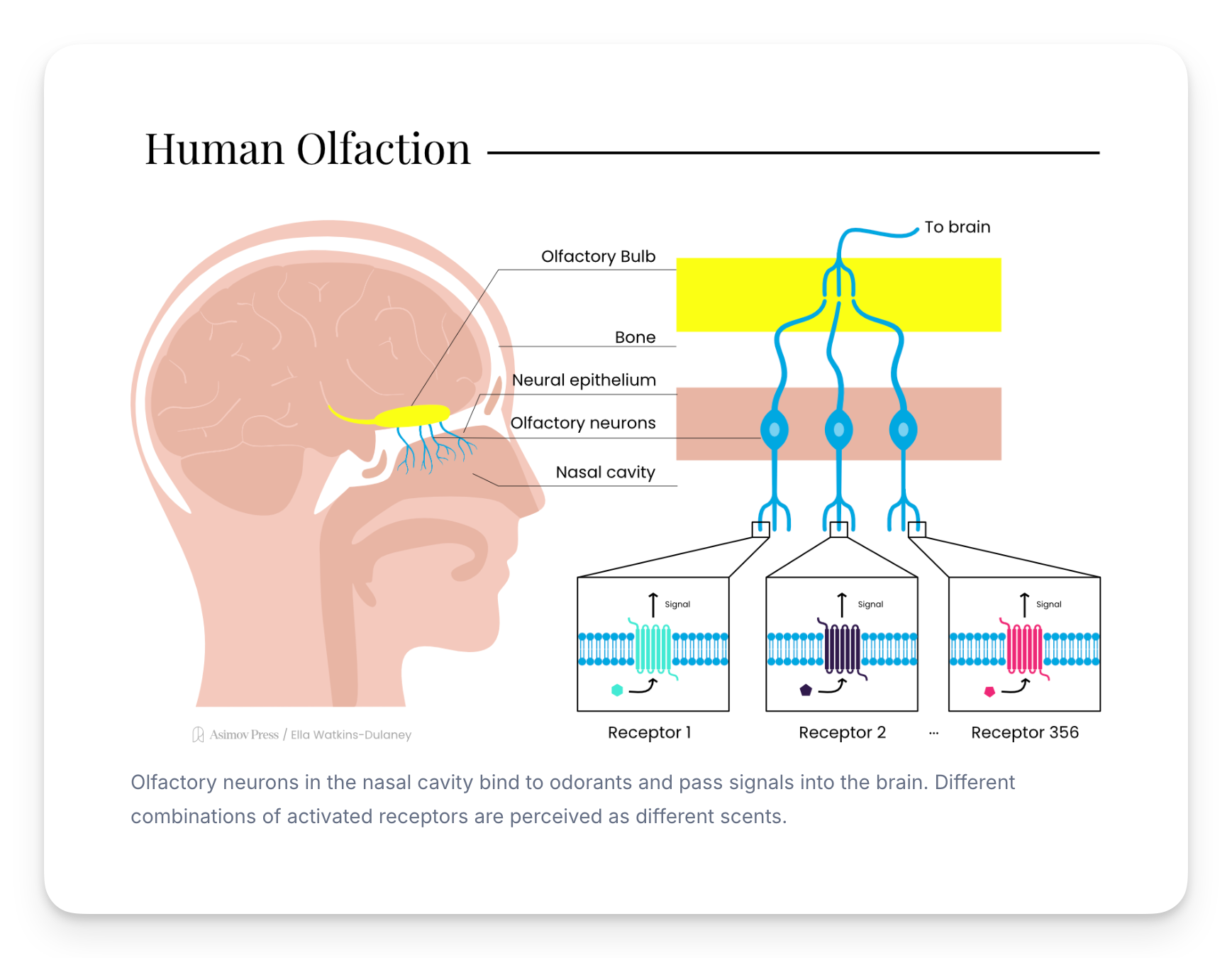
Smell is our most primal and, arguably, most emotionally potent sense. It summons memories, shapes taste, and influences behavior: the aroma of coffee is capable of enhancing alertness well before caffeine ever reaches the bloodstream. A hint of sunscreen collapses decades, taking us back to youth; but, pinch the nose, and suddenly a slice of apple is hard to distinguish from a piece of raw potato.
Despite its significance, scent remains the most mysterious of our senses. Unlike vision or hearing, it resists straightforward formalization. The challenge lies not only in the vast molecular diversity of odorants, which vary in far more ways than photons or frequencies, but also in the effort to build a shared vocabulary and technology capable of codifying subjective sensation. So while machines have learned to see through computer vision and hear through signal processing, scent remains stubbornly analog. There has been no RGB of odor, no Fourier transform for smell.
At least, until now.