The Potsdam Giants was the name given to Prussian infantry regiment No 6. The regiment was composed of taller-than-average soldiers, and was founded in 1675. It was eventually dissolved in 1806, after the Prussians were defeated by Napoleon. Throughout the reign of the Prussian king Friedrich Wilhelm I of Prussia (1688–1740), the unit was known as the "Potsdamer Riesengarde" ("giant guard of Potsdam") in German, but the Prussian population quickly nicknamed them the Lange Kerls ("long fellows").
He stopped doing the crazy old man routine then. His dark eyes snapped onto me, and for a moment I thought he was going to stab me. Then he grinned toothily, and said, “Well, guess I’ll have to settle for breakfast elsewhere. Does this place have Starbucks?”
“Yeah,” I said, like it was reasonable, “but they don’t have the coconut milk here.”
He grunted. “Who’s the president?”
“Clinton.”
“Which one?”
For some reason, we both thought that was hilarious, and his chuckle became my full fledged howls of laughter. Passers by must have thought I was as mad as the dirty old man on the sidewalk, and I did not care. Because I’d found someone like me.
At 21, Lapwood became the youngest ever director of music at Pembroke College, Cambridge. Prior to that she was the first ever female organ scholar in Magdalen College’s 560-year history. And now, superlatives aside, she’s among classical music’s biggest social media stars with a 555k following on TikTok. ‘Welcome to #OrganTok’ says Lapwood’s social media profile – and it’s a place that brims with late night Royal Albert Hall run-ins with the likes of Benedict Cumberbatch and Italian composer-supreme Ludovico Einaudi. As well as 2am rehearsals in the hallowed hall, her phone propped into an organ crevice, recording her ballerina-like poise and performances laced with humorous interjections (still not yet midway through her allocated 12-6am rehearsal slot).
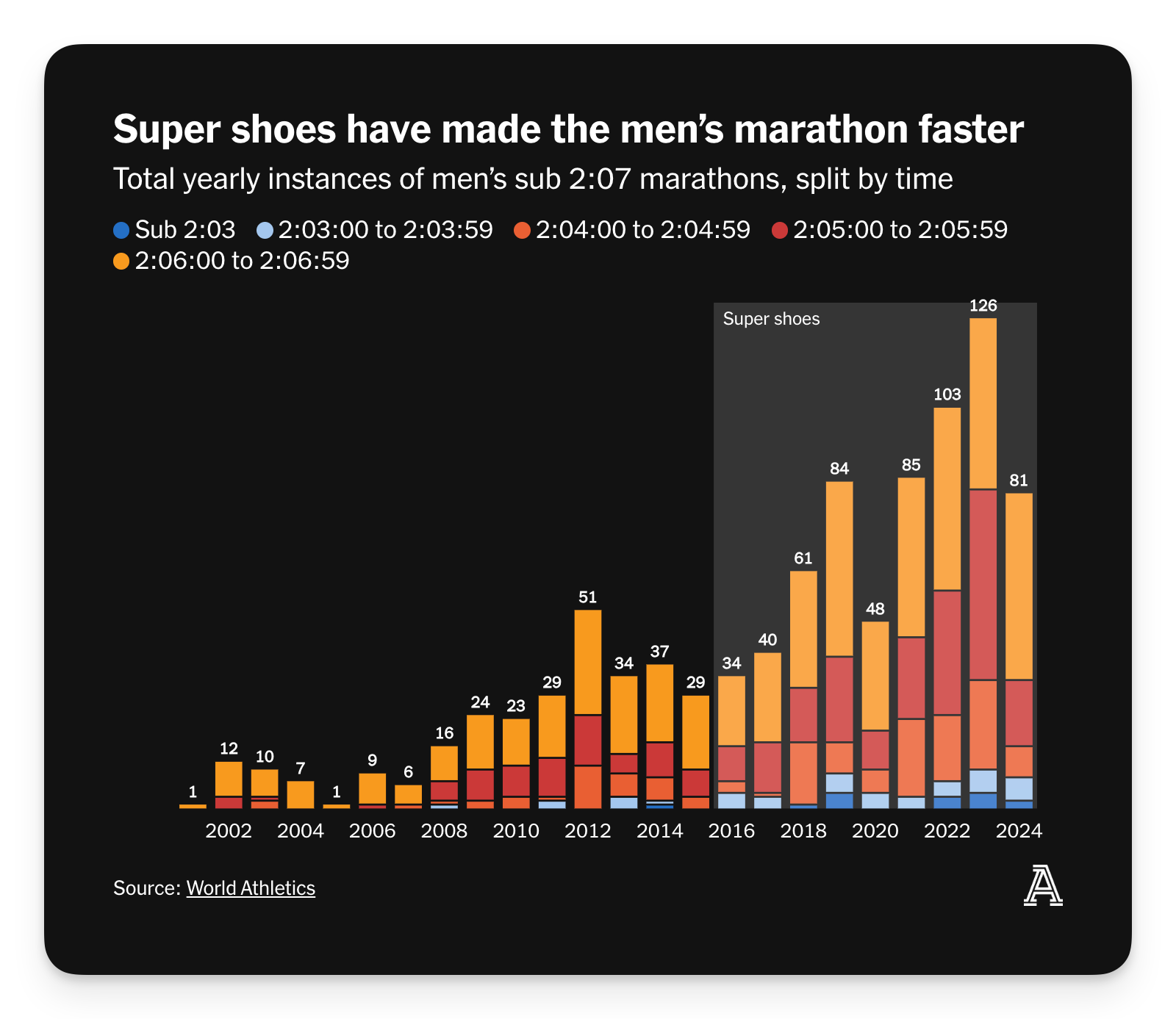
Still, Kipchoge was a superhero in a supershoe. He’d been agonisingly close to this two years earlier when he ran 2:00:25 at Nike’s Breaking2 in Monza (also not under record-legal conditions) in 2017.
The Vienna run was in Nike’s Alphaflys, the brand’s latest technology born out of their industry-breaking Vaporflys in Monza — the ones with the big midsole and the curved carbon plate.
This is the story of how the marathon has changed, told by some of the people behind the technological revolution.
Wearable AI technology offers a future where we’re no longer tethered to screens or overwhelmed by notifications. These devices are often designed to emulate nondescript accessories with simple or streamlined communication, filtering updates and disruptions based on our environment, allowing us to focus on meaningful interactions and high-value tasks. It’s about staying present, supported by an out-of-sight assistant who enhances the experience on our terms.
Ottawa announced plans back in 2021 to build what it called a "high-frequency" (HFR) rail corridor with stops in Toronto, Peterborough, Ottawa, Montreal, Trois-Rivières, Laval and Quebec City. At the time, the government estimated the cost at between $6 billion and $12 billion.
The federal government identified three qualified bidders for the project last year. A spokesperson for VIA HFR, the VIA Rail subsidiary set up to oversee the project, said the bidders have been asked to provide the government with two options: a "conventional" rail network with trains reaching speeds of 200 km/h, and a network with trains reaching speeds "comparable to those of European trains."
It’s the same story almost every night. Myanmar’s military is bombing its own people. There are hardly any air defense missiles, fortified bunkers or sirens. Every sound in the sky can mean approaching danger. Those who, unlike Saungkha, have no access to the internet must listen closely to determine if the noise is "drawn out and soft” or "thunderous and short,” as his people describe it.
Up until a few years ago, the 31-year-old Saungkha used to sometimes sit in passenger planes himself. They would bring him to Vietnam, France or the United States. Today, he is the commander of a force of more than a thousand young men and women who have followed him into the jungle to fight against the military.
The erstwhile human rights activist has turned into a rebel leader.