A weekly collection of links to interesting things curated by Colin Wright.
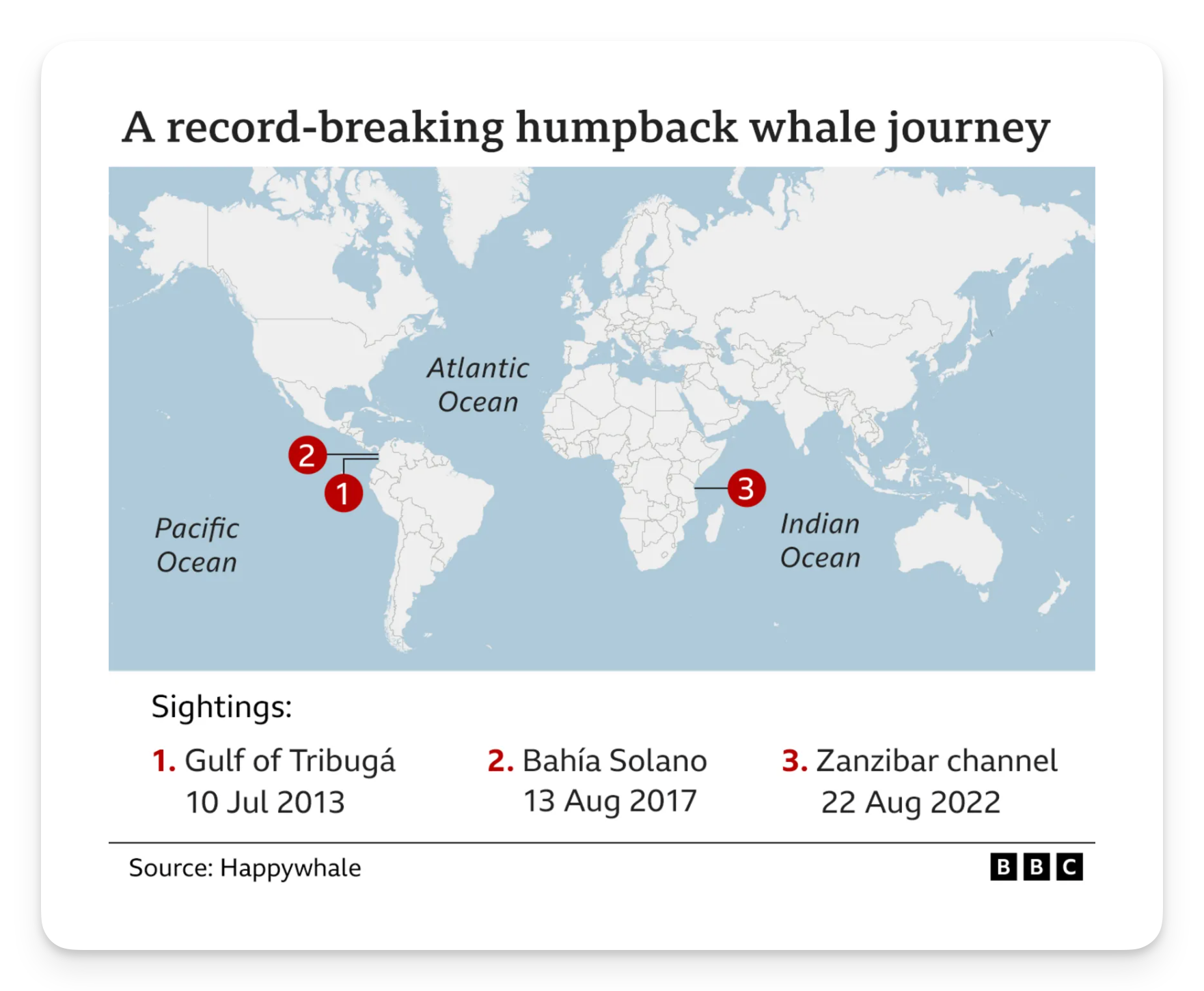
Whale Makes Epic Migration, Astonishing Scientists
The sightings are separated by a 13,046 km great-circle distance - the minimum distance for the route the whale might have taken, the scientists say, though it is likely to be much greater.
Since the earth is a sphere, the shortest path between two points is expressed by the great circle distance, which corresponds to an arc linking two points on a sphere.
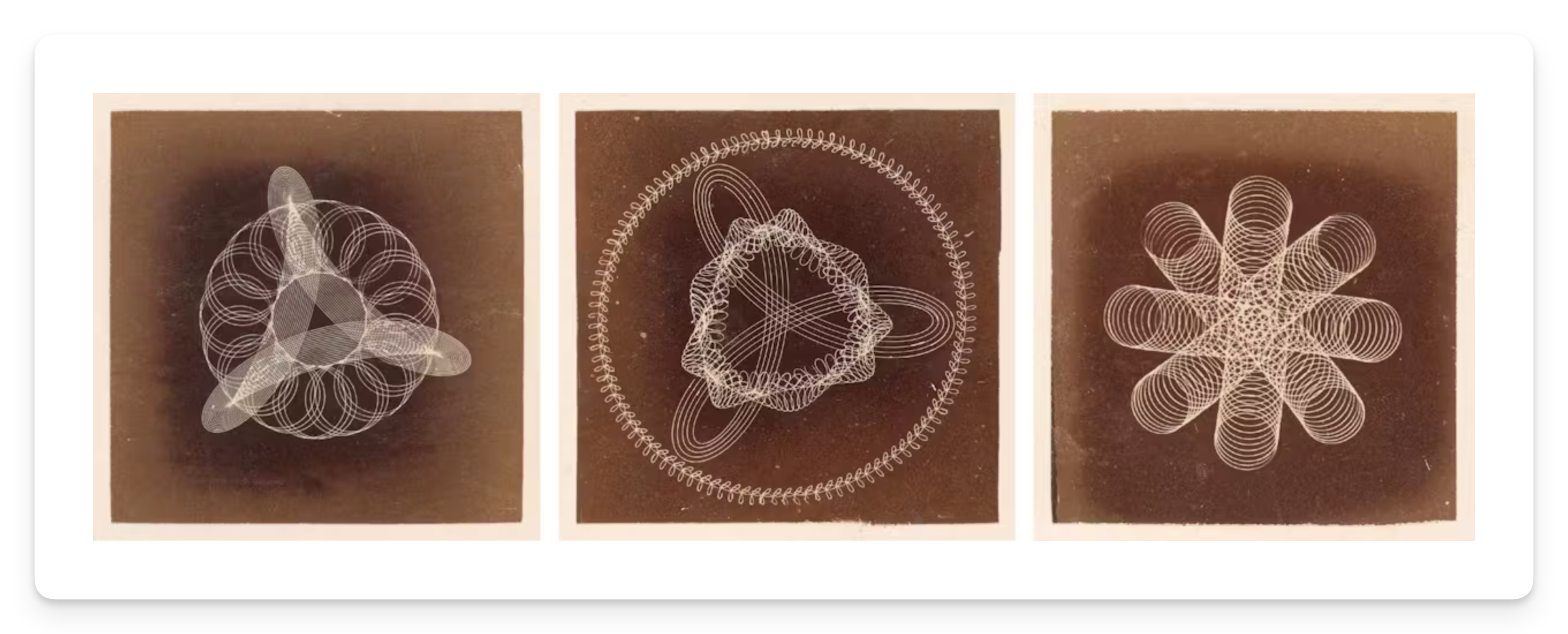
Specimens of Fancy Turning
“Fancy” turning is an old artform, thought to originate in fifteenth-century Bavaria, with sustained discussions of the practice first appearing in Charles Plumier’s L’Art de Tourneur (1701). While we may be more familiar with lathes being used to shape staircase balusters and table legs, here an eccentric cutter can create both convex and concave objects from a variety of mediums. These patterns ornament the lids of wood and ivory boxes, bannister newels, and Fabergé eggs.
The Great Offline
True disconnection, like true wilderness, is an empty goal. Whether we have shunned social media or not, the internet does not cease to exist as a driving force in the world, any more than ecological systems cease to shape our lives the minute we reach the end of the forest trail and hop back in the car. The concepts of the “offline world” and the “wilderness” function as vessels into which we pour our frustrations with contemporary life: They are defined by what they don’t contain, rather than what they do.
The Art of Taking It Slow
Most new, high-end bikes are compact, lightweight, and hyper-responsive, with carbon-fibre frames, drop handlebars, and disk brakes, some of which are hydraulic. One of the bikes recommended by Bicycling magazine last year has a matte-black colorway with “a stealthy aesthetic”: the cables and wires are tucked inside the frame. The bike is advertised as “race bred, built for speed.”
Petersen believes that the bike industry’s focus on racing—along with “competition and a pervasive addiction to technology”—has had a poisonous influence on cycling culture.
Proof
The product that I mass-customized was a piece of consumer electronics called The Public Radio. We had backed into mass customization in a weird way, taking a feature that would typically have been field-adjustable and locking it down. Specifically, we designed The Public Radio — a battery-powered FM radio — such that it did not have a tuning knob and instead needed to be tuned to the customer’s requested frequency during the manufacturing process.

The AI We Deserve
For all the ways tools like ChatGPT contribute to ecological reason, then, they also undermine it at a deeper level—primarily by framing our activities around the identity of isolated, possibly alienated, postmodern consumers. When we use these tools to solve problems, we’re not like Storm’s carefree flâneur, open to anything; we’re more like entrepreneurs seeking arbitrage opportunities within a predefined, profit-oriented grid. While eolithic bricolage can happen under these conditions, the whole setup constrains the full potential and play of ecological reason.
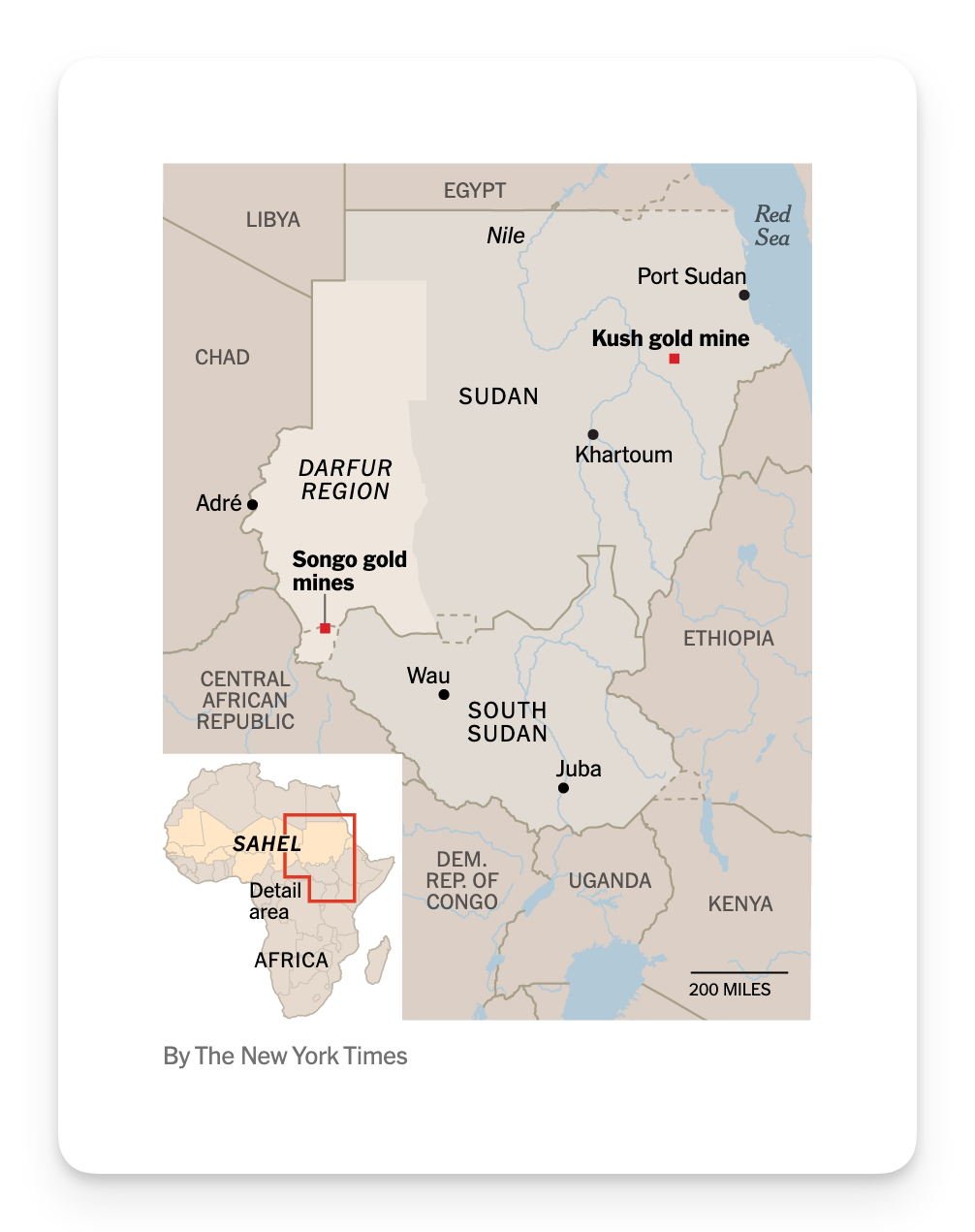
The Gold Rush at the Heart of a Civil War
As Sudan burns and its people starve, a gold rush is underway.
War has shattered Sudan’s economy, collapsed its health system and turned much of the once-proud capital into piles of rubble. Fighting has also set off one of the world’s worst famines in decades, with 26 million people facing acute hunger or starvation.
But the gold trade is humming. The production and trade of gold, which lies in rich deposits across the vast nation, has actually surpassed prewar levels — and that’s just the official figure in a country rife with smuggling.