

A weekly collection of links to interesting things curated by Colin Wright.
Frank Deschandol’s Photos Uncover the Some of the World’s Most Elusive Insects and Arthropods
“I’m above all a naturalist who came logically to photography, not the other way around,” he explains. “I’ve always had a strong connection with nature, and I couldn’t live without traveling and discovering new places.”



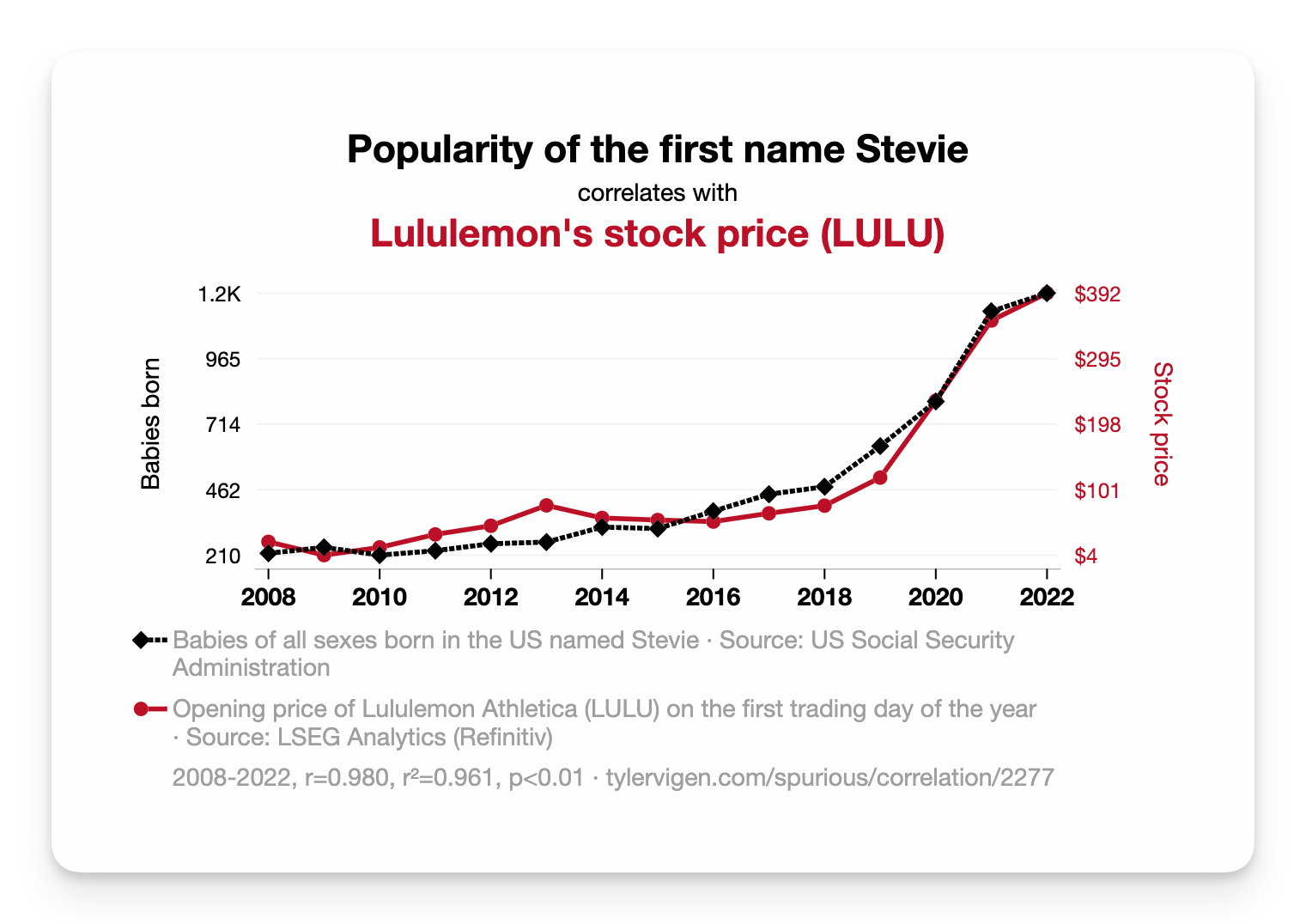
Spurious Correlations
Spurious Correlations a project that is fun first, and mildly educational second. It's great to occasionally break all the rules just to see what happens!
You shouldn't take this project as a warning against believing research. You also shouldn't take it as an afront on correlations or p-values. These are useful tools when used correctly.

In Japanese You Need a Dictionary to Count Things
One of the first things you learn of a language is counting to ten. When you're getting started, Japanese counting seems to be as easy as any other language: one is ichi, two is ni, three is san, and so on. These words come from ancient Chinese. (If you remember only one of these, remember 2=ni, because I'll use it in the examples that follow).
The numbers from eleven up are extremely regular combinations of the first ten. For example, thirteen is just juu-san, literally "ten-three". "No big deal!" you think as an endearing beginner, "I've got this!".
Then you learn a bit more. And more. And more.
Olive Oil Fraud and Mislabelling Cases Hit Record High in EU
The EU had a record number of potential olive oil fraud and mislabelling cases in the first quarter of this year as inflationary pressures fuelled an increase in the hidden market for the kitchen staple.
The cost of olive oil has more than doubled since 2018 with production hit by extreme weather caused by the climate crisis and other factors.
As the price has spiked, so has the number of “cross-border EU notifications”, which include mislabelling, potential fraud, and safety cases involving contaminated oils.
Inside the Emerging Virtual-Preaching Economy in Internet-Obsessed Kenya
Wekesa, 31, stands five-foot-four with a clean-shaven head and is dressed in a sleek, cream-and-maroon Ankara suit. He has the air of a man at ease before a congregation of thousands. But he’s alone in his living room, facing a coffee table and empty couch. The webcam is broadcasting his nightly sermon live on Facebook, the Samsung live on TikTok, and another phone live on a messaging app called Imo. In total, close to 500 people are following along. “Some of us, if it were not for God, we would have been defeated [a] long time ago,” he tells them.
China Adds New Clean Power Equivalent to UK’s Entire Electricity Output
China added as much new clean energy generation in the first half of this year as the UK produced from all sources in the same period last year, data shows, as wind and solar power generation continued to surge in the world’s biggest emitter of greenhouse gases.
The Paradox of Nuclear Strategy
The formulation epitomises what other scholars would later call ‘the nuclear revolution’: the transformational effect nuclear weapons would have on international statecraft, making war less, not more, likely.
The theory posited that the catastrophic effect of nuclear wars would be apparent to all, meaning many states would seek nuclear weapons and the ability to use them to respond to aggression. Having achieved such a secure second-strike capability, however, such states would fall back and relax their inherent impulse for competition and expansion, leaving the world a more peaceful place.
This theory always remained just that: a mere belief that could not explain the way states with nuclear weapons behaved after they acquired them.