

A weekly collection of links to interesting things curated by Colin Wright.
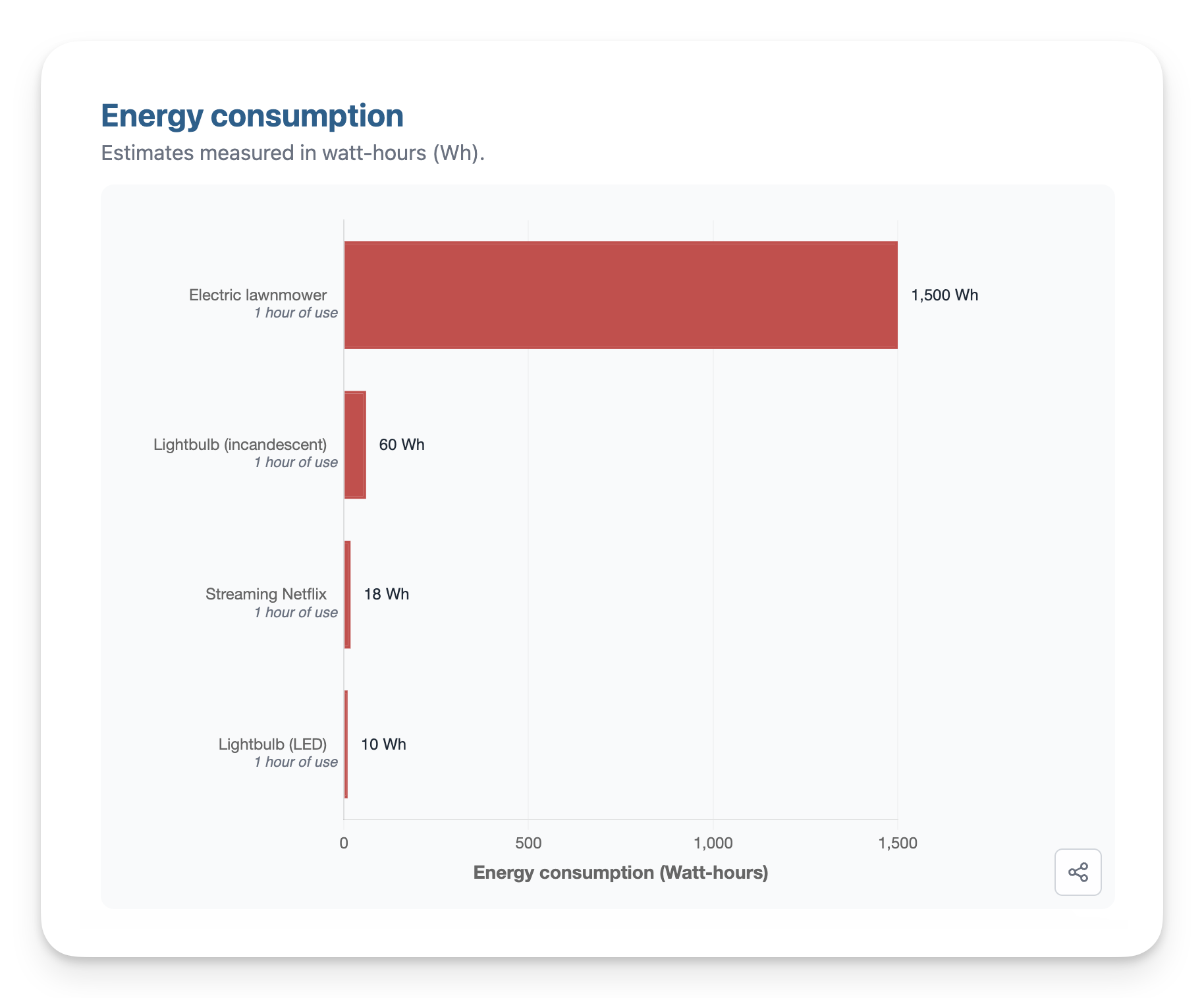
Does That Use a Lot of Energy?
Compare the daily energy consumption of different products and activities.
Add and remove products or activities in the sidebar to compare them on the chart. Most have the option of adjusting the number of hours used, miles driven, or other units of usage.
What Are the Odds?
Many statistics depend on personal factors such as location, genetics, or health. This is just for fun so don't take it too seriously!

The Rise of Industrial Software
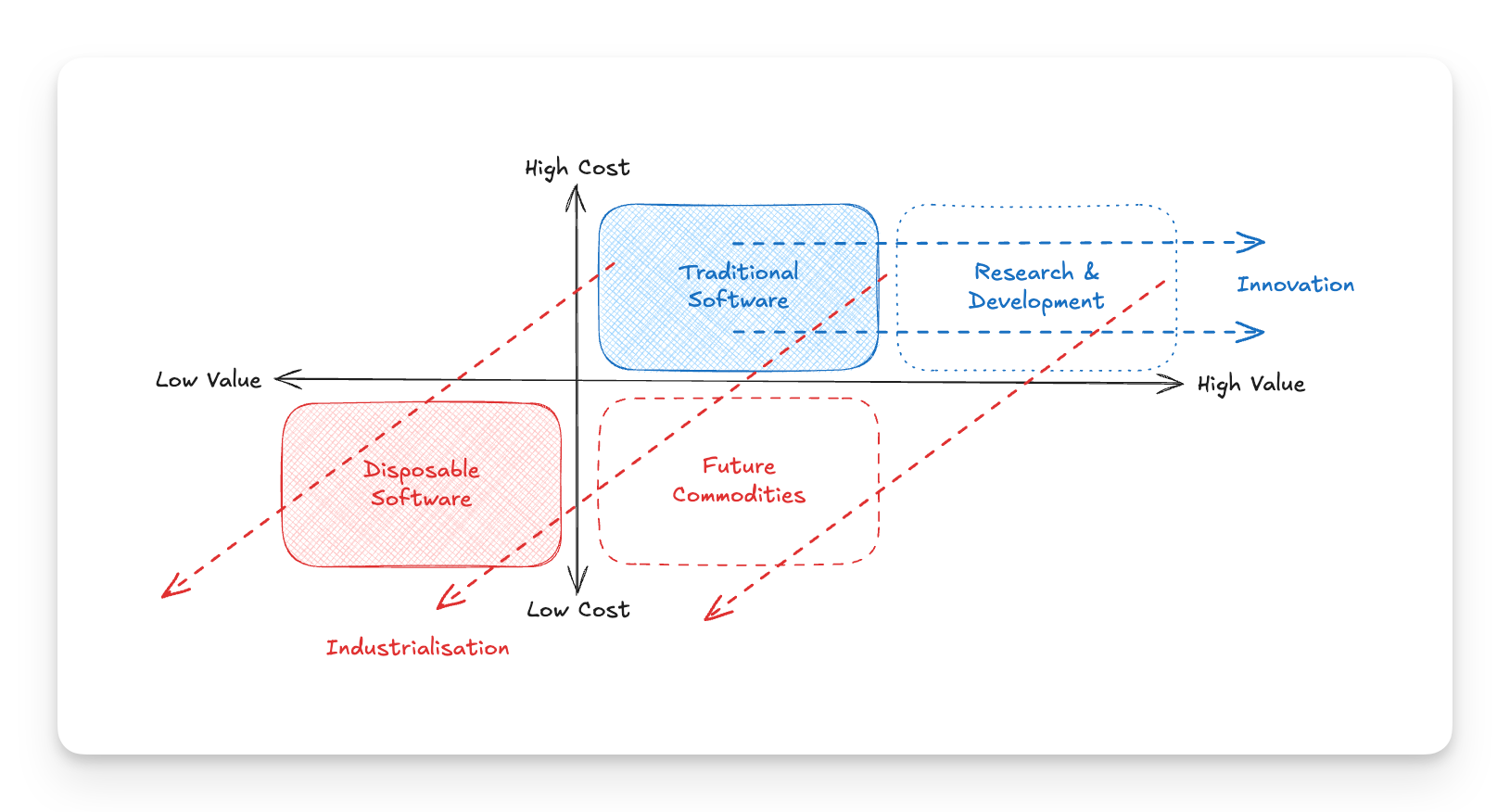
For most of its history, software has been closer to craft than manufacture: costly, slow, and dominated by the need for skills and experience. AI coding is changing that, by making available paths of production which are cheaper, faster, and increasingly disconnected from the expertise of humans.
I have written previously about how AI coding can be a trap for today’s practitioners, offering shortcuts to incomplete solutions at the expense of the understanding needed for sustainable development practices. But as we collectively address the shortcomings of our current toolset, it is clear that we are heading into a world in which the production of software is becoming increasingly automated.
What happens to software when its production undergoes an industrial revolution?
Hard Drives Are Already Sold Out for the Entire Year, Says Western Digital
Looking to buy a new hard drive? Get ready to pay even more this year.
According to Western Digital, one of the world’s biggest hard drive manufacturers, the company has already sold out of its storage capacity for 2026 with more than 10 months still left in the year.
“We’re pretty much sold out for calendar 2026,” said Western Digital CEO Irving Tan on the company’s recent quarterly earnings call.
Astronomers Are Filling in the Blanks of the Kuiper Belt
Out beyond the orbit of Neptune lies an expansive ring of ancient relics, dynamical enigmas, and possibly a hidden planet—or two.
The Kuiper Belt, a region of frozen debris about 30 to 50 times farther from the sun than the Earth is—and perhaps farther, though nobody knows—has been shrouded in mystery since it first came into view in the 1990s.
Over the past 30 years, astronomers have cataloged about 4,000 Kuiper Belt objects (KBOs), including a smattering of dwarf worlds, icy comets, and leftover planet parts. But that number is expected to increase tenfold in the coming years as observations from more advanced telescopes pour in. In particular, the Vera C. Rubin Observatory in Chile will illuminate this murky region with its flagship project, the Legacy Survey of Space and Time (LSST), which began operating last year. Other next-generation observatories, such as the James Webb Space Telescope (JWST), will also help to bring the belt into focus.
Solve Everything
This essay is an effort to sketch out how technological progress over the next 10 years may transpire, suggesting how the future may occur as Artificial Intelligence (AI) evolves at an accelerating rate and grand challenges in medicine, energy, and industry are systematically solved. It is an effort to provide a high-level vision of how advances in the “Industrial Intelligence Stack” may solve the great human challenges of our time and how society may benefit as a result.