A weekly collection of links to interesting things curated by Colin Wright.
All About Automotive Lidar
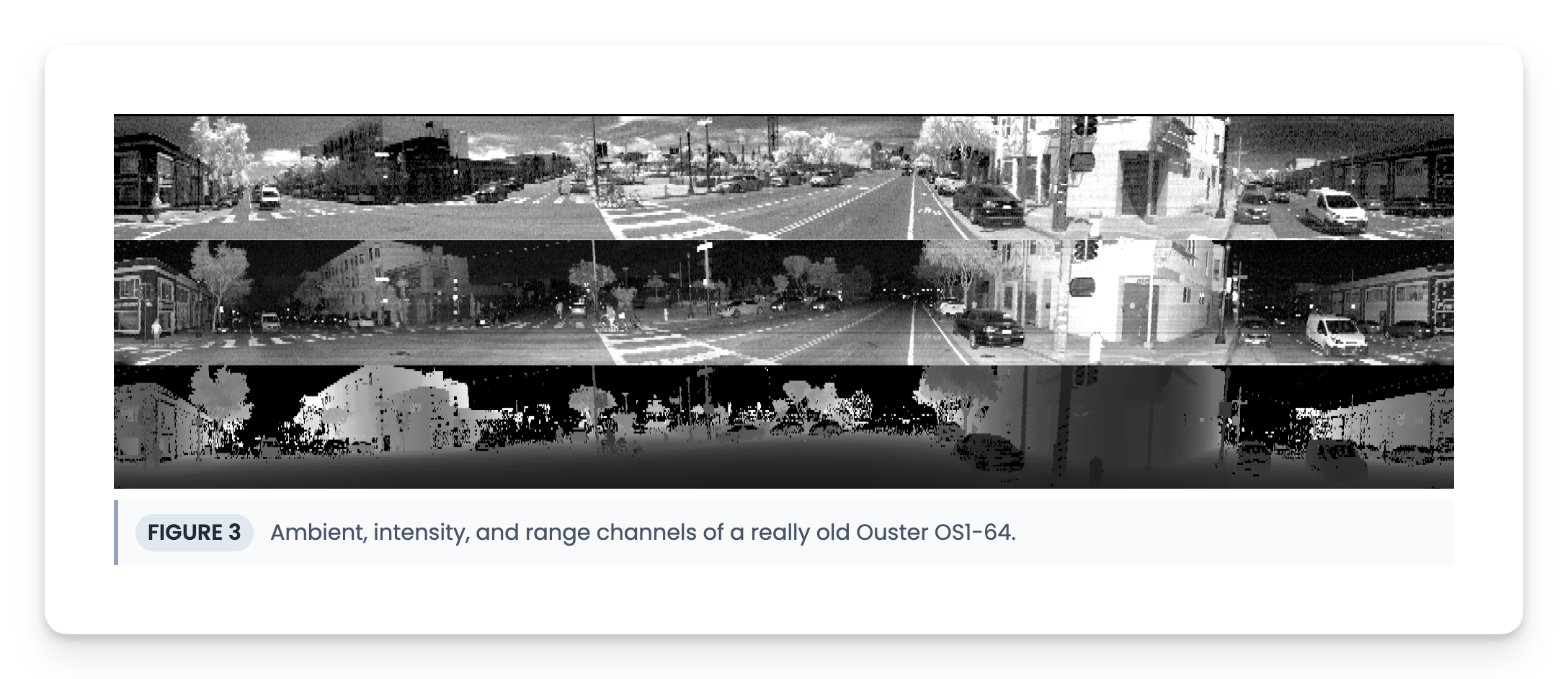
A lidar is a sensor which operates by bouncing light off surrounding surfaces. Lidars typically quantify:
distance, by measuring how much time it takes for light to bounce back
bearing, by shining the light or pointing the detector in a particular direction
reflectivity, by measuring how much light has bounced back
speed, by measuring the Doppler shift in the reflected light.
ambient, by measuring the amount of light in the environment in a particular direction
Meet the Woman on a Mission to Photograph Every Species of Hummingbird in the World
Seven years ago, anesthesiologist and budding photographer Carole Turek embarked on a seemingly impossible quest to photograph every hummingbird species in the world—all 366 of them. Now 75 years old and entering retirement, Turek has just 90 species left on her list. And what began as a personal obsession has garnered the attention and praise of researchers, conservationists, and legions of fans through her popular YouTube channel and website, Hummingbird Spot.
Turek developed an early affection for birds as a child, sparked by the chatter of pet parakeets that filled her family’s home in the Philadelphia suburbs. But it wasn’t until she was in her 30s, after completing an anesthesiology residency and moving to Colorado, that wild birds grabbed her attention. One afternoon, while Turek dined on a restaurant patio, a flash of iridescence caught her eye. Sipping from the blossoms of a hanging flower basket was Turek’s first hummingbird—possibly a Broad-tailed, but she lacked the expertise to identify it then. She watched, spellbound, until the bird zipped out of sight. “I was fascinated with it,” she says.

How the Dollar-Store Industry Overcharges Cash-Strapped Customers While Promising Low Prices
On a cloudy winter day, a state government inspector named Ryan Coffield walked into a Family Dollar store in Windsor, North Carolina, carrying a scanner gun and a laptop.
Inside the store, which sits along a three-lane road in a county of peanut growers and poultry workers, Coffield scanned 300 items and recorded their shelf prices. He carried the scanned bar codes to the cashier and watched as item after item rang up at a higher price.
Red Baron frozen pizzas, listed on the shelf at $5, rang up at $7.65. Bounty paper towels, shelf price $10.99, rang up at $15.50. Kellogg’s Frosted Flakes, Stouffer’s frozen meatloaf, Sprite and Pepsi, ibuprofen, Klondike Minis – shoppers were overpaying for all of them. Pedigree puppy food, listed at $12.25, rang up at $14.75.
All told, 69 of the 300 items came up higher at the register: a 23% error rate that exceeded the state’s limit by more than tenfold. Some of the price tags were months out of date.
‘Hobby Dogging’: Germany’s Viral Trend of Pretending to Walk a Dog
Taking a dog for a walk — without the dog?
Believe it or not, an emerging pastime called “hobby dogging” is a new leisure activity for animal lovers in Germany who don’t want the vet bills, hairy carpets, drooling or expensive vet fees. There is also no need to pick up the poo, deal with aggressive behavior or barking when leaving your pet at home.
As might be expected, it has been met with much head-shaking, skepticism and ridicule online. After all, the dog only exists in the walker’s imagination.
Hobby dogging — essentially dog training without dogs — follows in the wake of “hobby horsing,” a previous trend that saw children (and a surprising number of adults) gallop through obstacle courses on stick horses.
It sounds like some viral prank generated by AI, but it is surprisingly true (and truly surprising). In Bad Friedrichshall, north of wealthy southern Germany’s car capital of Stuttgart, you can even get professional guidance in walking your imaginary dog.

300,000 AI-Animated Poses in an Instant: My Visit to Disney and the New Reality for Cartoons
It’s a warm fall afternoon at Walt Disney Studios in Burbank, California. A gentle breeze blows through the meticulously landscaped trees lining the walkways, and a ray of sunshine hits the famed Team Disney building, where 19-foot-tall stone carvings of the seven dwarfs (of Snow White fame) hold up the roof.
The renowned sculptural architecture is a nod to the film that helped build the Disney empire. And just across the lot, inside Disney’s Main Street Cinema, the entertainment giant is exploring ways to preserve that legacy with the help of technology, such as artificial intelligence. Four startups are gathered in the theater to present their technology to a crowd of executives and media attendees. One startup, Animaj, is demonstrating how it uses AI to accelerate the animating process.
Brightly colored, blobby figures prance and bound across a wide screen in front of me, characters from a children’s YouTube series called Pocoyo. Animaj — selected by Disney as one of its 2025 cohort of startups to finance, platform, and mentor via the Disney Accelerator Program — is now using both human artists and AI to produce these shorts, allowing it to bring the series to screens quickly.
“Thanks to this tool, it takes less than five weeks to produce a 5-minute-long episode, whereas it used to take five months,” Animaj CEO and co-founder Sixte de Vauplane tells me, speaking in front of the company’s demo space after the presentation.

Mach-23 Potato Gun to Shoot Satellites Into Space
If you want to send a 1,000 lb (454-kg) object into space at Mach 23, put 3,000 lb (1,360-kg) of packing material around it that you don’t mind when it simply ablates into vapor as it shoots like a flaming reverse meteorite into the sky. If you want to shoot a 40,000-lb (18,144-kg) object into space, put 4,000 lb (1,814 kg) of packing material around it. The gun becomes more efficient as it’s scaled up.
If that sounds crazy, you’re not wrong. I never specifically asked Mike Grace why the company is called Longshot. I kind of wanted to just form my own opinions on the double entendre name and leave the real reason a mystery. Is it because the company has a low chance of succeeding? Or maybe because Grace wants to build a literal 6-mile-long (10-km) space gun, and the company would literally be making really long shots? Is he a Seth Rogen and Charlize Theron fan? Frankly, any of those answers seem plausible.
The idea is that as you scale up your payload, your surface-area-to-volume ratio gets better, meaning less payload gets burned off as sacrifice material and more survives the Mach 23 smelt.
The “vehicle,” as Grace calls it, functions kind of like the world’s biggest shotgun shell. In a shotgun, you’ve got propellant in the back, then wadding, then the payload (shot). Same basic idea here: the front of Longshot’s vehicle – the part carrying the payload – is blunt, and the rear tapers into a flat, two-sided pressure-catching skirt. The whole design looks very much like a wedge you’d split wood with. The compressed gas tanks (air for now, hydrogen in the future) along the barrel are the propellant. Ahead of the vehicle, however, Longshot pulls a vacuum to reduce initial drag.