A weekly collection of links to interesting things curated by Colin Wright.
Markdown Ate The World
I have always enjoyed the act of typing words and seeing them come up on screen. While my favorite word processor of all time might be WordPerfect (here), I’ve used almost all of them. These programs were what sold me on the entire value proposition of computers. They were like typewriters, which I had used in school, except easier in every single way. You could delete things. You could move paragraphs around. It felt like cheating, and I loved it.
As time has gone up what makes up a “document” in word processing has increased in complexity. This grew as word processors moved on from being proxies for typewriters and into something closer to a publishing suite. In the beginning programs like WordPerfect, WordStar, MultiMate, etc had flat binary files with proprietary formatting codes embedded in there.
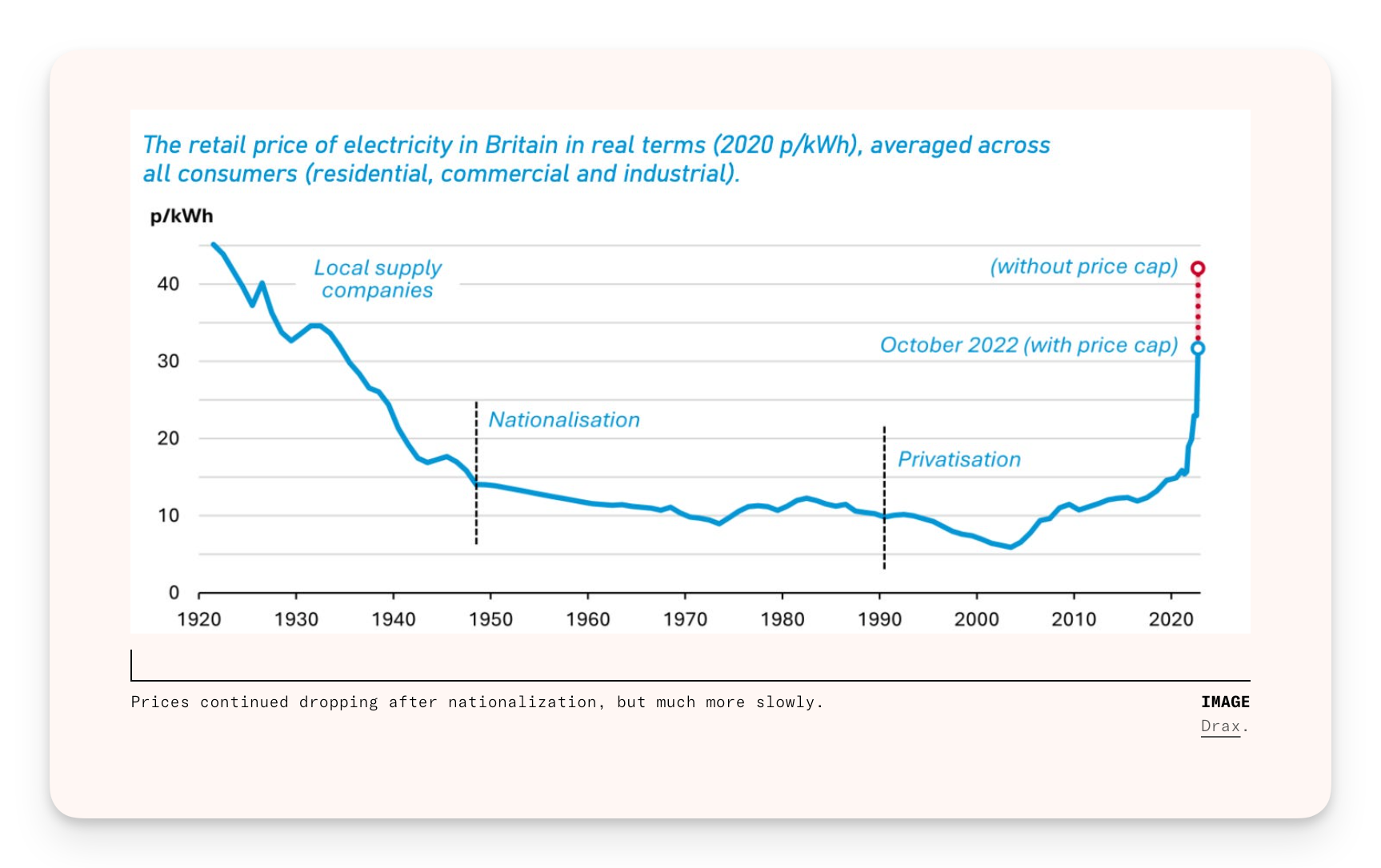
How the World’s First Electric Grid Was Built
In 1883, Sir Coutts Lindsay, owner of the Grosvenor Art Gallery in Bond Street, decided that he wanted to illuminate his paintings without the smoke produced by gas lanterns. He installed a small generator, first in the yard and then in the basement of the gallery. This was a cutting-edge status symbol at the time. The generator turned out to produce more than enough electricity to power his gallery lights, so he started to supply the excess power to his neighbors via overhead cables.
In 1887, after being pitched by a professional engineering team, Sir Coutts formed the London Electricity Supply Corporation. To spare passersby the noise of the generator, to gain access to cooling water, and to allow it to buy cheaper coal transported by river, the corporation moved to a new base in Deptford. The Deptford facility was linked by cables to substations at the Grosvenor Gallery, Trafalgar Square, and Blackfriars. By 1891, the world’s largest generator and one of the world’s first modern power stations was up and running.
‘It Does Feel Like an Intimidation Campaign’: Why Is US Tech Giant Palantir Suing a Small Swiss Magazine?
It was over beers on an autumn evening in Zurich in 2024 that a group of journalists with an independent Swiss research collective began to discuss investigating Palantir, one of the world’s biggest tech companies.
Three years earlier, Palantir had advertised that it was setting up a “European hub” in the Swiss municipality of Altendorf, a sleepy town of roughly 7,000 people on the shores of Lake Zurich.
Press coverage of the move was positive: a Swiss national newspaper said the canton of Schwyz had “pulled off a coup” by landing a US tech company. But the journalists in the collective, WAV, were not so sure. They wondered what Swiss authorities were doing with Palantir.
Ads Are Popping Up on the Fridge and It Isn’t Going Over Well
Walking into his kitchen, Tim Yoder recoiled at a message on his refrigerator door: “Shop Samsung water filters.”
Yoder, a supply-chain manager in Chicago, owns a Samsung Electronics Family Hub fridge. He paid $1,400 for an appliance that came with a 32-inch screen on the door that allows him to control other Samsung gadgets, pull up recipes or stream music.

Britain Responds to Iran War Energy Shock by Requiring Solar Panels and Heat Pumps in All New Homes
The U.K. government on Tuesday introduced new rules requiring developers to install heat pumps and solar panels in all new homes across England, in policymakers’ latest response to the economic fallout of the Iran conflict.
U.K. ministers say the Iran war and the largest supply disruption in the history of the oil market reinforces the need to leverage clean power as an energy security tool.
The Future Homes Standard — a set of new-build regulations for England from 2028 — will establish requirements to ensure homes are built with on-site renewable electricity generation, the majority of which is expected to be provided by solar power.
The rules will also see homes built with low-carbon heating, such as heat pumps and heat networks.
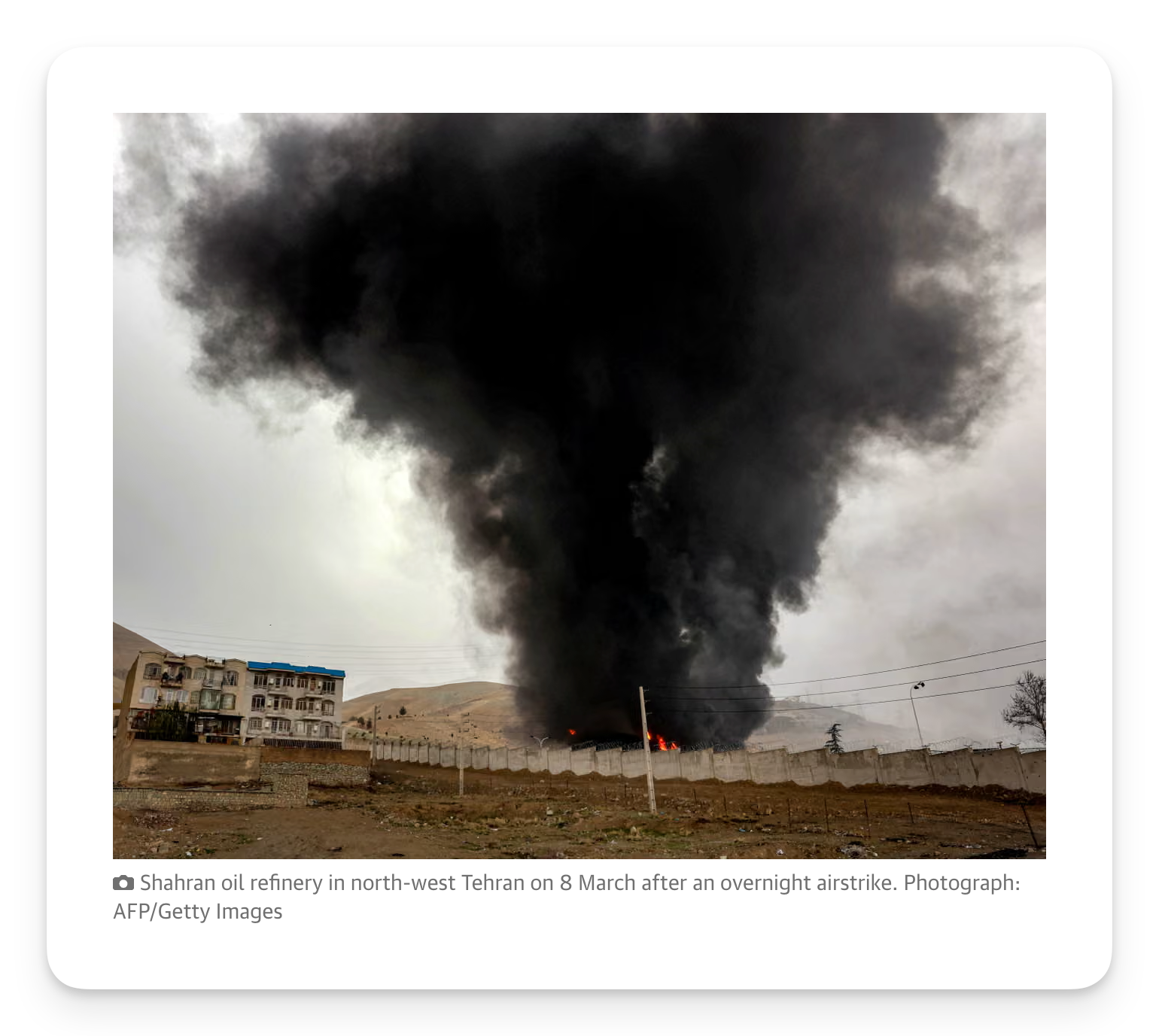
5m Tonnes of CO2 Emitted in Just 14 Days of US War on Iran, Analysis Finds
The US-Israel war on Iran is a disaster for the climate, according to an analysis that finds it is draining the global carbon budget faster than 84 countries combined.
As warplanes, drones and missiles kill thousands of people, level infrastructure and turn the Middle East into a gigantic environmental sacrifice zone, the first analysis of the climate cost has found the conflict led to 5m tonnes of greenhouse gas emissions in its first 14 days.
The analysis, shared exclusively with the Guardian, adds another layer on to reporting of the catastrophic environmental harm being caused by attacks on fossil fuel infrastructure, military bases, civilian areas and ships at sea.
“Every missile strike is another downpayment on a hotter, more unstable planet, and none of it makes anyone safer,” said Patrick Bigger, a research director at the Climate and Community Institute and a co-author of the analysis.