

A weekly collection of links to interesting things curated by Colin Wright.
Phone Cameras Can Take in More Light Than the Human Eye
“Smartphone cameras have significantly improved in recent years. Computational photography and AI allow these devices to capture stunning images that can surpass what we see with the naked eye. Photos of the northern lights, or aurora borealis, provide one particularly striking example.
If you saw the northern lights during the geomagnetic storms in May 2024, you might have noticed that your smartphone made the photos look even more vivid than reality.”


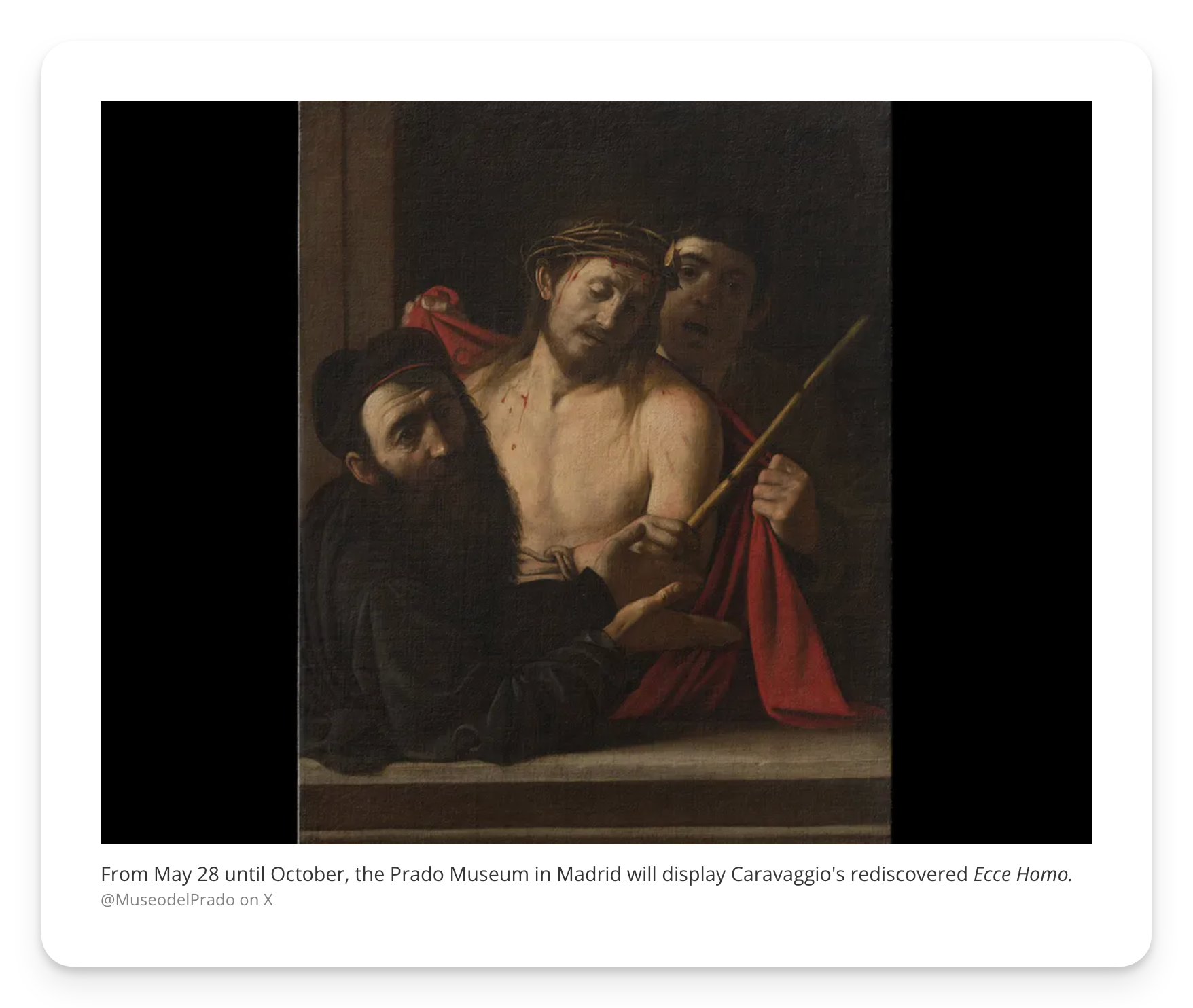
Spain’s Prado Museum Will Showcase a Lost Caravaggio That Nearly Sold for Under $2,000
“In April 2021, the painting, Ecce Homo, depicting Christ in a crown of thorns, caused some serious ruckus after the Ansorena auction house in Spain announced plans to auction the piece for €1,500 (about $1,800 at the time). The auction house had attributed the work to the "circle of [the 17th-century Spanish artist] José de Ribera."
However, the item never made it to the sale. Experts at the Prado Museum began to chime in that there was “sufficient stylistic and documentary evidence” the painting could actually come from Caravaggio, per the Art Newspaper’s Gareth Harris. The Comunidad de Madrid regional government stepped in giving the painting protected heritage status, and the Spanish government created an export ban so that the piece could not leave the country. Anthony Crichton-Stuart, a former Christie’s specialist, told the New York Times’ Scott Reyburn at the time that he believed the painting may actually be worth “at least €50 million.””
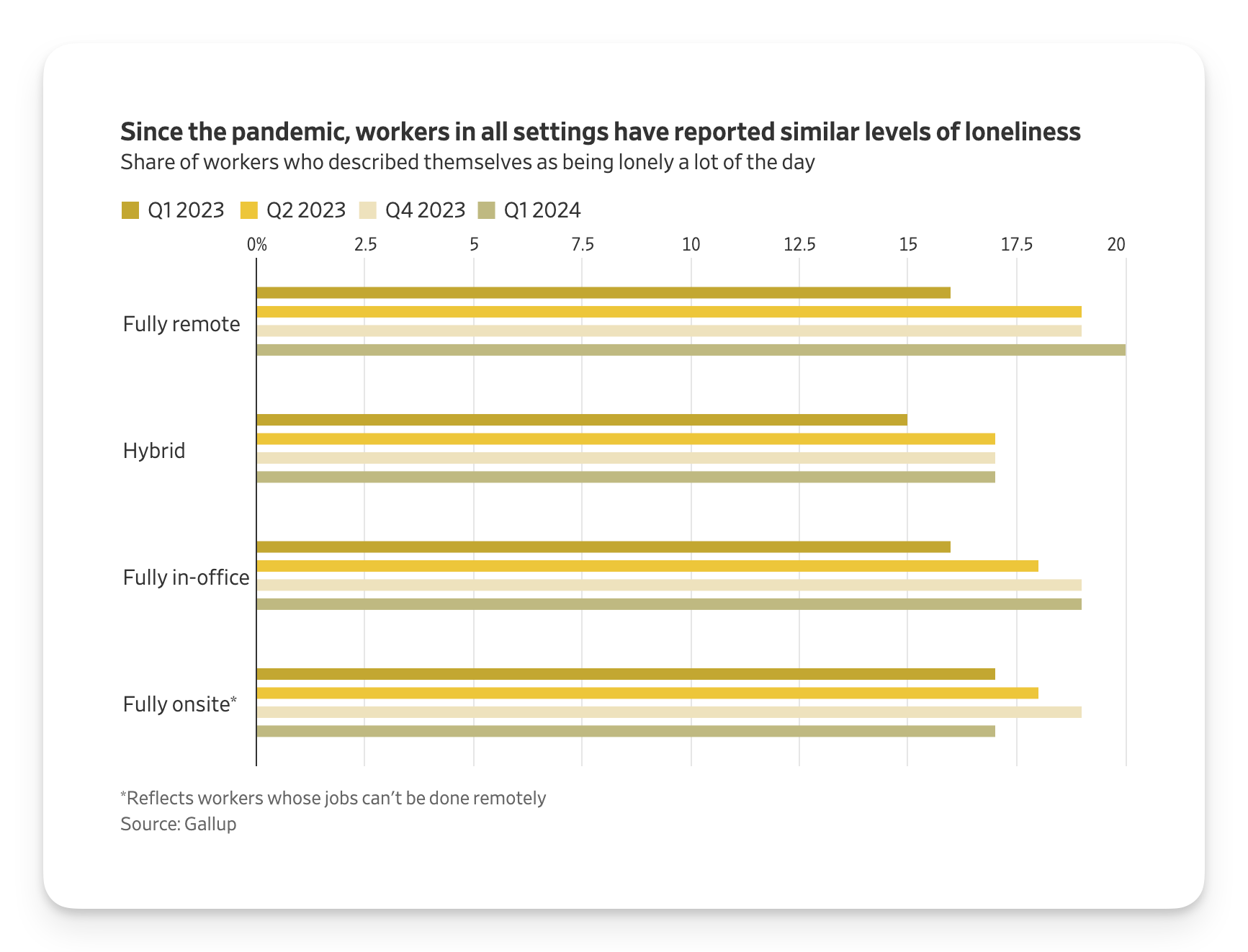
The Loneliness of the American Worker
“More Americans are profoundly lonely, and the way they work—more digitally linked but less personally connected—is deepening that sense of isolation.
Nick Skarda, 29 years old, works two jobs in logistics and office administration in San Diego to keep up with his bills. After a couple of years at the logistics job, he has one friend there. He says hi to co-workers at his office job but doesn’t really know any.
“I feel sort of an emptiness or lack of belonging,” he says. Juggling two jobs leaves Skarda exhausted, with little energy or time to grab drinks with co-workers. “It makes it harder to go in and give it your all if you don’t feel like anyone is there rooting for you,” he adds.”
Welcome to the Millennial Midlife Crisis
“For most millennials, the old material markers of midlife, like owning a home or spending 20-plus years at one job, are a nostalgic fantasy. Something we miss but never had. Even as we negotiate gray hairs, crow’s-feet, and a changing body, for many of us, little has changed in our career, home, and money prospects. Growing up, even though our family didn’t have a lot of money — my parents were refugees who moved from Pakistan to Canada without college degrees and drove taxis, waited tables, sold cars, and did whatever else they could to give us what little they could — things felt relatively fine. My parents always managed to clothe and feed us, we went out for dinner a few times a month, we always had a pretty decent roof over our heads; hell, they even managed to buy a house at one point. They had jobs, they left jobs, they got new jobs. They lived paycheck to paycheck, but they also weren’t worried about where that next check came from. I can’t imagine buying a house in downtown Toronto today on one income with less than $10,000 saved for a down payment. I actually want to cry just thinking about the prospect. Same with their ability to get a job when they needed one. I have 20 years of experience in my field at this point, and the majority of the time when I apply for a job, I never hear back.”
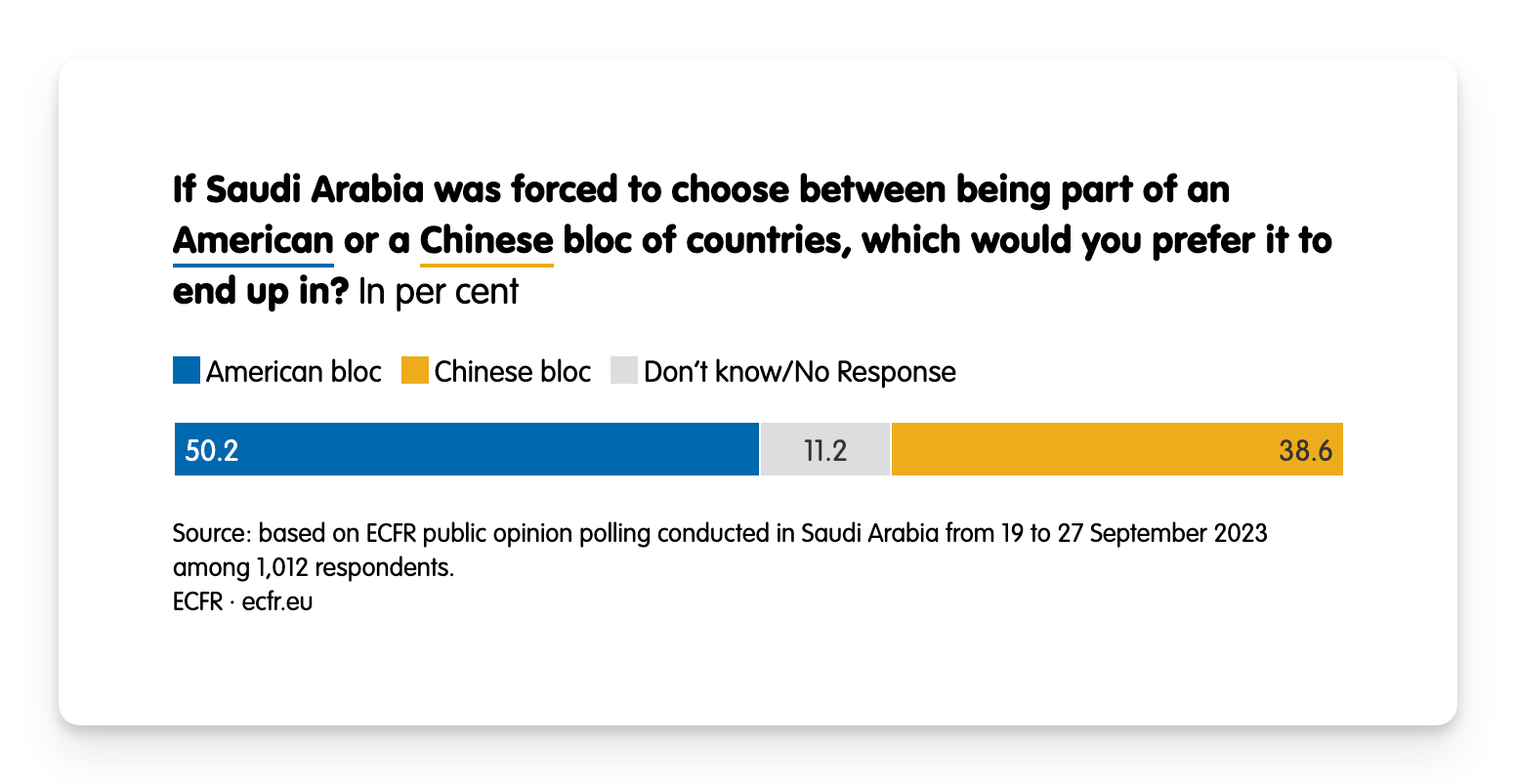
China’s Blossoming Relationship With Saudi Arabia and the UAE
“The blossoming relationship between these two Gulf states and China is a symptom of a broader evolution in the geopolitical context and has implications that reach far beyond the Middle East. Saudi Arabia and the UAE have emerged as key middle powers driven by their ambition to play a role in a changing global order and the growing geopolitical competition between China and the United States. In the meantime, China’s changing perspective on the Gulf is part of its growing assertiveness and ambition on the international scene.
The wars in Ukraine and especially Gaza have accelerated those trends. They have reinforced the narratives of a declining Western-led order and fed growing debates in the Gulf about the need to diversify economic and security partnerships. But these wars have also highlighted the contradictions of China’s position. Despite its growing influence, Beijing has maintained a reserved approach to the recent Houthi attacks in the Red Sea as well as to the Israel-Hamas conflict more broadly. Beyond the hype, relations between China and the Middle East remain relatively shallow, still driven by transactional interactions and a lack of mutual understanding.”
I Went a Week Without Ultra-Processed Foods. Here’s What I Learned
“Wandering the aisles, I select ingredients for a fish, couscous and vegetable stew; a quiche; and sandwiches (I’m fortunate to only be cooking for one). Crushed tomatoes are fine, but a prepared tomato spread is not; pie crust is OK if I make it from scratch, but not if I buy it pre-made. Then I stock up on snacks: apples and cheddar cheese, hummus and pita chips (many brands don’t pass muster), snap peas and mangoes.
I want a few treats so this week feels like fun, and not punishment, and while the fresh fruit is a huge treat in my book, I step into the ice cream aisle as well. Unsurprisingly, most of the brands I’d normally pick up are ultra-processed: filled with emulsifiers, thickening agents and flavorings. There’s a growing selection that aren’t – though they’re a not-insignificant $2 to $3 more per pint. That’s my first takeaway: purchasing whole ingredients and less-processed foods isn’t cheap – and with soaring food prices, it’s near impossible for many families.”
Another Sriracha Shortage May Be on the Horizon. What Happened?
“Huy Fong Foods has limited its Sriracha production several times in the last few years.
In 2022, a company representative said the problems stemmed from “several spiraling events, including unexpected crop failure from the spring chile harvest.” That year, a persistent drought in Mexico hindered irrigation and caused low yields.
Last year, Huy Fong Foods also announced decreased production of its signature Sriracha sauce “because of a shortage of raw material,” and said it didn’t know when the supply would increase.
The company has struggled to find the red jalapeños it needs to make Sriracha since 2017, when it ended its nearly three-decade-long exclusive relationship with Underwood Ranches over a payment dispute.”