

A weekly collection of links to interesting things curated by Colin Wright.
The Copier Wars: Fair Use’s Rude Awakening
“In a world where copying and pasting is as easy as moving a cursor from one place to another, it’s easy to underestimate the importance of the photocopier as a disruptive force.
After all, it wasn’t like we didn’t have ways to copy materials from one page to another previously. Just ask anyone who’s ever held a quiz created from the chemicals of a ditto machine.
But the 1942 invention of xerography, the dry-photocopying technique that made it possible to easily reprint documents, had a strange effect on society. It made the reproduction of printed material not only easy, but cost-effective—particularly in offices.
And for businesses that relied on the scarcity of information as a business model, the photocopier was bad news—and, in many ways, it showed cracks in the copyright system.”
The USDA’s Gardening Zones Shifted
“Recently, the USDA updated its plant hardiness map for the first time in 11 years.
If you’re a gardener — and everybody can be a gardener, even on a balcony or a stoop — this is a big deal!
The updated map opens up new possibilities for home gardeners, but there are limits. Let’s explore how the map has changed and what this means for your garden.”

The Styles of Furniture
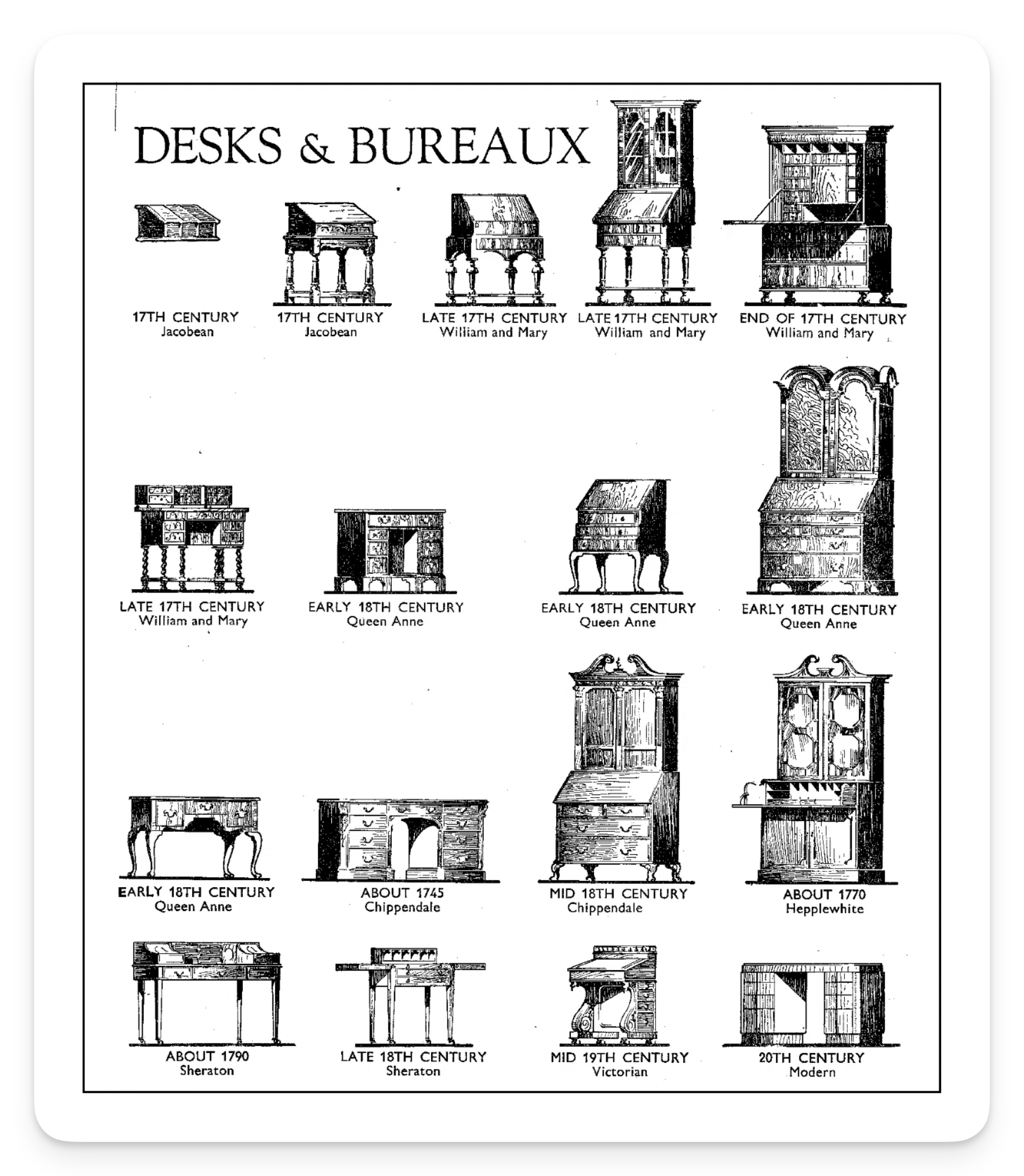
“Modern furniture fashions and current production methods have obscured from the young cabinet-maker much, if not all, of the wide traditional background of his craft.
At various periods during the history of this country, circumstances, and the skill of the craftsman, have combined to produce furniture and interior woodwork of distinctive styles, surviving examples of which are to be seen in museums and elsewhere. The artistic merit of much of this old work appeals to the taste of many people, who appreciate the use of its features in furniture and interiors, even in these days of novel design and ample choice.
Reference to the City and Guilds syllabus for cabinet-making shows that the student is required to have a good knowledge of these period styles and their characteristics, as well as an acquaintance with the related influential French designs.”
Nonmonogamy By the Numbers
“But is polyamory more common among wealthier people? Are open marriages less satisfying for those involved? Should your neighbor/friend/cousin’s ex’s sister whom you’ve heard has a wife and a boyfriend just … break up/cheat/get over their little experiment?
We need not speculate so wildly. There is, in fact, a fairly rigorous body of research that offers insight into the ways people live and love outside monogamy, research that can help ground the cultural conversation in empirical reality rather than leave it to freewheeling expressions of preference or moralizing opinion. The scientific understanding of consensual nonmonogamy actually paints a nuanced and interesting picture.”
Obsolete, But Not Gone: The People Who Won't Give Up Floppy Disks
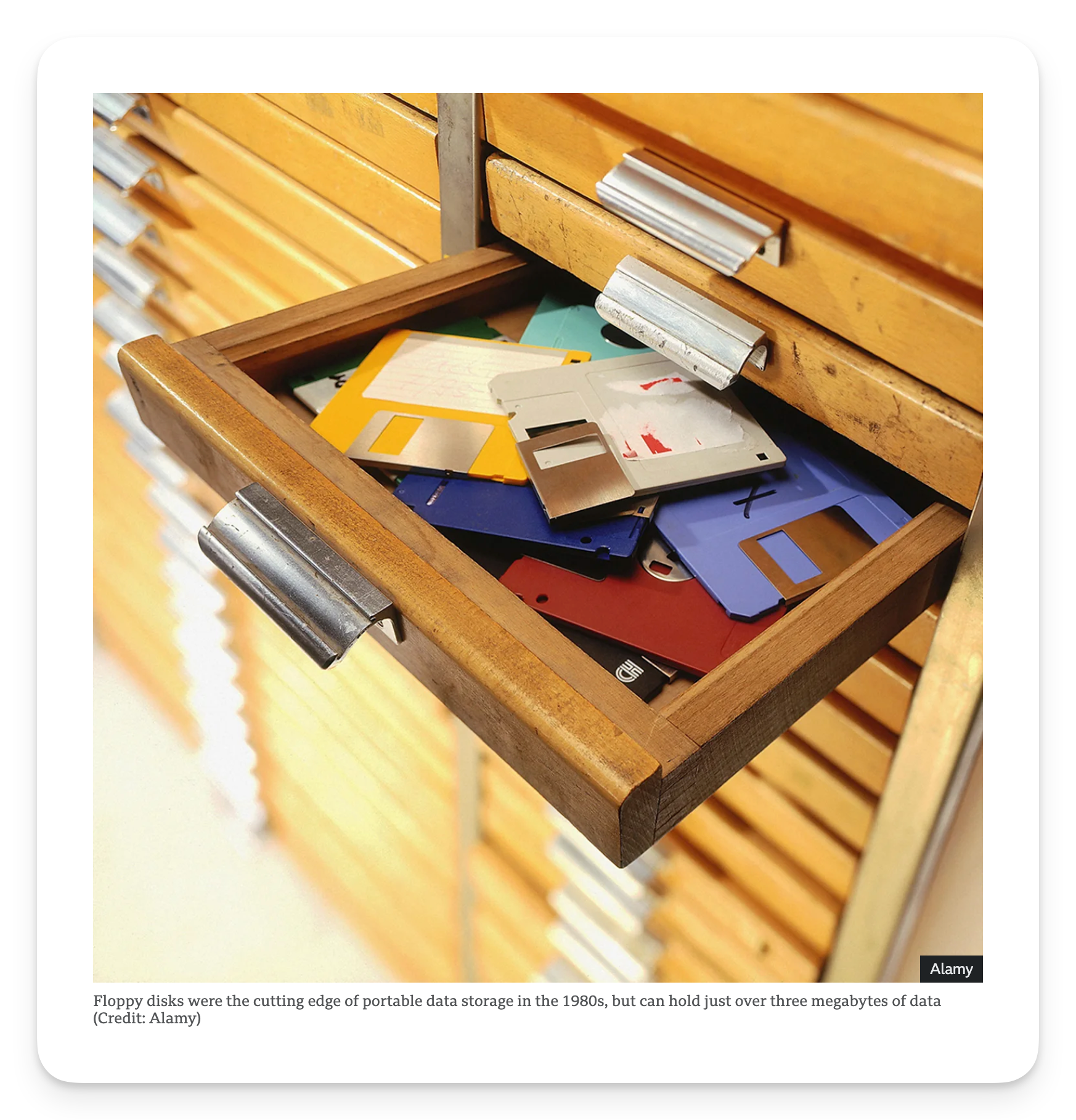
“If you remember a time when using floppy disks didn't seem weird, you're probably at least 30 years old. Floppy disks or diskettes emerged around 1970 and, for a good three decades or so, they were the main way many people stored and backed up their computer data. All the software and programmes they bought came loaded onto clusters of these disks. They are a technology from a different era of computing, but for various reasons floppy disks have an enduring appeal for some which mean they are from dead.
The original 8in (20cm) and 5.25in (13cm) floppy disks were actually floppy – you could bend them slightly without harming the magnetic material inside.
But the later 3.5in (8.75cm) disks were arguably the most successful. It is these that came to be immortalised as the "Save" icon in many computer applications even today. The 3.5in disks, which Espen Kraft uses, are small and rigid, not actually floppy, but that means they are both more robust and easier to store.”
National Archives and Ancestry Team Up To Digitize Millions Of Records
“The National Archives and the genealogy company Ancestry are teaming up to digitize and put online tens of millions of records from the Archives’ vast holdings.
The project, announced Thursday, will take place over five years. In the first phase, about 65.5 million records that had previously not been available online will appear on Ancestry’s website, the organizations said in a statement.”
Ordered Back to the Office, Top Tech Talent Left Instead, Study Finds
“Return-to-office mandates at some of the most powerful tech companies - Apple, Microsoft and SpaceX - were followed by a spike in departures among the most senior, tough-to-replace talent, according to a case study published last week by researchers at the University of Chicago and the University of Michigan.
Researchers drew on résumé data from People Data Labs to understand the impact that forced returns to offices had on employee tenure and the movement of workers between companies. What they found was a strong correlation between the departures of senior-level employees and the implementation of a mandate, suggesting that these policies “had a negative effect on the tenure and seniority of their respective workforce.” High-ranking employees stayed several months less than they might have without the mandate, the research suggests - and in many cases, they went to work for direct competitors.”