

A weekly collection of links to interesting things curated by Colin Wright.
When War Destroys the Internet Economy
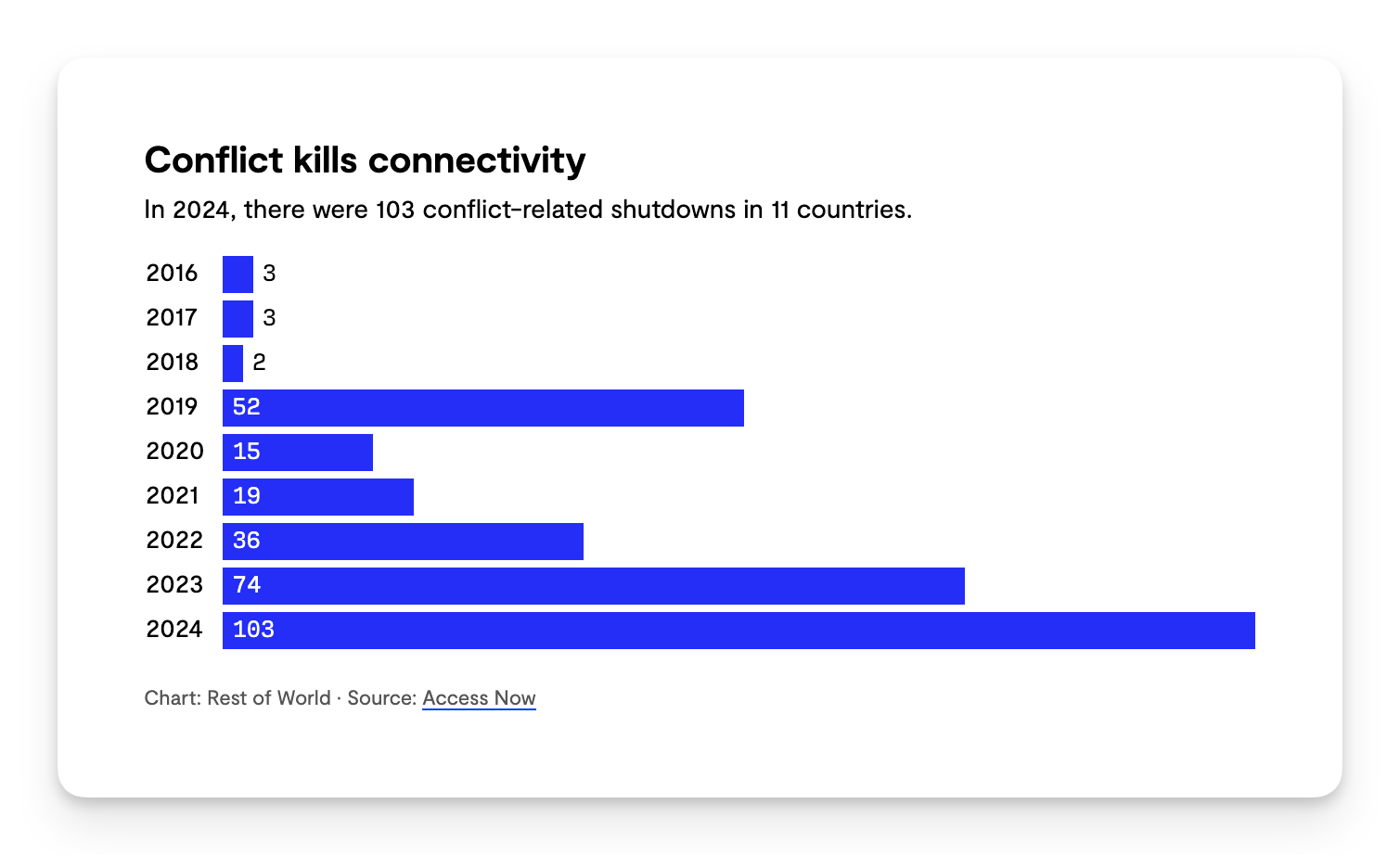
Iran was ranked among the world’s rising startup ecosystems as recently as last year. A year later, it is in the middle of a conflict, and a weeks-long internet shutdown is choking off the local economy and freezing tech activity.
“We cannot do most tasks,” an Iranian engineer who works with Digikala, the country’s largest e-commerce company, told Rest of World. He requested anonymity for fear of government retaliation. “The company is trying to create a local LLM [large language model] with open-source models like DeepSeek, Qwen, or Gema, and now it cannot even update these models.”
Our Spreadsheet Overlords
Two years have passed since OpenAI released ChatGPT and the panic set in. Two years of above-the-fold headlines about “AI”—a subaltern specialty topic and the preserve of goofy sci-fi films for some 80 years prior—and two years of confusing, rank speculation about “artificial general intelligence” (AGI), a loosely defined idea of “human-level” yet machinic reasoning. Large Language Models, or LLMs, capture and generate what we have long taken to be an essentially human thing, language, shaking our historical sense of our own species to the core. But their abilities are matched by a lack of intelligence, and even a lack of the consistency we have long expected from computing machines.
Best Gas Masks
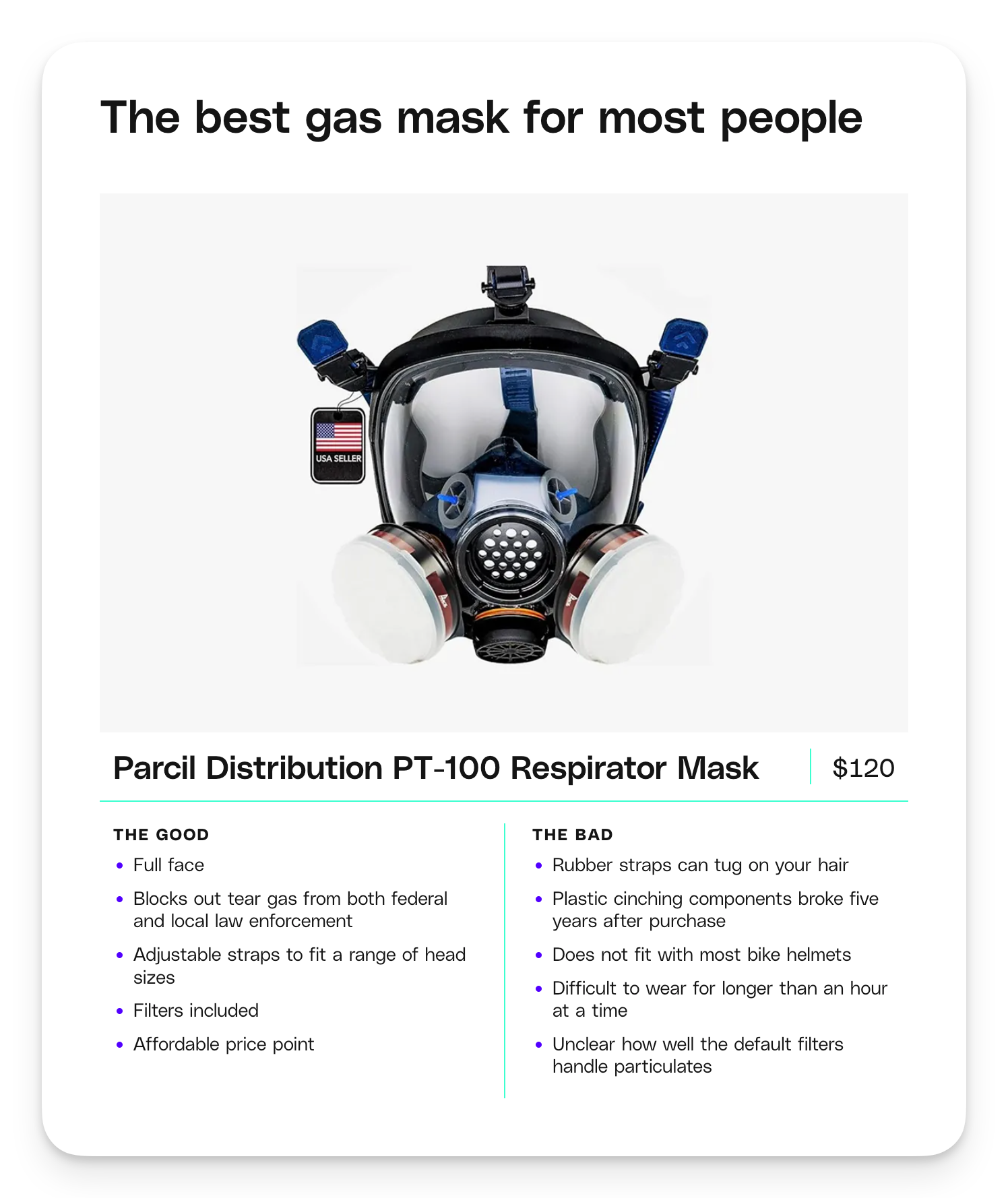
I was tear gassed by the government for the first time in July 2020 at one of the many Black Lives Matter protests that broke out all over the country. The feeling is excruciating, like your lungs are trying to kill you from the inside out. The sting in your eyes is painful, too. But oddly, after you’ve been tear gassed enough times, you mostly just resent the inconvenience of having to stand around and involuntarily gasp and sob. That summer, I learned the art of walking out of a cloud of tear gas — briskly, but not too briskly, lest you lose breath control and take in a huge huff of aerosolized pain.
Deepfake ‘Nudify’ Technology Is Getting Darker—and More Dangerous
Open the website of one explicit deepfake generator and you’ll be presented with a menu of horrors. With just a couple of clicks, it offers you the ability to convert a single photo into an eight-second explicit videoclip, inserting women into realistic-looking graphic sexual situations. “Transform any photo into a nude version with our advanced AI technology,” text on the website says.
The options for potential abuse are extensive. Among the 65 video “templates” on the website are a range of “undressing” videos where the women being depicted will remove clothing—but there are also explicit video scenes named “fuck machine deepthroat” and various “semen” videos. Each video costs a small fee to be generated; adding AI-generated audio costs more.
Seeing Like a Sedan
Picture a fall afternoon in Austin, Texas. The city is experiencing a sudden rainstorm, common there in October. Along a wet and darkened city street drive two robotaxis. Each has passengers. Neither has a driver.
Both cars drive themselves, but they perceive the world very differently.
One robotaxi is a Waymo. From its roof, a mounted lidar rig spins continuously, sending out laser pulses that bounce back from the road, the storefronts, and other vehicles, while radar signals emanate from its bumpers and side panels. The Waymo uses these sensors to generate a detailed 3D model of its surroundings, detecting pedestrians and cars that human drivers might struggle to see.
In the next lane is a Tesla Cybercab, operating in unsupervised full self-driving mode. It has no lidar and no radar, just eight cameras housed in pockets of glass. The car processes these video feeds through a neural network, identifying objects, estimating their dimensions, and planning its path accordingly.
Government by AI? Trump Administration Plans to Write Regulations Using Artificial Intelligence
The Trump administration is planning to use artificial intelligence to write federal transportation regulations, according to U.S. Department of Transportation records and interviews with six agency staffers.
The plan was presented to DOT staff last month at a demonstration of AI’s “potential to revolutionize the way we draft rulemakings,” agency attorney Daniel Cohen wrote to colleagues. The demonstration, Cohen wrote, would showcase “exciting new AI tools available to DOT rule writers to help us do our job better and faster.”