

A weekly collection of links to interesting things curated by Colin Wright.
Astonishing Images From the 2026 Wildlife Photographer of the Year Awards
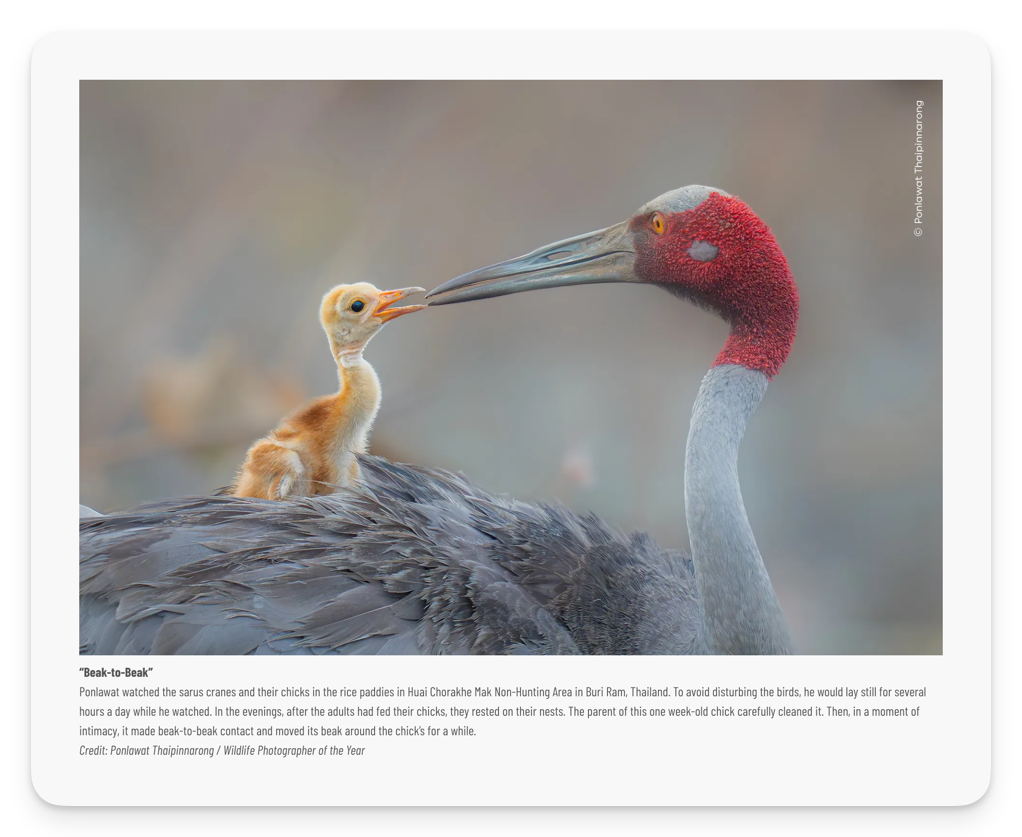
From a tender moment between a crane and her chick to a heartbreaking image of a polar bear cub’s final moments, the finalists for the Nuveen People’s Choice Award of the Wildlife Photographer of the Year contest stun.
Photographers from 113 countries and territories submitted more than 60,000 images for consideration. A judging panel of photography, wildlife, conservation and science experts whittled the finalists list down to 24 photographs that are now competing for votes from the public.
Ultrarunners in Secondhand Trainers: The Rickshaw Drivers Taking on the World’s Toughest Races
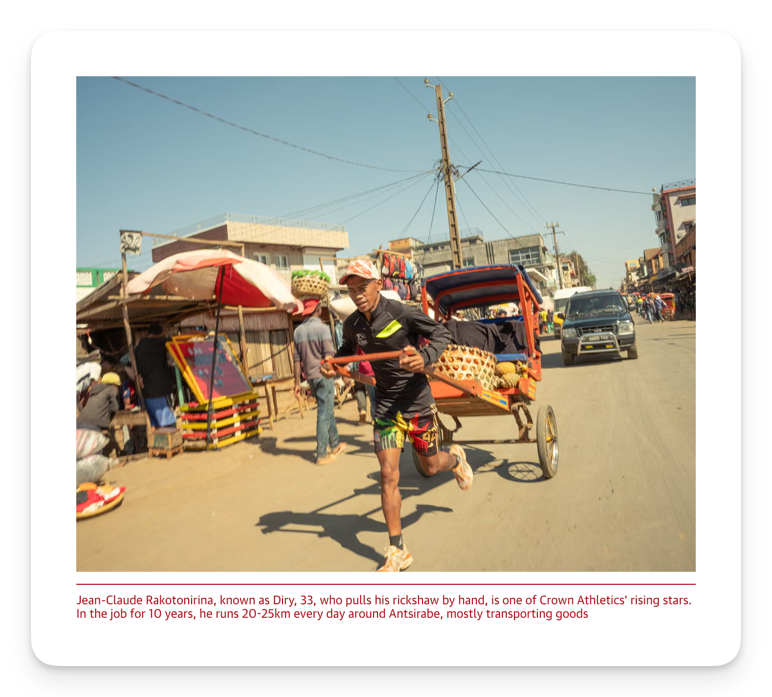
It is a fiercely competitive market, and one of the toughest physical jobs in Madagascar’s Antsirabe, but over the past five years cycle rickshaw driver Haja Nirina has honed his athletic prowess alongside his business.
In this city, about 100 miles (160km) south of the capital, Antananarivo, there are more than 4,000 rickshaws for a population of 265,000, the cheapest transport available for people and goods. Some are pulled by cycles, others by hand. Each day, Nirina makes between 10 and 15 trips, making 10,000 to 15,000 ariary (£1.70 to £2.60). Unlike 99% of drivers, Nirina doesn’t lose 5,000 ariary of his income paying a daily rental fee for the rickshaw. For the past three years, he has owned his, thanks to a programme run by his local athletic club.
AI Poop Analysis App Offered to Sell Me Database of Its Users’ Poops
A few weeks ago, I came across a wild post on Reddit’s r/DHExchange, a subreddit for trading large datasets: “I hoarded a large database of something valuable, just not what’s [sic] you expect…150k stools images.”
The post, made by a user called Ill_Car_7351, was advertising exactly what it sounds like: A database of poop images, collected from an AI poop analyzing app that he had launched several years ago. Basically, 25,000 people had been taking images of their poop and uploading them to his app. He’d been collecting, analyzing, and annotating these images and now wanted to sell access to them: “I’ve got 150k+ labeled and classified images of 💩 from roughly 25K different people. Jokes aside, I know there’s a lot of value in it (hard to obtain, useful for ML [machine learning] training, cancer studies etc) but not sure on how to move about it. Feels like I’m sitting on a pile of shi..ny coins but can’t find who wants them.” The poster added that “the images are extremely rare,” and that he was trying to figure out how much money he could sell them for.
Dating in a Swipeless World
Bumble made headlines last week when it announced plans to kill off the swipe feature and shift toward matchmaking driven by artificial intelligence, a move meant to address rampant dating-app fatigue.
Bumble didn’t pioneer the swipe (Tinder did), but as one of the most popular dating apps on the market, its decision to eliminate swiping could alter the dating habits of millions of users who have grown used to vetting partners with the flick of a finger.
“Swiping primes people to make superficial, snap judgments,” said Jenny Taitz, a clinical psychologist and author of “How to Be Single and Happy,” who has written for The New York Times. “It really has turned dating into gaming.”
But what is the alternative?
Would You Eat This Bug To Save The World?
The rows of plastic bags contained crickets, cockchafers, grasshoppers, worms, larvae and some beetles. They crawled up the sides of their cellophane prisons, trying to escape. I tried to suppress a shudder.
The northeastern region of Isan in Thailand is as far east as you can go before the Mekong River and the border with Laos. People here consume bugs the way Americans eat potato chips. They are served at breakfast, lunch and dinner and often carried around as a midday snack. Many people forage for them themselves, venturing a few times a week into the lush jungle landscape. Others simply stop by the nearest “jungle market” like the one I visited recently with the chef Weerawat “Num” Triyasenawat. These markets host dozens of vendors who display local insect delicacies by the hundred on plastic tables for shoppers to stop, peruse and munch.
Balcony Solar Advances In Colorado As New Legislation Removes Barriers
Colorado Governor Jared Polis this week signed new legislation — HB26-1007 — which removes many of the barriers to so-called balcony solar — solar panels that can be mounted on on the railings that surround many balconies, patios, and lanais typically found in many apartment and condominium buildings. In a press statement, Polis said: “Colorado is breaking down barriers to clean energy and saving people money on energy bills. Just because you live in an apartment or multi-family building doesn’t mean you shouldn’t be able to use solar panels to save money on your energy bill and this new law expands access and choice to money-saving clean energy solutions to more Coloradans. Thank you to the sponsors for expanding choices for more Coloradans to explore new technology that protects our environment, and saves Coloradans money.”